Dating red flags
How to Tell the Difference Between Privacy and Hiding Things
Sunday, July 19, 2026






Being an open book is a terrible foundation for romance. Healthy love actually requires locked doors and separate spaces. The trouble begins when those locked doors start feeling like barricades.
Privacy is about protecting your individual identity and personal peace. Hiding things is about protecting a secret that would damage the relationship if exposed. One creates a safe boundary for selfhood, and the other creates a barrier to true intimacy.
Right now you might feel a heavy knot of suspicion in your chest. You are probably replaying small interactions and wondering if you are just being paranoid. It is exhausting to feel like you are searching for clues in your own relationship.
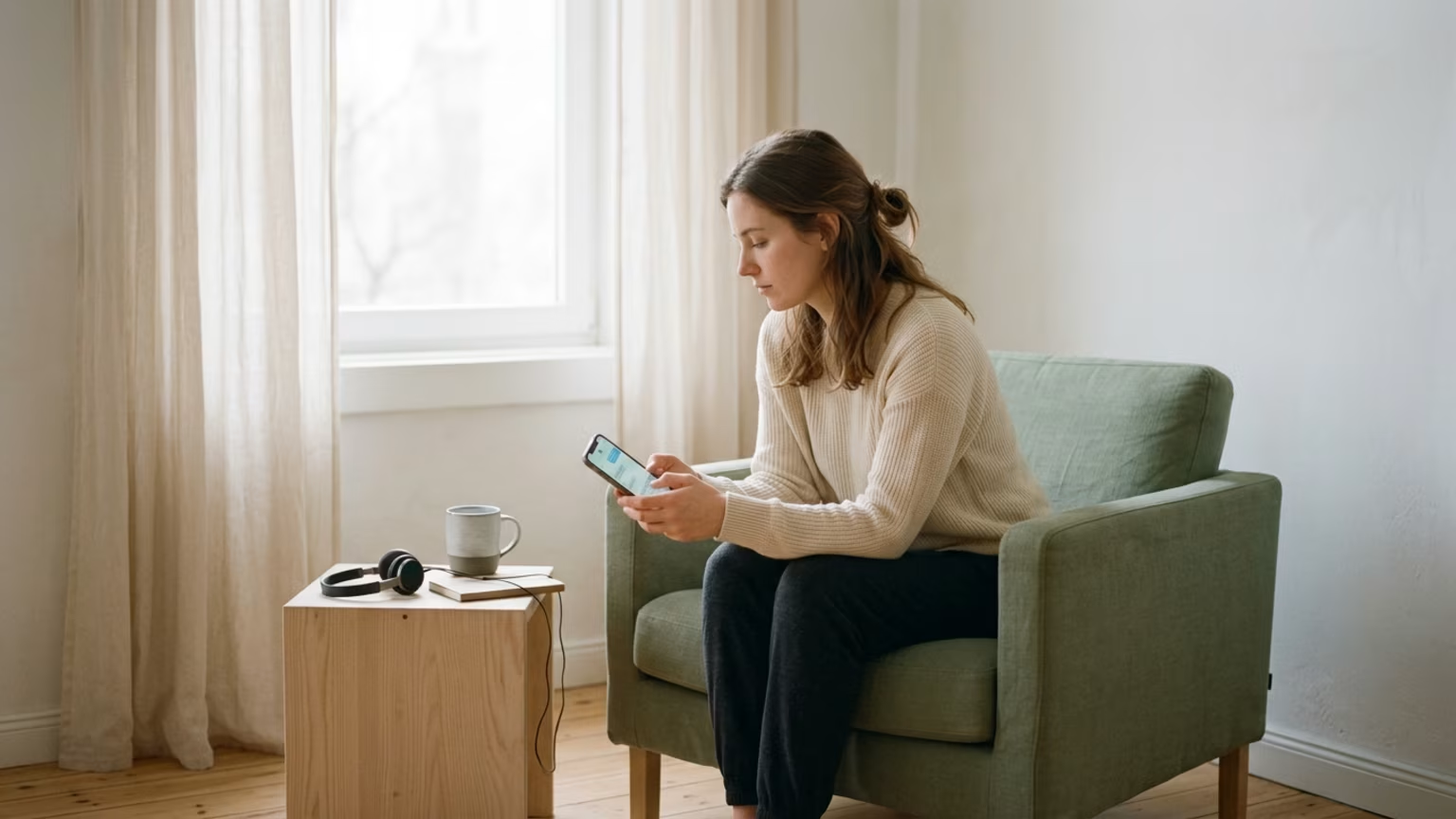
You might catch yourself watching where they place their phone. You might feel a spike of panic when they leave the room to take a call. Living in this state of hypervigilance drains your energy very quickly.
You are trying to protect your heart from unexpected pain. It is completely normal to feel rattled when a partner suddenly changes their routine.
We all crave emotional safety and predictability in love. When a partner suddenly shifts their behavior, our brain interprets the unknown as a threat. The ache comes from the wide gap between what you see and what you fear.
We fill that gap with our worst fears. A sudden need for secrecy triggers a very old fear of abandonment. Your body reacts as if you are in physical danger.
You start scanning every conversation for inconsistencies or hidden meanings. This constant scanning leaves you deeply tired and deeply lonely. It takes immense energy to carry the weight of suspicion alone.
It is common to confuse our own past hurts with current reality. Sometimes we project old fears onto a perfectly innocent need for space. Learning the art of separating your internal worries from actual warning signs takes time and practice.
Having private thoughts and separate friendships is healthy. A partner does not need to share every single detail of their workday. They do not need to show you every text they exchange with their siblings.
Privacy allows two individuals to exist together without merging into one person. A secure partner will comfortably claim their private time without making you feel excluded. They might retreat to read a book alone to recharge their energy.
This solitary time actually gives them more capacity to love you better. You should never feel penalized for letting a partner enjoy their own space.
Secrecy feels very different in your body. It has a heavy and guarded energy. A secretive partner might become defensive when asked a simple question about their day.
They might accuse you of snooping if you glance at an incoming notification. It is helpful to trust your gut feeling when things seem off. You know the subtle difference between someone who is quietly reading and someone who is actively guarding their screen.
Listening to your intuition when it tells you something is hidden is a powerful act of self-trust. You are the only expert on your own bodily responses.
Put down the magnifying glass and pause for a deep breath. Focus your attention on something entirely within your control for the next ten minutes. Watering a plant or organizing a drawer can gently bring you back to the present moment.
This tiny pause breaks the cycle of anxious thoughts. Remind yourself that you do not need to solve this mystery tonight. You are allowed to simply exist in your own body for a little while.
Rest is a form of self-care when you are experiencing the quiet ache of heartbreak. Taking a step back helps you view the situation with a clearer mind.
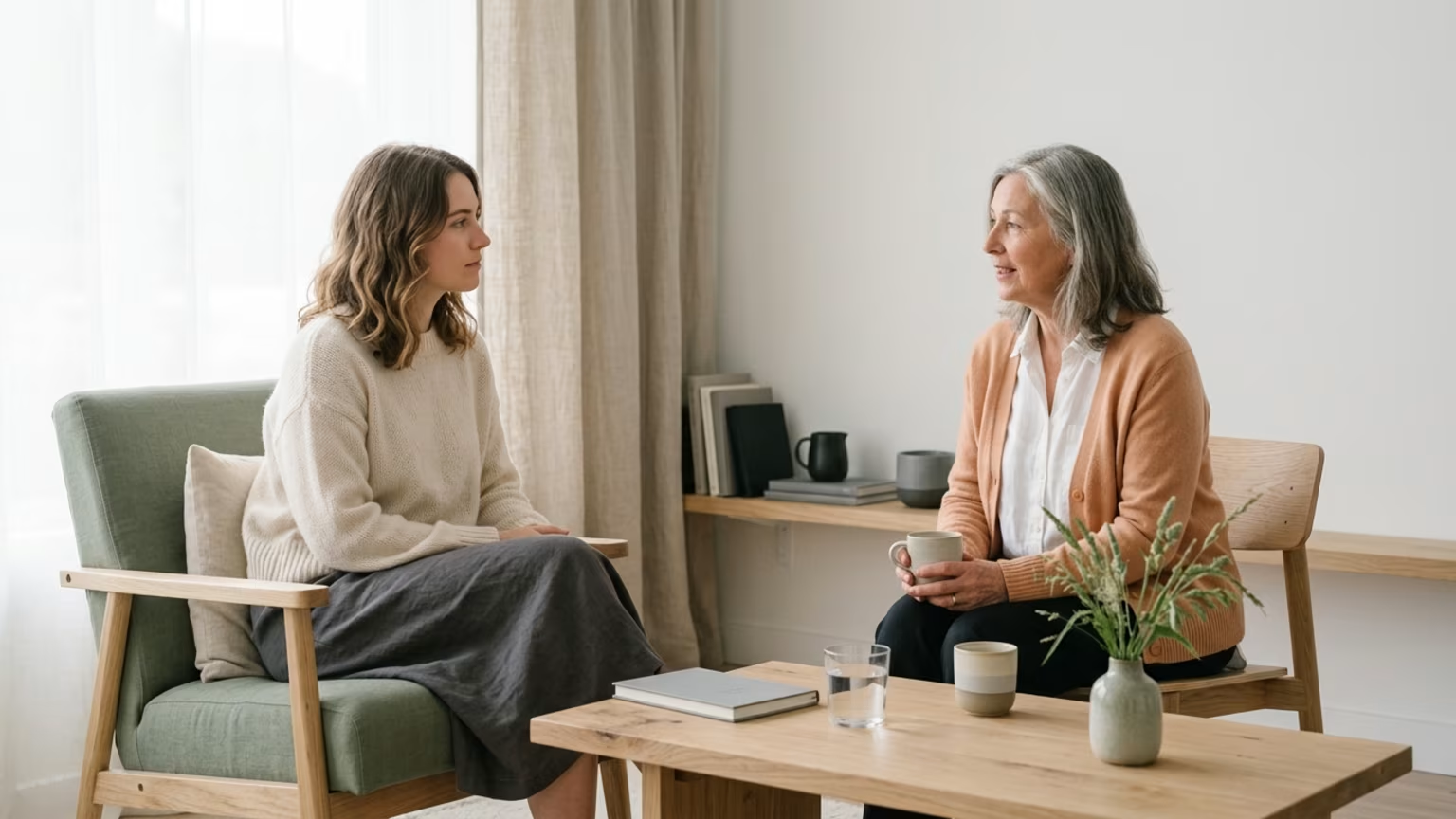
At some point you will need to name what you are observing. Approaching the topic with curiosity is better than leading with an accusation. Keep your voice steady and your phrasing simple.
You want to express your feelings without putting them on the defensive immediately. Try saying something like this: "I notice you have been guarding your phone a lot lately. It makes me feel disconnected from you. I would like us to have an open conversation about what is going on."
Wait and see how they respond to this gentle invitation. A caring partner will listen and validate your feelings. A defensive response gives you very important information about their capacity for closeness.
Sometimes a partner will respond to your boundary by completely withdrawing. They might stop speaking to you or ignore your texts for days. At uncrumb, our team has seen this pattern many times.
We provide guidance on recognizing when silence is used as punishment in conflict. This guidance helps people tell the difference between healthy space and manipulation. We teach people to name the pattern once and set a clear time limit.
A partner asking for an hour to cool down is completely normal. Chronic punishing silence is a strong signal to consider leaving. You deserve active communication instead of silent retaliation.
You do not have to prove your anxiety is valid before asking for clarity. Your feelings are enough of a reason to start a gentle conversation. Save this gentle reminder for later.
Not every situation can be resolved with a good conversation. Sometimes you have to prioritize your own emotional safety. Stepping away is incredibly hard but often very necessary.
First, you should pay attention if they repeatedly make you feel crazy for asking questions. A partner who shifts the blame onto you for their secretive behavior is avoiding accountability. This behavior erodes your self-esteem over time.
Second, notice if they repeatedly break promises about transparency. If they agree to change their behavior but immediately revert to old patterns, their words are empty. You cannot build a secure attachment on empty promises.
Third, consider walking away if your body constantly feels tense around them. True intimacy should feel like a soft place to land. It is important to know if your partnership offers real comfort or just familiar chaos.
Fourth, step away if you find yourself compromising your core values. You should never have to shrink yourself to keep the peace. You deserve to feel fully respected and deeply seen.
The line between privacy and secrecy often comes down to intention. Privacy is driven by a desire for personal restoration and boundaries. Someone creating privacy is managing their own energy levels.
Secrecy is driven by fear and avoidance. A person hiding something is actively trying to prevent you from finding out a truth. They are managing the flow of information to control your perception of them.
This manipulation destroys the foundation of trust.
A locked phone is a standard modern boundary for privacy. Everyone deserves digital security and a private space for their thoughts. A locked phone only becomes suspicious when paired with sudden behavioral shifts.
The context of the behavior tells the real story. If your partner suddenly changes their passcode and leaves the room to text, the context has shifted. If they sleep with the phone under their pillow, they are creating a barrier.
You are reacting to the shift in their energy.
Holding secrets is exhausting for the person hiding things. It takes a massive amount of mental energy to keep stories straight. This internal pressure often leaks out in the form of irritability.
They might snap at you over tiny things to release their own stress. You end up absorbing the collateral damage of their hidden life. You might start wondering what you did wrong to cause their bad mood.
This dynamic is incredibly unfair to you and your nervous system. You can start noticing when the shift from personal space to secrecy happens by trusting your lived experience. You are the expert on your own life.
True honesty is deeply uncomfortable at times. It requires a willingness to expose your flaws and risk rejection. A partner who hides things is usually terrified of this vulnerability.
They prefer the illusion of perfection over the messy reality of true intimacy. You cannot force someone to be ready for vulnerability. You can only decide if you are willing to wait for them to grow.
Waiting for potential is a very painful way to live your life. You deserve a partner who is fully present right now.
Sometimes we try to control a situation by gathering as much information as possible. We think that if we just know everything we can prevent heartbreak. This illusion of control keeps us trapped in a cycle of anxiety.
The truth is that we cannot control another person. We can only control how we respond to their actions. Learning to surrender this need for total control is incredibly freeing.
It allows you to redirect your energy back into your own life.
Your sense of safety should never depend entirely on someone else. You build your own safety by trusting your instincts and setting clear boundaries. When you know you can walk away from a bad situation you feel much more secure.
This internal strength is your best protection against secrecy. Spend time nurturing your own friendships and personal goals. A rich independent life makes it easier to spot when a relationship is draining you.
You become less tolerant of secretive behavior when your own life feels fulfilling.
Normal privacy includes having individual friendships and separate hobbies. It means maintaining your own thoughts and personal journal entries. A healthy couple does not need to share every waking thought to feel connected.
The goal is interdependence rather than total fusion.
Snooping is a desperate attempt to find safety through information. The best way to stop is to recognize that snooping rarely brings true relief. Focus on self-soothing techniques like deep breathing or taking a short walk.
Bring your concerns to your partner directly instead of searching for clues in secret.
A relationship can survive if both people are willing to do the hard work of rebuilding trust. The partner who hid things must take full accountability for their actions. They must demonstrate consistent transparency over a long period of time.
Healing is possible but it requires deep patience from both sides.
Many of us are conditioned to believe that love means having zero boundaries. Taking time for yourself might feel selfish if you grew up in a codependent environment. Having private space is actually a sign of emotional maturity.
You are allowed to keep parts of your inner world just for you.
We started by looking at the locked doors that exist in every relationship. A healthy partnership respects those doors and knocks gently before entering. You should never feel like you have to break down a barricade just to reach the person you love.
True connection thrives when both people feel safe enough to leave their doors slightly ajar.

A collective of writers and researchers specializing in behavioral psychology and relationship recovery.


Uncrumb is a calm space for honest relationship advice. Follow us for new guides, small reminders and gentle support when love feels confusing.
Emotional vibe coding favors honest feelings. A gentle look at why thoughtful messages still need follow-through, without tests or pressure to overshare.
Continue reading
Uncrumb is a calm corner of the internet for women who want kinder love choices. Read the guides that fit your story, take what helps and return whenever you need a bit more clarity.