Attachment and psychology
From Anxious to Anchored: How to Stay Grounded When Dating Feels Uncertain
Wednesday, July 29, 2026





A recent Forbes Health survey found that 80% of women report dating app burnout. That number matters. It proves your exhaustion is not a personal failure.
The world will tell you that caring too much is a weakness. We believe that closure is a myth you do not actually need. Your anxiety over a delayed text is just proof that your heart still works.
Recent studies indicate that 78% of dating app users report feeling emotionally or physically exhausted. We are all swimming in a sea of overwhelming digital noise. It makes sense that your nervous system feels constantly on edge.
You do not need to become a perfectly detached robot to survive modern romance. Wanting a clear answer is a very normal human desire. You are allowed to seek comfort when the waiting game feels entirely too heavy.
Standard dating guidance usually demands an aggressive and unnatural posturing. It insists that you must hide your feelings and match their exact response time. Performing this unbothered perfection requires an immense amount of daily energy.
This exhausting protocol forces us to suppress our natural desire for connection. We are told to wait hours before replying to a simple question. This creates a culture of forced silence that helps absolutely no one.
Industry data suggests that more than 70% of mutual matches on dating platforms never result in a single message. We match with people and then wait for them to prove their interest first. It is a lonely standoff that leaves everyone feeling completely unseen.
When someone finally does write back, the anxiety often remains incredibly high. Studies show that 41% of users report being ghosted. That high rate is a primary driver of the intense anxiety associated with response-time delays.
We sit in our rooms and wonder if we have done something wrong. We replay every small interaction in our tired minds. The silence feels like a personal rejection rather than a simple scheduling conflict.
This hyper-vigilance takes a very real toll on your physical body. Your heart races every single time your phone screen lights up. You deserve a dating experience that feels soft and safe.
Trying to play it cool only breeds more resentment and confusion. We swallow our needs to appear low-maintenance and easygoing. In reality, shrinking your needs will never bring you the deep security you crave.
The pressure to remain casual is an unfair burden to carry alone. It asks you to ignore your own intuition for the sake of politeness. It is time to drop the heavy armor and choose a softer path.
It is completely fine to admit that dating apps are deeply frustrating. We pretend that swiping is a fun game, but it often feels like a second job. You spend hours curating a profile just to be met with total silence.
This dynamic naturally triggers anyone with an anxious attachment style. You are wired to seek reassurance when you feel a sudden emotional distance. When the app goes quiet, your brain registers that silence as an active threat.
Society tells you to fix this by simply caring less. They tell you to date multiple people at once to dilute your feelings. Spreading your energy thin rarely cures the ache of wanting a steady connection.
When the waiting game feels too heavy, you need practical ways to self-soothe. Relationship experts recommend a 90-second pause between feeling an anxious trigger and taking action. This brief window allows the initial emotional spike to gently pass.
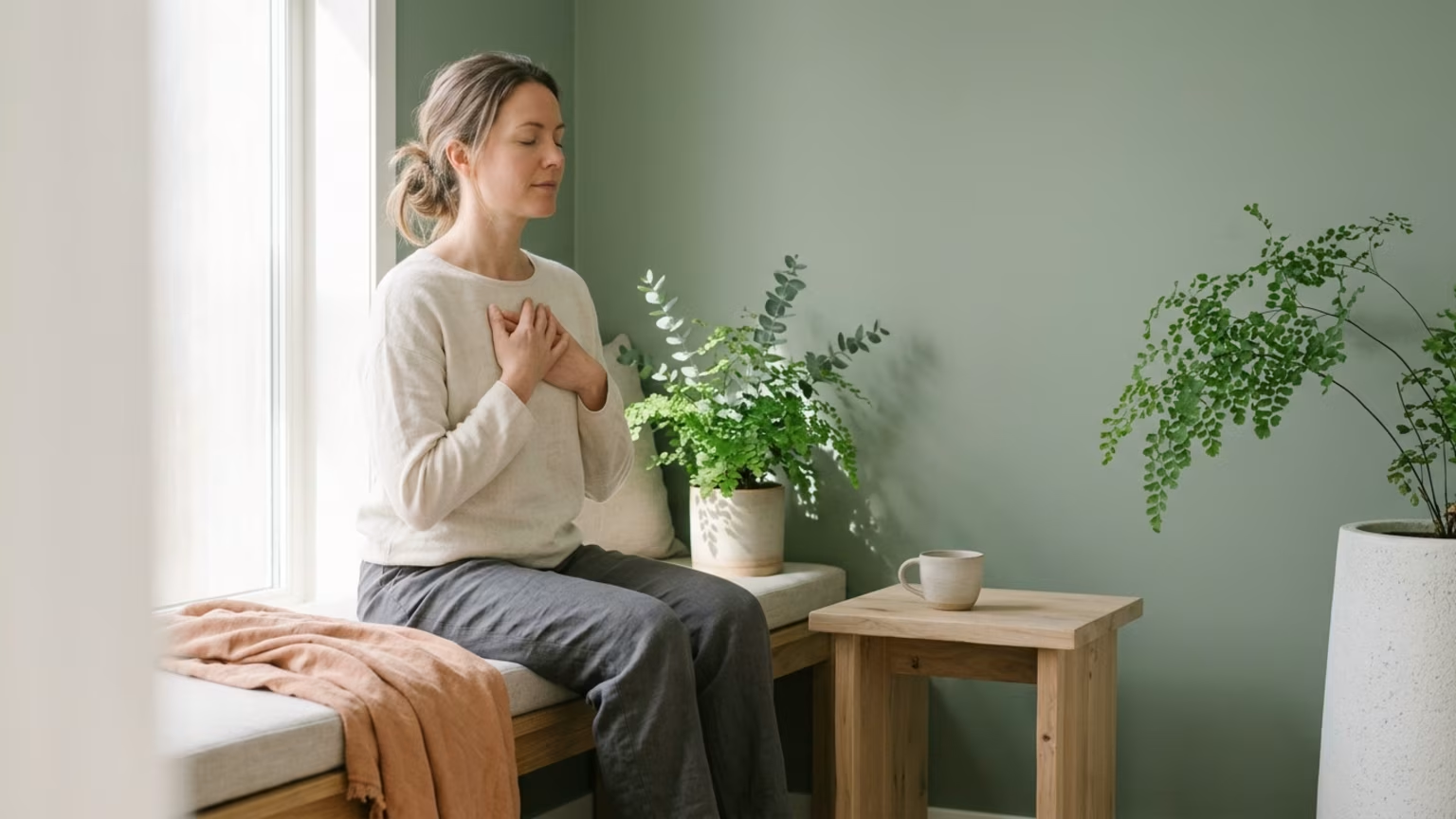
During that quiet pause, you can rely on physical grounding techniques. Clinical methods include placing your feet firmly on the floor or drinking cold water. Making your exhales longer than your inhales signals deep safety to your nervous system.
These small actions remind your body that you are completely safe right now. You do not need to fix the uncertainty in this exact moment. You just need to breathe and let the uncomfortable feeling exist.
Another incredibly helpful tool is scheduled checking. Instead of constantly monitoring an app, set specific windows for activity in the morning and evening. This breaks the checking loop and gives your tired mind a necessary break.
If you feel a desperate need to ask for reassurance, try the notes app buffer. Write your anxious thoughts in a private note instead of sending a text. This provides an emotional release without sabotaging the developing connection.
In our experience, we have found that when people feel numb in dating situations, it often means their system is protecting them. It does not mean they are becoming bitter or permanently closed off. We guide people to take intentional breaks without guilt.
We recognize that numbness may signal tiredness rather than coldness. Returning after rest often brings clearer pattern recognition. Taking time away helps you understand your own needs with much more clarity.
According to a 2026 market research report by Segmentos, 53.3% of singles have officially opted out of digital apps. Many are shifting toward in-person introductions instead. Liesel Sharabi, a researcher at Arizona State University, notes this widespread frustration has fueled a renewed interest in offline events.
This mass exit shows that people are craving something real and tangible. The "Slow Dating" trend has emerged as a beautiful response to this widespread burnout. It encourages fewer but much higher-quality interactions.
When you practice slow dating, you stop treating every match like an emergency. You learn how to find calm when dating terminology feels overwhelming. You give yourself permission to step away from the constant swiping.
Clinical advice suggests treating a slow response time as neutral information about a person's day. It is rarely a definitive metric of their romantic interest level. A slow responder who consistently makes in-person plans is showing genuine effort.
Only 31% of US young adults are actively dating at least once a month. Among women, this figure drops to a mere 26%. Modern romance is simply not the top priority for everyone at all times.
Match Group reported paying users fell roughly 5% to 13.8 million in Q4 2025. Bumble’s paying user base dropped 16% year-over-year during the exact same period. The digital landscape is shifting as people search for deeper meaning.
The financial reality of modern romance only compounds this deep exhaustion. The average date in the US now costs between $189 and $205. This adds massive financial pressure to the already high emotional stakes of dating.
It makes perfect sense why people are choosing to stay home and rest. Spending over two hundred dollars to sit across from a stranger is undeniably stressful. You are allowed to protect your wallet and your peace of mind.
We highly recommend trying a technique called naming the state. By saying "my attachment anxiety is activated," you create psychological distance from the emotion. This helps you observe your feelings without letting them entirely consume you.
Another helpful practice is fact-checking your anxious spiral. Create two mental columns for what you know and what you are assuming. You know they have not replied, but you are assuming they are angry.
Separating facts from fears is a powerful way to anchor your mind. It stops the runaway train of catastrophic thinking before it derails your entire afternoon. You gain back the mental clarity needed to enjoy your own day.
It is perfectly acceptable to delete your dating profiles for a season. You do not owe the digital world your constant availability. Reclaiming your time is a radical act of self-care.
When you return to dating, you can do so with fresh boundaries. You can decide in advance how much energy you are willing to spend on strangers. Setting these limits early prevents the slow creep of dating fatigue.
When you feel anxious, remember that the whole world is adjusting. You are not alone in wanting a softer approach to romance. You can choose to navigate dating with an anxious attachment by prioritizing your own peace.
Learning to trust yourself takes time and immense patience. Every time you pause before double-texting, you are building emotional resilience. You are proving to your brain that you can handle uncertainty.
We highly recommend building a life that feels full and warm. When your evenings are rich with hobbies, a quiet phone feels less threatening. You can learn to stop the cycle of self-doubt in love by rooting deeply into your own life.
Your worth is never tied to how quickly a stranger replies. You are a whole person before they text, and you remain whole afterward. The waiting game loses its power when you stop playing by its rules.
That opening statistic about extreme burnout is not meant to discourage you. It is a mirror reflecting our collective need for a much gentler approach. The silent phone screen on your nightstand does not define your worth.
We have been taught that a successful relationship requires endless emotional labor. The truth is that real love should feel like a safe harbor. It should not require you to constantly earn your right to be there.
Healing from a past heartbreak is never a race to a finish line. True peace comes from deeply trusting yourself through the quiet, uncertain moments. You are allowed to care deeply and still remain perfectly anchored in your own value.

A collective of writers and researchers specializing in behavioral psychology and relationship recovery.


Uncrumb is a calm space for honest relationship advice. Follow us for new guides, small reminders and gentle support when love feels confusing.
Recent research links heavy screen time to anxiety. Learn how to set gentle digital boundaries to protect your peace when online dating leads to heartbreak.
Continue reading
Uncrumb is a calm corner of the internet for women who want kinder love choices. Read the guides that fit your story, take what helps and return whenever you need a bit more clarity.