Dating red flags
Why He Wants Access to Your Phone But Guards His Own
Thursday, July 9, 2026





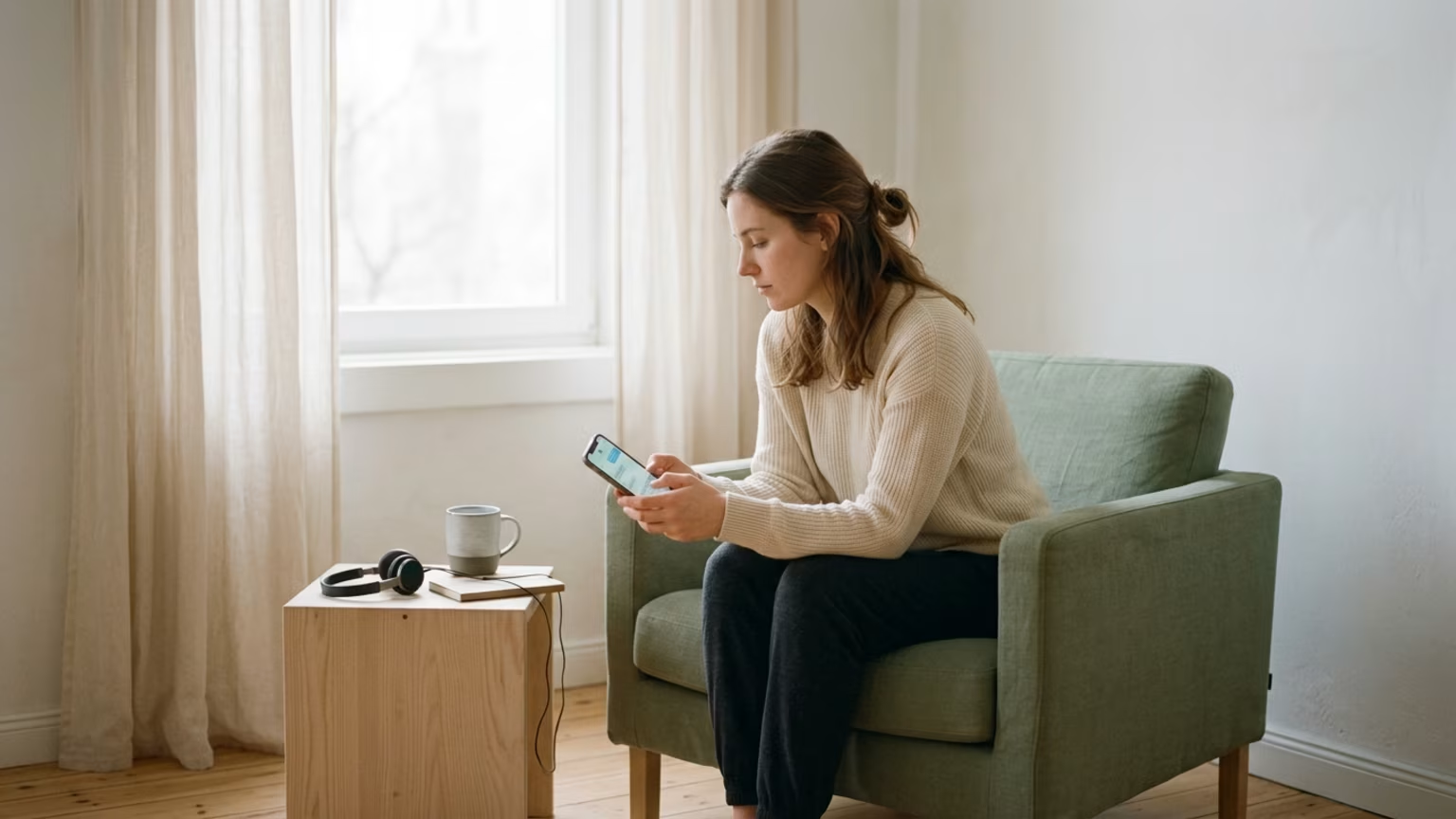
You are sitting on the couch after dinner. His phone buzzes loudly on the coffee table. He flips it face down quickly but then asks who is texting you.
A partner demanding your passcodes and hiding their own creates a deep imbalance. True security in a relationship goes both ways. It is perfectly normal to feel uneasy when the rules apply only to you.
You might be feeling incredibly confused right now. You are likely trying to prove you have nothing to hide. It is exhausting to constantly share your private world and get a blank wall in return.
Many people find themselves over-explaining their innocent text messages. You might feel a knot in your stomach when your phone lights up. You just want him to feel secure and loved.
You might even leave your phone open on purpose. You do this to show him he can trust you. It hurts when he does not offer that same openness back.
Save this gentle reminder for later. Your personal space matters. You do not have to earn trust by giving up your privacy.
This ache happens for a very simple reason. Fairness is a core part of feeling safe with someone else. When a partner wants full access to your life, they are asking for deep vulnerability.
When they refuse to offer that same vulnerability back, your brain senses danger. It makes you feel like you are being monitored instead of trusted. A healthy relationship requires mutual respect.
You are carrying the heavy weight of an uneven standard. The human brain looks for patterns to feel safe in love. A one-sided rule breaks that natural pattern of safety.
It is common to start questioning your own actions. You wonder if you did something to make him doubt you. This is a normal reaction to an unbalanced situation.
If you are wondering if giving him your passcodes proves your trust, you might feel a deep emptiness. True loyalty is built on mutual respect. It is never built on one person surrendering all their privacy.
Clients often tell me they fear asking for basic fairness. They worry it might make them seem crazy or demanding. I used to feel the exact same way.
I would twist myself into knots trying to be the cool and easygoing partner. The truth is that asking for clarity is never too much. The right person will gladly meet your needs.
The day I started stating my needs plainly was a good day. The wrong people naturally filtered themselves out of my life. You can find that same quiet confidence.
Your tiny action for today is to change your phone password. You do not need to make a big announcement about it. Just reclaim a small piece of your personal space for yourself.
This small step sends a signal to your own heart. It tells your nervous system that you are safe. It reminds you that you have control over your own boundaries.
Creating rules that protect your daily peace is a gentle act of self-care. You can take this one tiny step right now. You deserve to feel comfortable in your own life.
Having a conversation about this can feel very scary. You might worry about starting a fight. Having the right words ready can help calm your racing heart.
You can say this: "I feel uncomfortable with the current rule about our phones. I am happy to keep our devices private, or we can both share them. I need us to have the same standard."
If he asks why you changed your password, you can stay very calm. You can say: "I realized I need a little more personal space. I love you, and I need our privacy rules to be equal."
Keep your voice soft and steady. You are simply stating a fact about your own comfort. You are not accusing him of anything bad.
The way he responds to this gentle boundary will tell you a lot. A loving partner will listen to your feelings. They will want to find a solution that feels fair to both of you.
Your need for privacy does not mean you are doing something wrong. Every person needs a small place that belongs only to them. Your phone is a digital diary of your life.
You deserve a relationship where trust is a shared bridge. You do not have to prove your worth by living under a microscope. Trust is something you build together over time.
When you feel that tight feeling in your chest, listen to it. Your body knows when a situation is out of balance. Honor that gentle inner voice today.
Feeling some heartbreak is normal when facing these truths. We often wish the situation was different. A little heartbreak is just a sign that you care deeply about love.
Remind yourself that you are worthy of equal respect. Repeat this truth when you feel anxious. Let it settle into your mind like a warm cup of tea.
Sometimes a one-sided rule points to a larger problem. It might be time to step back if he gets very angry. Anger is not a healthy response to a calm boundary.
Another sign is if he accuses you of hiding things. He might do this to distract from his own secret behavior. This turns the conversation away from fairness and onto your defense.
You might be wondering if his hidden screen is a bad sign for your future. If you feel constantly on edge in your own home, listen to that feeling. Your daily peace is far too precious to lose.
Love should feel like a safe harbor. It should not feel like an endless test you have to pass. You have permission to walk away from any situation that drains your spirit.
Stepping away takes a lot of courage. It is okay to take your time to make a decision. Just remember that you are allowed to choose your own well-being first.
Many couples do share passwords for convenience. They might use each other's phones to change music or check directions. The key difference is that the sharing is entirely mutual.
Neither person feels forced to hand over their access. It happens naturally out of trust and shared life logistics. It is never used as a tool to check up on someone.
You can have a very healthy relationship without ever sharing a password. Normal is whatever makes both people feel safe and respected. Mutual agreement is the most important part of any rule.
The first step is to recognize how this behavior makes you feel. It is perfectly okay to feel smothered by constant monitoring. You can put a password on your phone to protect your peace.
Have a calm conversation about why you need personal space. A partner who respects you will understand this need. If the checking continues, it might indicate a deeper lack of trust.
You are not responsible for fixing his internal insecurities. Your only job is to be honest and loving. You cannot cure his doubt by completely erasing your own privacy.
Trust is built through consistent and honest actions over time. It grows when you both show up for each other daily. You build it by keeping your promises and communicating openly.
You do not need to read private texts to know someone is loyal. Shared experiences and emotional support create real security. Devices can remain private, and your emotional connection can stay wide open.
Focus on spending quality time together without screens. Have deep conversations about your hopes and fears. True intimacy happens face to face.
You likely feel guilty from a deep desire to please your partner. We often confuse giving up our privacy with showing our love. Society sometimes tells women to be totally accommodating.
Wanting privacy is a basic human need. It does not mean you have a secret to hide. You can love someone deeply and still keep a password on your phone.
Let go of the idea that love means having no boundaries. Healthy boundaries actually make relationships much stronger. They allow both people to breathe and grow as individuals.
He might feel suspicious at first when you change your habits. That temporary suspicion is not your responsibility to manage. Your only job is to communicate your needs clearly and kindly.
You are simply balancing the scales of the relationship. If he requires an open phone to trust you, the foundation is shaky. Real security comes from the heart and not a screen.
Stay firm in your gentle boundaries. Over time, he will either adjust to the new normal or reveal his inability to compromise. Both outcomes will give you clarity for your future.
You deserve to feel completely secure in your own relationship. Your need for personal space is valid and deeply human. Keep listening to that quiet inner voice that knows your true worth.

A collective of writers and researchers specializing in behavioral psychology and relationship recovery.


Uncrumb is a calm space for honest relationship advice. Follow us for new guides, small reminders and gentle support when love feels confusing.
Mental-health expert Prakriti Saxena Poddar warns that repeatedly using AI chatbots for relationship reassurance reinforces anxiety and weakens self-trust.
Continue reading
Uncrumb is a calm corner of the internet for women who want kinder love choices. Read the guides that fit your story, take what helps and return whenever you need a bit more clarity.