Attachment and psychology
How can I enter the new year with a calmer attachment style?
Tuesday, December 30, 2025





You may be looking at the new year and thinking, "I do not want to feel this anxious in love again." You might wonder, How can I enter the new year with a calmer attachment style? You may feel tired of the same patterns, the same panic, the same doubts.
You do not have to change your whole life at once. A calmer attachment style grows from many small, kind choices. You can start this year by slowing down, learning your triggers, and treating yourself with more care.
The simple answer is this. You enter the new year with a calmer attachment style by understanding what is happening inside you, learning to soothe yourself, and choosing safer people and safer habits. This takes time, but it does not have to be harsh or extreme.
Right now, you might feel like relationships are never simple. Even in calm moments, you wait for something to go wrong. A delayed text, a short reply, a change in tone. Your body reacts before your mind can think.
You might refresh your messages again and again. You might read old chats to see if you missed a sign. Your mind runs with thoughts like, "Did I say something wrong?" or "Is he pulling away?" Even when there is no real proof, your fear feels real and sharp.
Or you might feel the opposite. When someone likes you, you feel trapped or pressured. You pull back, cancel plans, or say you are busy. You might think, "If I get too close, I will get hurt," so you leave first or never fully show up.
In both cases, your nervous system does not feel safe in love. Your body reacts as if every small change is a threat. You can feel clingy one day and cold the next. You may judge yourself for this and think, "Why am I like this?"
As the year ends, these thoughts can feel even louder. Holidays, social media posts, and talk about goals can make you feel behind in love. You may feel pressure to "fix" your attachment style before the new year starts, which can make you even more stressed.
Your attachment style did not appear out of nowhere. It often began in childhood, with how safe and seen you felt with your caregivers. This is not about blaming them or you. It is about understanding the story your body still carries.
If care was inconsistent, you may have learned to stay on high alert. Maybe a parent was warm one day and distant the next. Maybe you never knew if your needs would be met. Your nervous system learned, "I must watch closely. I must not relax."
As an adult, this can show up as anxious attachment. You might feel a strong fear of being left, even when things are okay. You might need a lot of reassurance. You might react strongly to small changes because, in your body, they do not feel small.
If closeness brought criticism, control, or rejection, you may have learned to protect yourself by pulling away. You may have felt safer keeping your feelings to yourself. You may have learned that needing someone is risky.
As an adult, this can show up as avoidant or fearful attachment. You may feel overwhelmed by intimacy but lonely when you are alone. You might send mixed signals, or feel calm only when there is distance.
Insecure attachment is not a character flaw. It is your brain and body trying to keep you safe based on old experiences. They look for danger even when you are not in danger anymore. They misread neutral things as threats.
This can sound like, "He took longer to reply, so he must not care," or "She did not say goodnight, so something is wrong," or "If I depend on someone, they will hurt me." These thoughts feel true because they are tied to very old pain.
When you ask, "How can I enter the new year with a calmer attachment style?" you are really asking, "How can I help my brain and body feel safer in love now, even if they did not feel safe before?" That is a kind and brave question.
Living with an anxious, avoidant, or mixed attachment style can touch almost every part of your life. It is not just about romance. It affects how you see yourself, how you handle conflict, and how you make choices.
On the inside, you might feel unlovable or "too much." You may think, "If I were easier, he would stay," or "If I were less needy, this would work." Or you might think, "I do not need anyone," while feeling a quiet ache for closeness.
Your mood may swing with your relationships. A sweet message can lift your whole day. A small misunderstanding can ruin your week. It can be hard to focus at work or rest at night because your mind is busy scanning for relationship problems.
This can also affect the people you choose. You might feel drawn to partners who are hot and cold, because that pattern feels oddly familiar. Or you might choose people who are emotionally distant, then blame yourself when you feel lonely with them.
In conflict, your reaction may feel bigger than the moment. You may cry, panic, shut down, or lash out. Afterward, you might feel confused or ashamed and think, "Why did I react like that?" You might promise yourself you will stay calm next time, and then find it hard to do so.
Over time, this can make you feel hopeless about love. You may fear you are "stuck" like this. You might worry the new year will just repeat the old one. That fear itself can keep your nervous system on edge.
The good news is that attachment is not fixed. You can move toward a calmer, more secure style over time. You do not have to become a different person. You only need to learn new ways to understand and care for yourself.
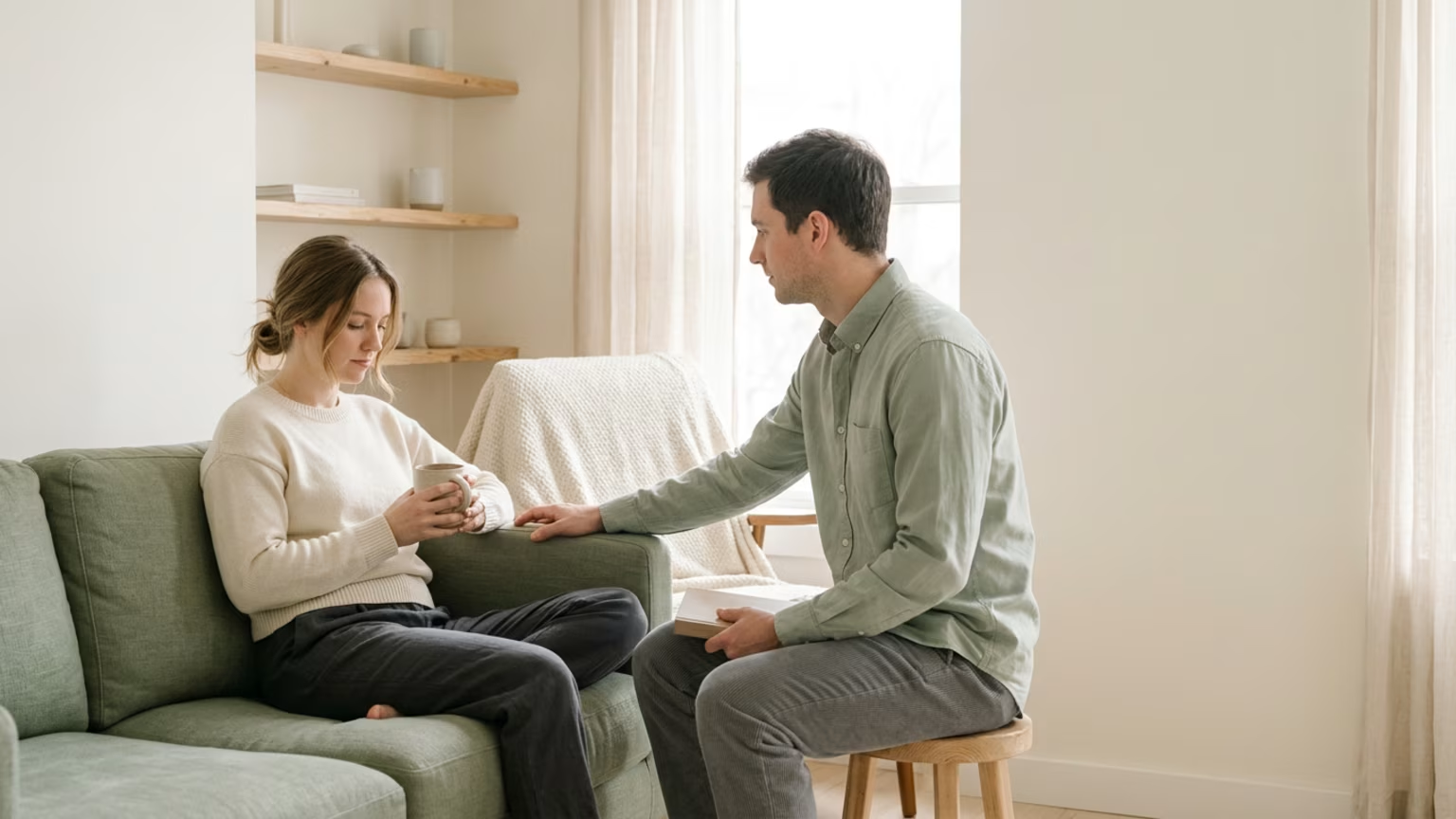
Before anything can change, you need to see what is happening with kindness. Not with blame.
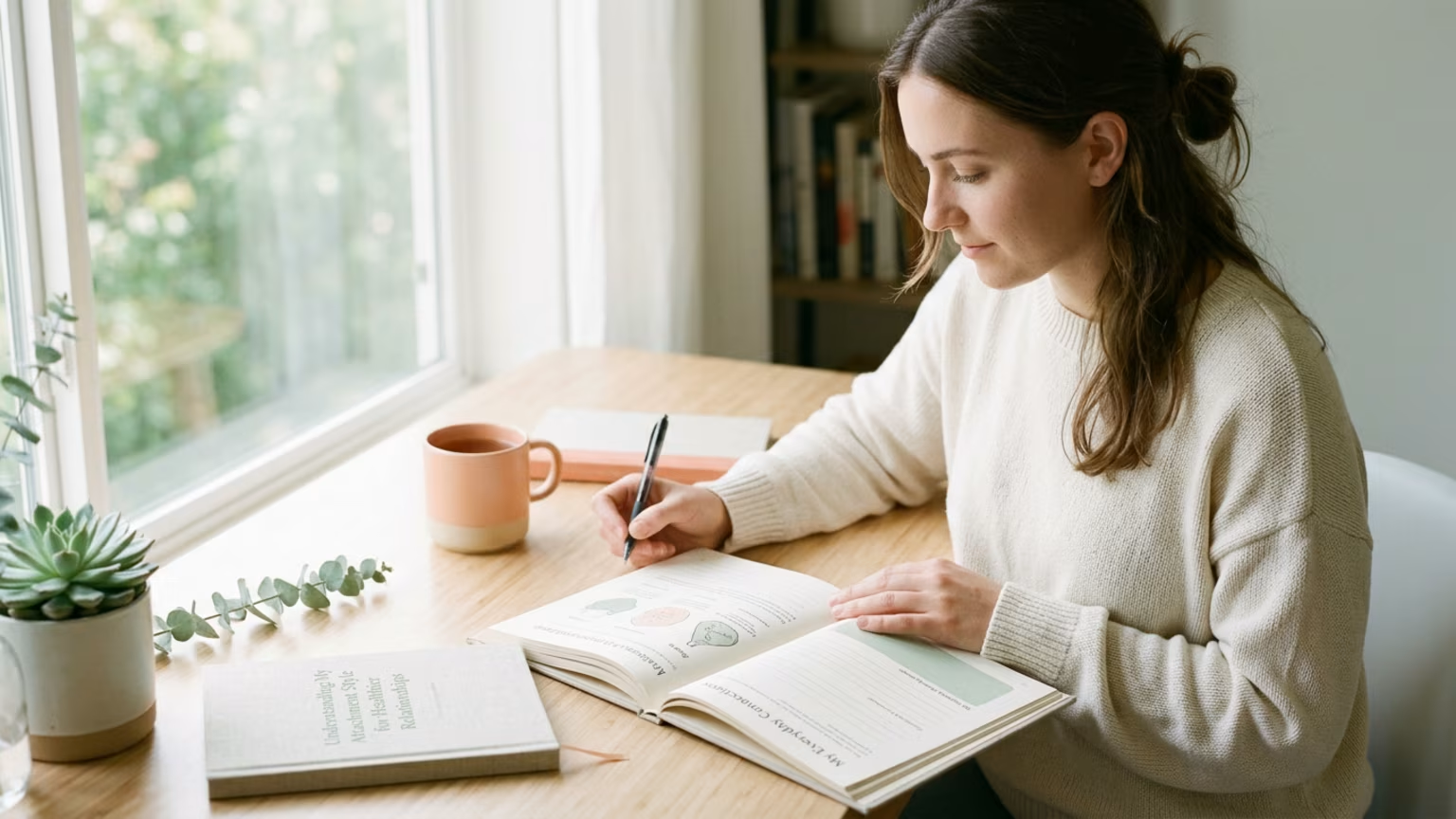
You can write these moments down in a small journal. Not as a report card. Just as a gentle record. Over time, you will start to see patterns.
Often, your reaction is bigger than the current moment because it is touching something old. When you feel strong fear, ask, "Who or what from my past does this feel like?"
Maybe waiting for a text feels like waiting for a parent who came home late and angry. Maybe a distracted partner feels like being ignored as a child. Seeing this link does not erase the pain, but it helps your adult self say, "This is an old fear, meeting a current moment."
You might not have learned how to calm your feelings as a child. You can learn now, in simple ways.
The goal is not to erase the feeling. It is to show your body that you are here with it. That someone is caring for you now.
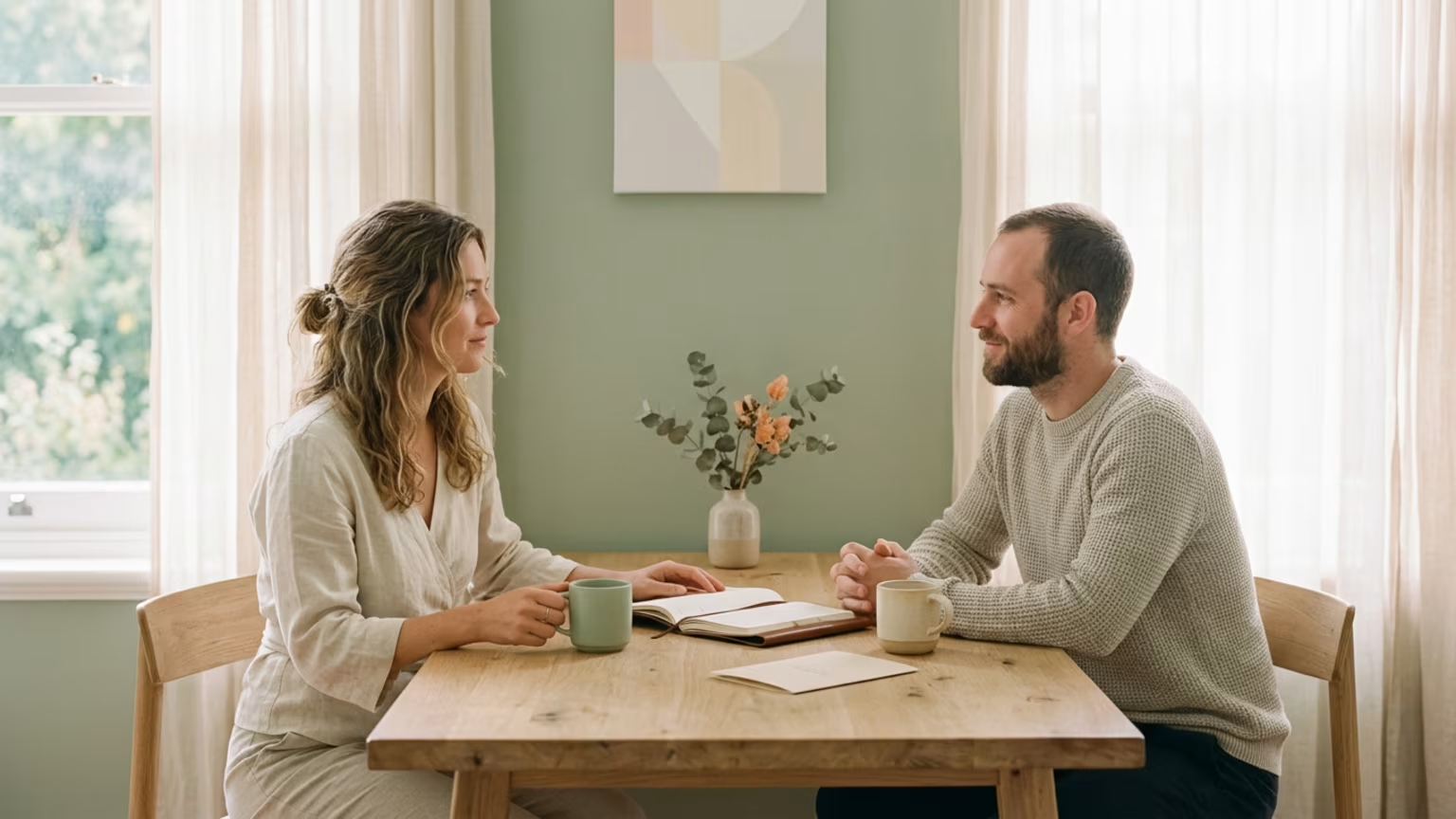
Many women with insecure attachment either hide their needs or express them in ways that feel indirect or intense. A calmer attachment style grows when you can say what you need in a simple way.
Instead of testing your partner or waiting for them to guess, you can try phrases like:
This may feel scary at first. You might fear rejection. But clear, calm requests help you see if someone is able and willing to meet you halfway. That is important information.
A calmer attachment style is not just about staying in connection. It is also about protecting your space and energy.
Boundaries might look like:
Boundaries are not punishments. They are ways you show yourself respect. They tell your nervous system, "I am not helpless. I can make choices that keep me safe."
If you often feel like you need too much attention, you might like the gentle guide I feel like I need too much attention sometimes. It can help you see your needs with more kindness.
Mindfulness does not have to be a long meditation. It can be tiny pockets of presence in your day.
These tiny practices help your brain learn that feelings can come and go. They are not emergencies you must fix right away.
If your attachment wounds feel very deep, you do not have to face them alone. A kind therapist can help you explore how your early life shaped your patterns now. Together, you can practice new ways of relating.
Therapy is not about blaming your parents or partners. It is about giving your nervous system new experiences of safety, understanding, and care. Over time, this can lead to something called "earned secure attachment." This means you grow more secure, even if you did not start out that way.
Working on your attachment style is powerful. But your environment also matters. Your nervous system will struggle to feel calm with someone who is very unpredictable, cruel, or often unavailable.
As you enter the new year, you might ask, "Who do I feel safer with? Who listens when I share? Who respects my needs, even if they cannot meet all of them?" These are signs of people who can support your healing.
If you are unsure how to tell if someone is serious about you, you might like the gentle guide How to know if he is serious about us. It can help you see patterns more clearly.
It is okay if you do not feel "secure" right away. Attachment healing is not a quick switch. It is more like slowly teaching your body and mind that the present is safer than the past.
So as you think about how to enter the new year with a calmer attachment style, you might let go of the idea of a perfect makeover. Instead, you can choose one or two gentle practices to carry with you.
For example, you might decide:
Small, repeated actions change your nervous system more than big, intense promises you cannot keep. Your system needs consistency, not perfection.
Healing also includes making room for setbacks. There will be days when you feel very triggered, when old patterns come back. These days do not erase your progress. They are chances to practice self compassion instead of self blame.
Over time, you may notice that you do not panic as quickly. You wait a bit longer before assuming the worst. You feel slightly more solid inside, even when someone else is distant. That is what a calmer attachment style feels like from the inside.
You are not broken for having an insecure attachment style. You learned to cope with the love you had. Now you are learning new ways. That is something to respect, not to judge.
As you step into the new year, you do not need to become the most relaxed person in every relationship. You only need to become a bit kinder to the part of you that is afraid. That part is not "too much." It is asking for safety.
You are not alone in this. Many women feel the same panic over texts, the same fear of being left, the same urge to protect themselves by leaving first. You are walking this path with many others, even if you cannot see them.
For now, you might choose one very small step. Maybe you write down what you feel after reading this. Maybe you take three slow breaths and place a hand on your chest. Maybe you decide that this year, you will not call yourself "crazy" for having needs.
This is how you enter the new year with a calmer attachment style. One gentle step, one honest look at your patterns, one kind choice for yourself at a time. That is enough.

A collective of writers and researchers specializing in behavioral psychology and relationship recovery.


Uncrumb is a calm space for honest relationship advice. Follow us for new guides, small reminders and gentle support when love feels confusing.
Modern dating feels exhausting. Learn how to navigate dating fatigue and reclaim your peace with gentle boundaries and intentional connection.
Continue reading
Uncrumb is a calm corner of the internet for women who want kinder love choices. Read the guides that fit your story, take what helps and return whenever you need a bit more clarity.