Attachment and psychology
How to stop being so distant with people
Wednesday, December 17, 2025
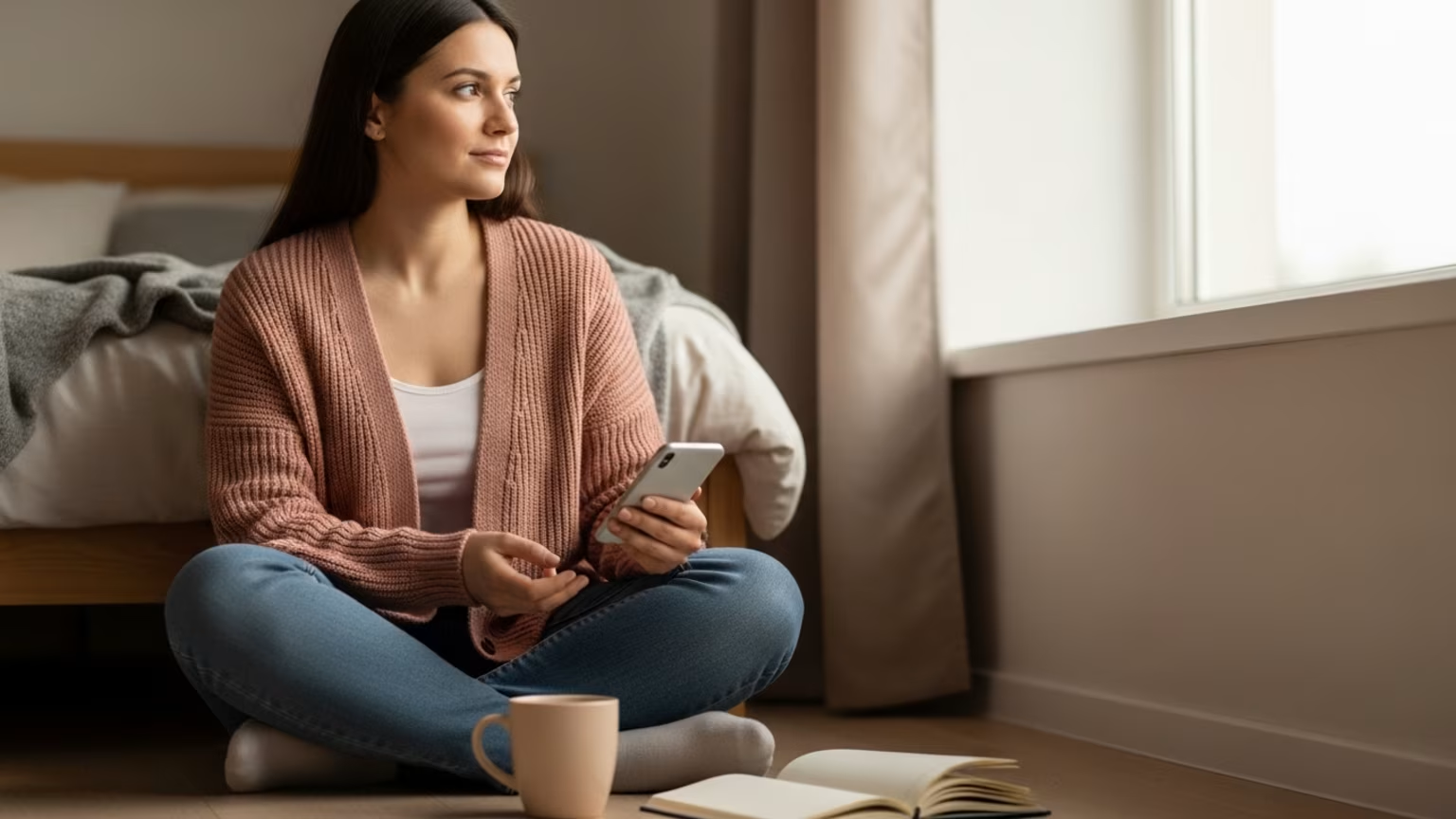





When you are distant with people, it can feel confusing and lonely. You may want closeness, but your body and mind pull you away. You might ask yourself how to stop being so distant with people, and feel scared that something is wrong with you.
The truth is, you learned to be distant for good reasons. Your mind has been trying to protect you. You are not broken. You can gently learn new ways to be with people, step by step.
This guide will help you understand why you feel distant, and how to stop being so distant with people in a way that feels safe. You will not change overnight. But small, kind steps can slowly build more trust, more ease, and more closeness.
Being distant does not always look the same from the outside. From the inside, though, it often has a similar feeling. It can feel like you are watching life and relationships from behind a glass wall.
You might notice things like this in your day to day life:
On the outside, people might say you seem cold, hard to read, or not interested. On the inside, it can feel very different. You might feel scared, ashamed, or overwhelmed.
Some common thoughts are:
You might feel torn. One part of you wants to text back, open up, and let people in. Another part wants to hide, stay busy, or disappear. That inner conflict is painful. It can make you feel lonely, even when you are not alone.
There are many reasons you might feel or act distant. None of them mean you are a bad person. Most of them are about safety. Your mind and body are trying to protect you from hurt they expect will come.
From early in life, you learned what to expect from people who cared for you. Some people grew up with caregivers who were mostly warm and reliable. They usually feel safer with closeness as adults.
Others grew up with caregivers who were distracted, critical, unpredictable, or unsafe. If this was you, your mind might have learned that closeness is risky or draining. You may have developed what is called an avoidant or fearful attachment style.
With this style, distance can feel safer than closeness. Getting close might trigger thoughts like, “They will leave,” “I will get hurt,” or “They will need too much from me.” So you pull away before that can happen.
If you have been rejected, cheated on, ghosted, or abandoned, your nervous system remembers that pain. Even when a new person seems kind, part of you may be braced for it to happen again.
You might think, “If I do not get too close, it will not hurt as much if they go.” So you stay at a safe emotional distance. This is your mind trying to reduce possible pain in the future.
Shame often hides under distance. You might secretly feel “too much” or “not enough.” You may think you are boring, needy, awkward, or hard to love.
When you believe this, it can feel kinder to others to hold back, or safer for you to not be fully seen. You might think, “If they get to know me, they will see how bad I am.” Distance becomes a way to hide parts of yourself you feel ashamed of.
Sometimes people are distant because they feel numb. You may not feel much at all. Things that “should” feel exciting or romantic feel flat or confusing.
Numbness is often a sign that your nervous system has been overwhelmed. When you go through too much stress, criticism, or trauma, your body may protect you by turning down your feelings. In that state, intimacy can feel strange or unsafe. It can be hard to connect when you cannot even feel your own emotions clearly.
If you grew up around chaos, lies, or broken promises, you might be very alert for danger in relationships. You may scan every word and gesture, always asking, “Is this safe? Are they going to hurt me?”
Being on guard like this is exhausting. To cope, you might pull away, avoid deep talks, or keep relationships light. It may feel easier to stay in control than to risk being let down again.
Sometimes distance is not about childhood or deep trauma. It can also be about simple overload. If your life is full of work, caretaking, or stress, you might have very little emotional energy left.
When you are tired, anxious, or burned out, relationships can feel like one more demand. Your body may move into a mild shutdown state. You might look distant because you are just trying to survive each day.
Being distant is a coping pattern. It has helped you in some ways. Maybe it kept you safe in hard times. Maybe it stopped you from staying in harmful relationships. It makes sense.
At the same time, this pattern can bring pain.
When relationships feel hard, you might start to believe there is something wrong with you. You may compare yourself to friends who seem open and relaxed in love.
You might think:
These thoughts hurt your self esteem. They can make you even more likely to pull away. You may start to think distance is your “true nature,” instead of seeing it as a learned pattern you can gently change.
Distance can shape your dating choices. You might choose partners who are also distant, emotionally unavailable, or not serious about you. This can feel safer, because they will not expect too much.
Or you may date people who want a lot of closeness very fast. At first, their intense attention feels good. Soon, though, it may feel smothering. You might shut down or end things suddenly. Then you wonder if you were “too harsh” or “too picky.”
You might also find it hard to tell if someone is serious about you, because you are not used to steady, calm closeness. You may feel confused about what healthy love should feel like. There is a gentle guide on this feeling called How to know if he is serious about us.
Distance does not only show up in romance. You might notice it with friends and family too.
Maybe you listen to others but rarely share your own struggles. People may think you are strong and fine, while inside you feel unseen. You might avoid asking for help. You may wait until you are at a breaking point before you reach out.
Over time, people might stop inviting you or sharing deeply with you, because they sense a wall. You may then feel even more alone, and take this as proof that you do not belong, when really it is the pattern of distance playing out.
Distance can bring short-term relief. You feel safer when you cancel plans or avoid a hard talk. But long term, it often increases loneliness, anxiety, and sadness.
You might feel stuck between two kinds of pain. On one side is the fear of closeness. On the other side is the ache of isolation. Living in that gap can be draining. You may feel tired, unmotivated, or hopeless at times.
If your distance is linked to past trauma, you may also notice panic, flashbacks, or strong emotional swings. In those cases, working with a therapist can be very helpful and is an act of care for yourself, not a sign of failure.
Learning how to stop being so distant with people is not about forcing yourself to be “open” all at once. It is about small, respectful steps that build safety in your body and in your relationships.
Instead of saying, “I am a cold person,” try noticing specific moments. For example:
When you notice, add a kind sentence like, “I am protecting myself,” or “This is my old pattern trying to keep me safe.” This helps your brain see the distance as a habit, not your identity.
When you feel yourself pulling away, pause if you can. Take a slow breath out. Then gently ask inside, “What am I afraid will happen if I stay close right now?”
Common answers might be:
Just naming the fear is powerful. It takes some of the confusion out of the moment. You might then share a softer version of this fear with someone you trust, when you feel ready.
You do not need to pour your whole heart out. You can practice sharing one short, honest sentence. For example:
This kind of sentence can reduce misunderstandings. It lets people know what is happening, without you needing to share every detail.
To gently train your brain that it is safe to share, you can add a tiny daily habit. Choose one person you trust. Once a day, share one feeling and one simple need. For example:
This takes less than a minute but slowly builds your comfort with naming your inner world. Over time, it will feel more natural to stay present instead of pulling away.
It is very hard to stay open when your nervous system feels under threat. Before a serious talk or a date that makes you anxious, try a small grounding practice:
These simple actions tell your body, “I am safe right now.” When your body feels safer, it is easier to stay emotionally present instead of going distant.
If you tend to shut down in conflict, it can help to plan for it with a partner or close friend. You might say:
Having a shared plan means your need for space does not have to feel like abandonment. It becomes a bridge instead of a wall. You are still allowed to take space, but there is also a clear way back to connection.
You will not always get this right. You will have days when you pull away and then regret it. That does not mean you are failing. It means you are human and learning.
When this happens, try talking to yourself like you would to a friend:
Then, if it feels possible, repair in a small way. You might send a simple message like, “I went quiet yesterday. I am sorry. I care about you and I am working on staying more present.”
If you notice that your distance is linked to deep pain, trauma, or very low mood, therapy can be a kind place to explore this. Attachment-informed therapy, trauma-informed therapy, or CBT that focuses on relationships can help you understand your patterns and build new ones.
A therapist can move at your pace. You do not need to share everything at once. The work is not to fix you, but to help you feel safer with yourself and others. If you are curious about attachment and whether it can change, you might like the guide Is it possible to change my attachment style.
Healing from distance is not a straight line. Some days you will feel braver and more open. Other days you will feel shut down again. This is normal.
Over time, with gentle practice, you may notice changes like:
Your self talk also becomes softer. Instead of, “I am a cold person,” it may become, “I withdraw when I am scared, and I am learning to stay.” This shift in how you see yourself is a deep part of healing.
Your relationships can start to feel steadier. You may have clearer agreements about space and closeness. You and your partner or friends might have small scripts you use when distance shows up, like, “I notice I am shutting down. Can we slow this down?”
Your body may react less strongly over time. Conflicts and serious talks will still be uncomfortable, but they might not feel like life-or-death events. You will feel more able to self soothe and to ask for reassurance when you need it.
If you have been distant with people, it is very likely that you had to be. At some point, pulling away kept you safe, or less alone, or less overwhelmed. That part of you was doing its best.
You are allowed to thank that part and also choose something new. You can learn how to stop being so distant with people without pushing yourself into unsafe situations. You can move at your own pace.
You are not too cold, too much, or too late. You are a person who learned to survive. Now you are learning how to connect. That is brave.
Today, you do not need to change everything. Maybe your one small step is to send a short message to someone you trust. Maybe it is to write down the sentence, “I withdraw when I am scared,” and place it where you can see it. Maybe it is to take one slow breath before you decide to cancel.
Whatever you choose, let it be small and kind. Let it be enough for today. You are allowed to take this slowly, and you do not have to do it alone.

A collective of writers and researchers specializing in behavioral psychology and relationship recovery.


Uncrumb is a calm space for honest relationship advice. Follow us for new guides, small reminders and gentle support when love feels confusing.
Learn how turning inward and reducing rumination after a loss helps you build stronger relationship boundaries, heal your heart, and reclaim your self-worth.
Continue reading
Uncrumb is a calm corner of the internet for women who want kinder love choices. Read the guides that fit your story, take what helps and return whenever you need a bit more clarity.