Modern dating
I feel behind because everyone my age seems coupled up
Friday, January 9, 2026





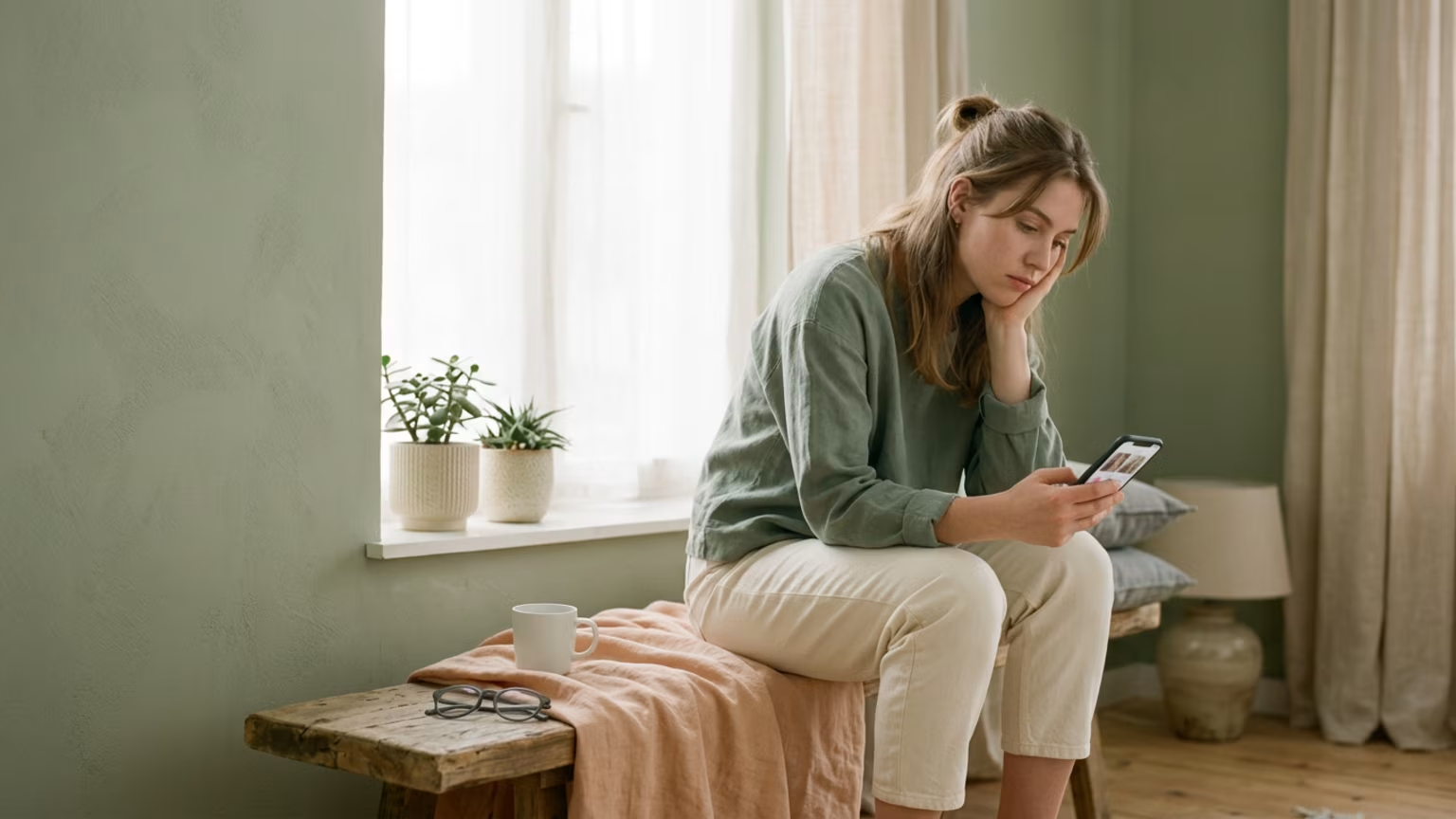
Your chest might feel tight when you scroll and see another engagement post. The thought is quiet but sharp: "I feel behind because everyone my age seems coupled up." This is common in modern dating, and it can hurt every single day.
The real question under this is simple and heavy at the same time. "I feel behind because everyone my age seems coupled up" and I wonder if something is wrong with me. We will work through why it feels this way and what you can do, gently, without rushing yourself or your life.
You deserve a calm, kind answer that you can use right now. This guide will help you understand what this feeling means, how to soften the pressure, and how to build a life that feels meaningful, with or without a partner.
Answer: It depends, but feeling behind is usually about pressure, not truth.
Best next step: Name your main feeling in one sentence and write it down.
Why: Naming feelings brings relief and shows what you actually need.
This feeling often shows up in small, ordinary moments. A friend posts a wedding photo, and your stomach drops. You walk into a party, and couples pair off on the couch while you ask yourself where to sit.
Maybe weekends feel long. You go home after work, make dinner, open your phone, and there it is again. Pregnancy announcements. Anniversary trips. House keys. You start to think, "Everyone is building a life, and mine has not even started."
There can also be a quiet shame that is hard to say out loud. Thoughts like, "I must have done something wrong," or "If I were more attractive, more easy-going, less intense, I would be chosen by now." It can feel like a private report card that only you can see and you believe you are failing it.
This feeling can change how you show up with friends. You may feel happy for them and also notice a lump in your throat on the way home. You might avoid certain gatherings because being the only single one feels like standing under a bright light.
For some women, this brings up fear about the future. Questions about marriage, kids, and health timelines can press on your chest late at night. It may feel like there is a closing window over your head, and every birthday makes the sound louder.
It also affects how you date. Anxiety can show up as overthinking every text, replaying dates, or staying in draining situations just so you are not "back at zero." You may think, "If I let this go, I will be alone again, and I do not have time for that."
Feeling behind when others are coupled is not a personal flaw. It grows from a mix of brain habits, cultural messages, and the current dating world.
The human brain is wired to compare. It looks around and asks, "Where do I sit in this group?" When your friends partner up, your brain measures your life against theirs. It might say, "They are ahead, I am behind," even if your actual values are different.
Social media makes this stronger. You do not just hear about big moments. You see proposal videos, wedding photos, baby showers, and couple trips over and over. It becomes easy to think that being in a relationship by a certain age is the basic standard, and you are missing it.
Many of us were given a quiet script about life. Something like: study in your early twenties, build a career, meet someone, move in, marry, have kids, buy a home. Even if no one said this clearly, it can feel like the "normal" path.
When life does not follow this order, the gap between the script and reality can create deep anxiety. You may have a strong career, good friends, and your own place, yet still feel like you are "off track" because there is no partner in the picture yet.
For women, there can also be extra pressure around age and fertility. Messages about "biological clocks" or "settling down before it is too late" can make every year feel like a countdown clock, even when your actual health and options are still wide.
Many women who have never married report higher levels of anxiety and loneliness. This does not mean anything is wrong with you. It means that being single in a couple-focused culture is stressful and often isolating.
Dating anxiety can make you feel tense about what to say, what to wear, and how to act on dates. You might avoid going out, delay replying, or shut down when something feels uncertain. Then, when nothing changes, it feels like proof that you are stuck, which adds more anxiety.
Dating apps can give access to many people, but they also create new kinds of pain. Swiping can start to feel like a second job. Ghosting, which means someone stops replying with no explanation, can trigger deep rejection and confusion.
Daily or heavy app use has been linked to more stress and sad feelings for many singles. Offline dating, like meeting people through shared activities, often feels kinder on mental health. Not dating at all for a time is sometimes better than dating from a place of fear and burnout.
As you move through your late twenties, thirties, or forties, more people your age are in long-term relationships or marriages. The visible group of single people around you gets smaller. It can feel like "everyone decent is taken" or "there is no one left for me."
Part of this is real numbers. The pool is different from when you were 20. But part of it is also fear and story. Many people start or rebuild loving relationships later than they expected. Others find different forms of family and connection that do not follow the usual order.
It is easy to treat your relationship status like a verdict on your worth. But being single is not a sign that you are broken. It is a snapshot of timing, chance, location, values, and choices, all mixed together.
There are countless reasons you might be single at this stage. Some are about your standards, your healing, or the city you live in. Some are about past partners who were not ready or able to meet you where you are. None of these erase your worth.
This part is about small, kind experiments, not big life overhauls. Take what fits. Leave what does not. Move slowly.
When you give your feelings words, they become easier to hold. They stop being a vague cloud and become something you can respond to with care.
A small rule you can repeat is: "If it hurts every day, I am allowed to mute it."
When you focus on values instead of milestones, you shift from "What box have I not checked?" to "How can I live fully now?" This does not erase the wish for partnership. It puts that wish inside a wider, richer picture of your life.
A simple rule to hold is: "If dating drains me for 3 weeks straight, I step back."
Notice the harsh thoughts that show up around your single status. Thoughts like, "No one will want me now," or "I ruined my chances," may feel true when they are just fear speaking.
Being single does not have to mean being alone. You can weave a life that holds support, joy, and meaning right now, even while you still hope for partnership.
Strong social support and basic self-care act like a cushion under you. They do not replace a partner, but they keep you from feeling like you are falling.
Comments from family or friends can sting, even if they are meant with love. Questions like "So when is it your turn?" can hit a very tender place.
If this pain feels heavy and constant, support can help. Anxiety and loneliness often ease when you have a steady place to explore them.
If you want more around how your patterns in love can change, you might like the guide Is it possible to change my attachment style.
Over time, healing in this area does not mean you never feel a sting when you see another couple photo. It means that sting does not direct your whole life anymore.
The urgency can soften. Instead of "I must find someone now or it is over," the feeling becomes more like, "I want love, and I am allowed to move in ways that feel kind to me." Your worth starts to feel less tied to your relationship status and more tied to how you treat yourself and others.
You may also start dating, or pausing dating, more on purpose. You choose slightly fewer but more meaningful dates. You speak up about your needs sooner. Or you take a break from apps without telling yourself you have "given up." Life becomes something you are in, not something that starts only when you are coupled.
Moments of joy and peace can show up inside this season too. A quiet coffee alone that actually feels nice. A night laughing with friends. A new skill. None of these cancel your wish for a partner. They just mean you are letting life touch you while you wait and while you choose.
Over time, comparison may still appear, but it has less power. You see other people’s news and think, "That is their path" instead of "That proves I am failing." Your story starts to feel more like your own.
No. Being single is not proof that anything is wrong with you. It reflects timing, chance, location, values, and how you and potential partners have shown up so far. If this fear is strong, one useful step is to ask a trusted friend or therapist, "What do you see in me that is lovable?" and write down their words.
In some ways, yes, because more people your age are already partnered, so the visible pool of single people is smaller. But many women form strong, lasting relationships after 30, 35, or 40. What tends to help is being clear on your values, keeping standards rooted in respect and safety, and choosing dating habits that protect your energy instead of draining it.
There is a difference between standards and preferences. Standards are basic needs like kindness, respect, honesty, and shared commitment. Preferences are extras like height, certain hobbies, or a specific career. Do not lower your standards for safety and respect, but it can help to soften rigid preferences that may block good matches.
Being in a relationship that does not feel good can hurt more than being single. Many women in unhappy partnerships feel lonely even while coupled. A simple rule is: "If a relationship costs my peace every day, it is too expensive." Choose relationships where you can breathe, not just ones that fill a box.
Jealousy is a signal of a deep wish, not a sign that you are a bad friend. You can try two things at once. First, validate your wish for partnership and care for the ache with journaling, therapy, or talking to someone safe. Second, practice being glad for your friends, perhaps by sending a kind message, while also letting yourself pull back a little when you feel too raw.
If you notice jealousy tied to being treated badly or ignored in early dating, you might like the gentle guide I worry about getting ghosted again.
Open your notes app and write one sentence that begins with "Right now, I feel…" Then add one more sentence that begins with "One small way I can care for myself today is…" Keep it simple and do that one caring thing within the next 24 hours.
This feeling of being behind can be very tender, especially in a world that celebrates couples loudly. Give yourself space for this, and let your life matter today, not only when someone joins you in it.

A collective of writers and researchers specializing in behavioral psychology and relationship recovery.


Uncrumb is a calm space for honest relationship advice. Follow us for new guides, small reminders and gentle support when love feels confusing.
Modern dating feels exhausting. Learn how to navigate dating fatigue and reclaim your peace with gentle boundaries and intentional connection.
Continue reading
Uncrumb is a calm corner of the internet for women who want kinder love choices. Read the guides that fit your story, take what helps and return whenever you need a bit more clarity.