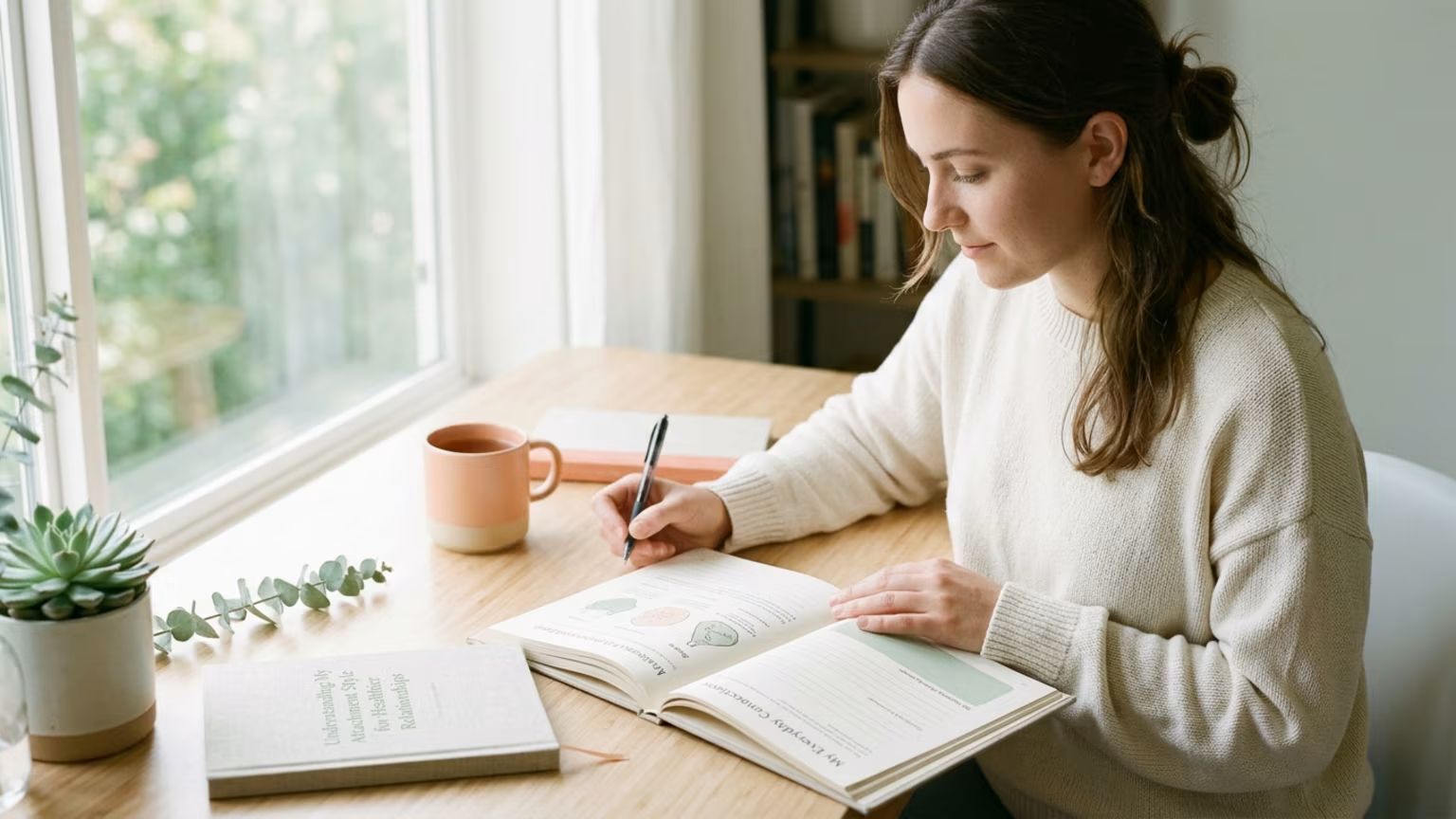
Attachment and psychology
I feel safer fixing others than looking at my own wounds
Monday, January 5, 2026





It is okay if caring for others feels easier than caring for yourself. This pattern can feel confusing and heavy, especially when you think, "I feel safer fixing others than looking at my own wounds." Here, we explore why this happens and what you can gently do next.
This question, "I feel safer fixing others than looking at my own wounds," often shows up after one more late night call, one more crisis that you helped someone through, and then you sit alone and feel strangely empty. It can feel like you only know how to be the helper, not the one who has needs too.
Many women in this place want to know if something is wrong with them, or if they are codependent, or if this is just how love works. This guide will explain what is going on, why this feels so strong, and simple steps to slowly turn some of that care back toward you.
Answer: It depends, but often this pattern comes from old attachment wounds.
Best next step: Notice one moment today when you want to fix someone and pause.
Why: Pausing shows the pattern, and awareness is the first step to change.
This pattern does not just live in your thoughts. It shows up in small daily moments. For example, a friend sends a sad text, and before you even breathe, you are already planning how to cheer her up, fix the problem, and be there right away.
Or your partner seems quiet and distant for a few hours, and your body tenses. Your mind starts racing with, "Did I do something wrong? How can I fix it? What do they need from me?" Instead of asking what you feel, you jump to managing their feelings.
Over time, this can make life feel like one long emergency. You may notice that you feel guilty when you rest, anxious when someone is upset, or strangely calm only when you are needed. When things are peaceful, you may even feel bored or uneasy, like you should be doing more.
There is often a quiet belief underneath this. It might sound like, "If I keep everyone okay, they will not leave me," or "If I am useful, I am worth loving." This makes the thought "I feel safer fixing others than looking at my own wounds" feel less like a choice and more like a survival rule.
This is a shared experience, especially for women who grew up in homes where they had to grow up fast. When you have spent years being the strong one, the listener, the fixer, turning that gentle attention inward can feel unsafe or selfish. It can also feel very unfamiliar.
There are real reasons why you feel safer fixing others than looking at your own wounds. This pattern did not appear out of nowhere. It was learned, usually very early.
One common reason is something called anxious attachment. Anxious attachment often happens when caregivers were sometimes loving and present, and sometimes distant, distracted, or overwhelmed. You never quite knew which version you would get.
As a child, you might have learned to watch adults closely. You checked their mood, their tone, their face. You tried to be good, helpful, or pleasing so they would stay kind and close. Your little body learned, "If I try hard enough, maybe they will not leave or get angry."
As an adult, that same pattern can show in romance and friendships. You might feel safe when you are doing things for others, giving support, or solving problems, because it feels like a way to keep them close. Looking at your own wounds may feel risky, because it does not seem to control whether people stay or go.
Another common root is growing up in a chaotic or unstable home. Maybe one parent struggled with addiction. Maybe there were money problems, mental health issues, or lots of fighting. In that kind of environment, it can feel like you must become the "fixer" to create any sense of safety.
As a child or teen, you might have calmed your parents, taken care of siblings, or smoothed over conflicts. You were praised when you were strong, helpful, or mature. Your pain did not get much space. So you learned to put it away.
Later, this can turn into codependency, where your self-worth feels tied to rescuing other people. Codependency means you feel responsible for the feelings, choices, and lives of others, and you forget your own needs. It is not a flaw in your character. It is a coping skill that went too far.
Fixing others can also be a way to avoid your own wounds. When you focus on someone's crisis, you do not have to feel your own sadness, loneliness, or fear. You stay busy. You stay useful.
Sometimes it feels like, "If I stop and look at my pain, it will swallow me." So you keep moving, helping, fixing. But over time, your body starts to show the cost. You may feel exhausted, burned out, resentful, or numb. You may cry easily over small things, because the big feelings are still pushed down.
Many women who say, "I feel safer fixing others than looking at my own wounds" also feel a deep fear of abandonment. Abandonment means the fear that someone you love will leave you, slowly or suddenly, and not come back.
When that fear is strong, you may feel that the only way to keep people is to be needed. You think, "If they need me, they will stay." Fixing becomes a kind of protection. It feels less painful to over-give than to risk being rejected.
This fear is not a sign that you are unlovable. It is usually a sign that important relationships in your past felt unsafe, unpredictable, or conditional. Your nervous system learned to work very hard to stop people from leaving, even at the cost of your own well-being.
Healing this pattern does not mean you stop being caring. It means you include yourself in the circle of care. Here are simple steps you can try, slowly, with kindness toward yourself.
The first step is not to change anything. It is only to notice. When you feel the pull to fix someone, pause for a few breaths if you can.
You do not have to act differently right away. Just seeing the pattern in the moment already starts to soften it. A simple rule you can repeat is, "If I rush to fix, I first pause for 3 breaths."
If looking at your own wounds feels too big or scary, start smaller. Start with simple needs and feelings from your day. This helps you build a gentle habit of turning inward.
You are not weak or selfish for having needs. You are human. Over time, this can make it feel less strange to ask yourself what you need instead of only asking what others need.
Boundaries are limits that protect your time, energy, and emotional well-being. They are not walls. They are choices about what you can and cannot do. A simple rule is, "If it costs your peace, it is too expensive."
Soft boundaries might sound like:
Start with low-stakes situations, like a friend who often vents but does not change anything. You do not have to explain your whole history. You only need to practice saying what you can and cannot offer right now.
This can be one of the hardest shifts. When you care deeply, it feels cruel to step back. But not every problem is yours to hold. Allowing others to feel their feelings and face their own choices is a form of respect.
If someone will not take any steps to help themselves, and you feel drained or resentful, it may be a sign to step back. Caring does not have to mean constant fixing.
If you feel safer fixing others than looking at your own wounds, it often means you did not learn how to comfort yourself. Self-soothing is the skill of calming your own body and mind when you feel upset, scared, or alone.
You can try:
These small acts tell your nervous system that you are not abandoned, even when someone else is not available or responding the way you hope.
Secure attachment means relationships where both people feel generally safe, honest, and steady. There are disagreements, but there is also repair and respect. You do not have to perform to be loved.
Notice how you feel around different people in your life. Do you have even one person who feels reliable, kind, and not draining? Try to spend a bit more time with them. Let them see you, not just the strong, helpful version of you.
You may also find it helpful to read about attachment styles. There is a gentle guide on this feeling called Is it possible to change my attachment style. Sometimes understanding your style gives you words and compassion for what you are going through.
For many women, this pattern is tied to deep experiences in childhood or past relationships. It can be very healing to explore your story with someone trained to hold it with care, like an attachment-focused therapist or counselor.
Therapy is not about blaming your parents or your exes. It is about understanding the map that your nervous system followed to keep you safe. With that insight, you can slowly draw a new map, one where your needs are not always last.
If therapy feels out of reach right now, you can still work gently with yourself. Books, podcasts, and journaling about anxious attachment and codependency can give you language and tools. Even allowing yourself to think, "I learned this pattern to survive" can be a powerful start.
When you are used to being the fixer, receiving care can feel uncomfortable or even wrong. You may brush off compliments, downplay your pain, or change the subject when someone asks how you are. Notice when this happens.
You deserve care just as much as the people you support. Letting love come toward you, not just through you, is an important part of healing.
Change in this area is often gentle and slow, not sudden. You do not wake up one day and never want to fix anyone again. Instead, you notice more often when you are doing it. You pause. You ask what you need. Sometimes you still over-give, and that is okay. You are learning.
Over time, you may feel less panic when someone is upset with you. You may feel more okay when a partner is quiet, because you trust that you can handle your own feelings. You might start to believe that you are lovable even when you are not solving anyone's problems.
Healing can also change the kind of relationships you choose. You may feel less drawn to people who are always in crisis, and more drawn to people who show up, take responsibility, and meet you halfway. You might enjoy love that feels calmer, even if it is unfamiliar at first.
Many women notice that as they work on this pattern, dating feels different too. If you often feel anxious about whether someone is serious, you might like the guide How to know if he is serious about us. You are allowed to want mutual effort, not just people who need saving.
You might be dealing with codependent patterns if you often feel responsible for other people's moods, choices, and lives while ignoring your own needs. But labels are less important than how you feel. If you feel drained, resentful, or invisible, that is enough reason to make changes. A helpful rule is, "If I feel small around them often, something needs to shift."
People who are always in crisis or avoid responsibility often sense who will carry their load. If you are used to rescuing, you might feel familiar comfort with them at first. Over time, you can learn to notice this early and take a step back instead of stepping in. Pay attention to how someone responds to the word "no" or a soft boundary.
No, it is a sign that important relationships in your life have not always felt safe or steady. Your nervous system is trying to protect you from pain by staying on high alert. You can calm that alert system by building small experiences of being safe, like honest friendships, self-soothing, and therapy. The fear may not vanish, but it can soften.
Start small and present-focused. You do not have to revisit every memory at once. Begin by noticing how this pattern shows up today and how it feels in your body. If deeper memories come up, write them down gently and plan to explore them slowly, maybe with a therapist or trusted person.
Yes, boundaries do not make you cold. They make your care more honest and sustainable. When you say yes from choice instead of fear, your love becomes cleaner and less resentful. A helpful rule is, "If my yes hides a silent no, I need a boundary."
Take 5 minutes and write down one recent moment when you felt the urge to fix someone. Under it, write one sentence that starts with "I felt" and one that starts with "I needed." Let this be your first small act of turning some of your care back toward you.
This guide has explored why you may feel safer fixing others than looking at your own wounds, and small steps to gently change that pattern. You can go at your own pace, and it is okay if today you only take one small step toward including yourself in the care you so freely give to others.

A collective of writers and researchers specializing in behavioral psychology and relationship recovery.


Uncrumb is a calm space for honest relationship advice. Follow us for new guides, small reminders and gentle support when love feels confusing.
Learn how turning inward and reducing rumination after a loss helps you build stronger relationship boundaries, heal your heart, and reclaim your self-worth.
Continue reading
Uncrumb is a calm corner of the internet for women who want kinder love choices. Read the guides that fit your story, take what helps and return whenever you need a bit more clarity.