Modern dating
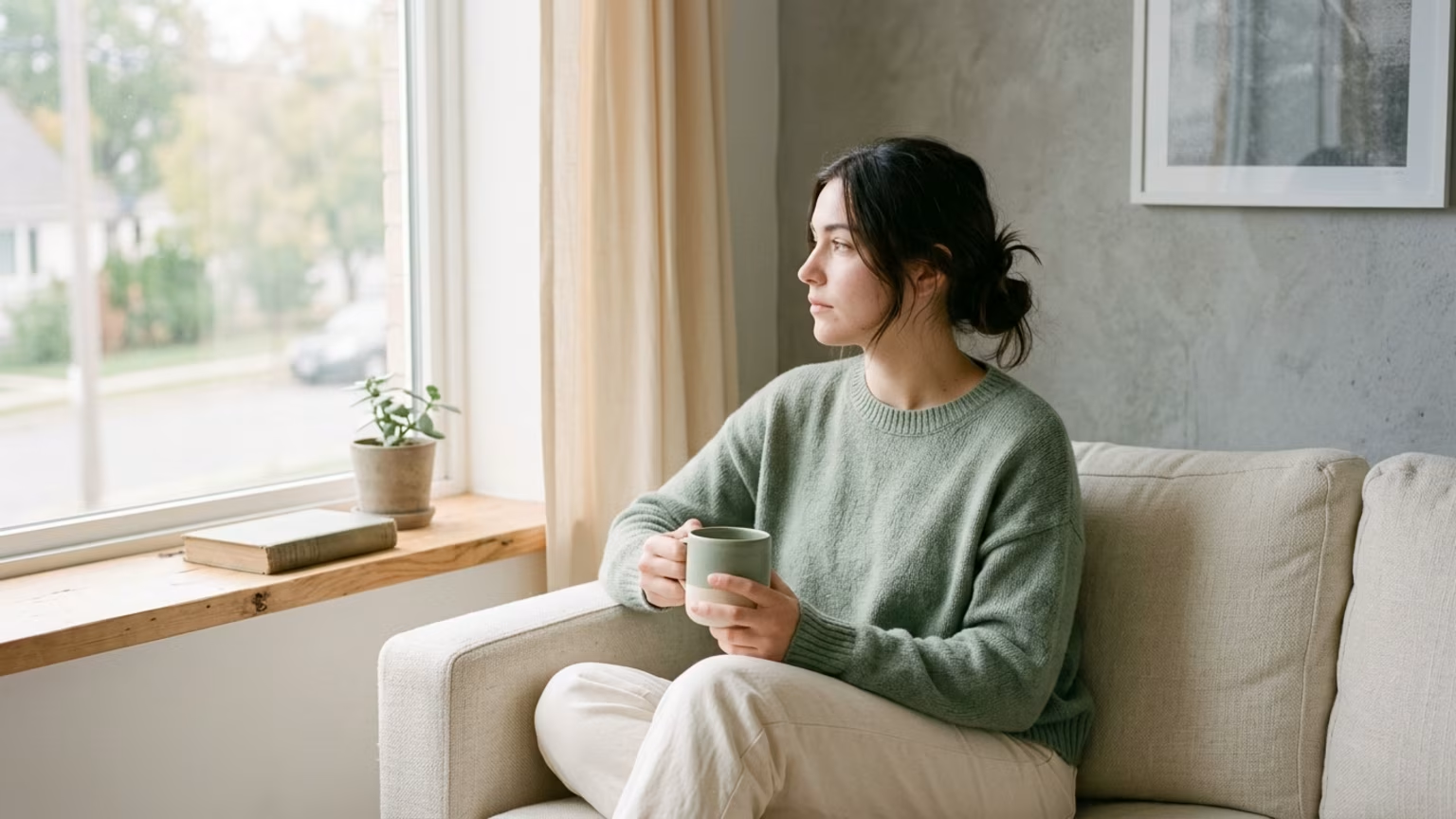





WHO data from 2023 found that approximately one in six people worldwide reported feeling very lonely. This figure represents 16% of the global population. Experts now treat this deep emotional pain as a serious public health priority.
The reported rate was particularly high among 13- to 17-year-olds, reaching 20.9%. Younger generations are feeling this absence of connection quite acutely right now. Experts believe that increased screen time and fewer shared public spaces play a large role.
This global attention helps validate the quiet struggles many of us face daily. Psychiatrist Antoine Pelissolo considers young people, women and single mothers particularly affected by the scarcity of social ties. It is a relief to know that your exhaustion is a recognized societal issue.
Former US Surgeon General Vivek Murthy described the mortality impact of social disconnection as comparable to smoking up to 15 cigarettes per day. This is a comparison of population-level risk and should not be interpreted as proof that loneliness directly causes an individual illness. A lack of connection affects our bodies profoundly.
The sheer volume of research confirms we are not simply imagining this crisis. Le Monde reports that the number of publications on loneliness indexed in Scopus rose from zero in 1980 to 3,242 in 2021. The global pandemic significantly accelerated this vital focus on human connection.
The WHO report discussed by Le Monde associated large-scale social disconnection with approximately 871,000 premature deaths worldwide each year. These numbers reveal the hidden cost of our highly individualized modern lifestyles. We are realizing that true well-being requires a supportive community.
For women navigating modern romance, this global health conversation feels incredibly validating. Draining dating experiences can leave you feeling entirely isolated. A sudden text withdrawal from a partner can easily trigger a deep sense of unworthiness.
I remember staring at my phone on a Sunday afternoon, willing it to light up with a message from him. The silence was deafening, and I spent hours analyzing every word I had said the night before. It was not until I finally put the phone in another room and made a cup of tea that I realized my worth was not tied to his response time.
That tiny act of creating physical distance from the device was my first step toward reclaiming my weekends. Experiencing dating app burnout is a natural response to unpredictable romantic communication. You can easily mistake the lack of a digital notification for a lack of personal value.
Constant rejection on dating platforms creates an exhausting cycle of hope and disappointment. The pain of heartbreak leaves a unique ache that makes the whole world feel incredibly quiet. We often pull away from our closest friends precisely when we need their comfort the most.
It is very easy to assume that finding a new relationship will fix this empty feeling inside. Relying entirely on romantic validation is an incredibly heavy burden to carry. We need broader forms of community to feel truly grounded and secure.
Setting healthy boundaries around your digital life can give your nervous system a necessary rest. You do not have to perform perfectly on a first date to earn a place in the world. Taking a break allows you to reconnect with your own gentle rhythm.
When you stop forcing yourself to swipe through endless profiles, your mind finally finds space to breathe. You start noticing the small acts of kindness from strangers at the grocery store or the coffee shop. These tiny moments of connection remind you that love exists outside of romantic relationships.
Understanding this trend requires us to separate loneliness from actual physical isolation. The primary research distinguishes loneliness as the painful subjective gap between the connection a person wants and the connection they experience. Isolation is simply an objective lack of relationships or daily interaction.
This means loneliness is not synonymous with simply being alone in a room. Someone can feel profoundly disconnected sitting right next to a romantic partner. A different person might live entirely alone without ever experiencing true loneliness.
Your relationship status does not magically secure you against feeling unseen or misunderstood. A partner cannot be your sole source of emotional fulfillment in life. Expecting one single person to cure your loneliness is a completely unrealistic expectation.
There is a vital difference between harmful involuntary loneliness and chosen solitude. Finding peace in your own company can provide deep renewal, personal space and quiet reflection. Moving from loneliness to sacred solitude helps you rebuild a safe, loving home within yourself.
Much of modern romance feels like a digital performance rather than genuine intimacy. We craft perfect profiles and send carefully curated messages, hoping to win someone's approval. Stepping away from this exhausting performance allows you to find more authentic ways to connect.
You do not have to earn love by being the most interesting person in the room. Real connection happens when you are allowed to be tired, quiet and imperfect. The cure for loneliness is a simple, shared vulnerability.
The statistics surrounding this emotional ache are both surprising and incredibly revealing. A Fondation de France and Credoc Solitudes study summarized by Le Monde highlights a sharp increase. In France 24% of people over age 15 reported feeling lonely in 2025, compared with 19% in April 2020.
The same French study found that 11% of people experienced what it called objective relational isolation in 2025. An OECD survey found that 11% of people in France felt lonely most or all of the time during the previous four weeks. This stands in stark contrast to an OECD average of 6%.
The physical toll of this disconnection is drawing serious medical attention across the globe. A 2016 meta-analysis linked deficits in social relationships with a 29% higher risk of coronary heart disease and a 32% higher risk of stroke. Researchers are proving that an aching heart is a literal medical concern.
A 2024 meta-analysis cited by Le Monde found that being alone or feeling lonely was associated with an approximately 30% higher risk of dementia. These findings show why public health officials are looking beyond traditional medicine to help people heal. We need social solutions for social pain.
To address these risks, many communities are turning to structured social interventions. The United Kingdom has used "social prescribing" since 2018, referring people to activities such as book clubs, art workshops and exercise. More than one million people in the UK have reportedly benefited from this community-based approach.
This approach has been piloted in approximately 10 French cities. Structured volunteering provides another powerful way to build strong community ties. Jean-François Serres advocates volunteering and the Monalisa network, which coordinates citizen teams of five to 30 volunteers in neighborhoods, care homes and hospitals.
France currently has more than 1,000 such teams, creating vital spaces for shared purpose. Sometimes, the simplest physical interventions offer the most immediate relief for an overwhelmed mind. A 2024 study led by Anastasia Benedyk found that roughly one hour of walking at close to 5 kilometers per hour could offset the decline in well-being associated with limited social contact.
Rebuilding your sense of connection does not have to start with romantic dating. You can pause the apps and still find beautiful, restorative ways to belong. Low-pressure activities offer repeated contact around a shared purpose, completely removing the intense pressure of romance.
You do not need to attend loud parties or force yourself into crowded rooms. A simple, recurring commitment like a weekly walking group or a quiet art class is completely sufficient. You can protect your heart and still leave a small door open for new friends.
Consistency is the real goal here, rather than instant intimacy or sudden sparks. Showing up to the same pottery class or volunteer shift allows trust to build naturally. True belonging grows slowly, often in the quiet moments we share with familiar faces.
You do not have to fix everything about your life in a single weekend. It is perfectly fine to take things one gentle, deliberate step at a time. Softening your expectations around socializing makes the entire process feel much more manageable.
When you stop viewing every interaction as a test, the world becomes a kinder place. You realize that countless other women are walking through the exact same emotional landscape. We are all just looking for a safe place to land at the end of a long week.
Over time, the heavy silence of heartbreak softens into something much more peaceful. You slowly learn to trust your own instincts and appreciate the quiet rhythm of your days. Eventually, the ache of loneliness simply fades into the background.

A collective of writers and researchers specializing in behavioral psychology and relationship recovery.


Uncrumb is a calm space for honest relationship advice. Follow us for new guides, small reminders and gentle support when love feels confusing.
A Los Angeles Times report shows men with cats face dating app stereotypes. Learn how to separate real behavioral boundaries from superficial photo judgments.
Continue reading
Uncrumb is a calm corner of the internet for women who want kinder love choices. Read the guides that fit your story, take what helps and return whenever you need a bit more clarity.