Attachment and psychology
What does a secure attachment look like for me
Wednesday, December 17, 2025






You might wonder, what does a secure attachment look like for me, in my real life, with my real history and fears. Maybe you hear people talk about being "secure" and you are not sure what that means for you. You might even worry that something is wrong with you because love often feels hard or confusing.
A secure attachment does not mean you never feel scared, jealous, or upset. It means you can feel those things and still feel mostly safe inside. It means you can be close to someone and still feel like yourself. When you ask, "What does a secure attachment look like for me?" the answer is simple and kind. It looks like you slowly learning that you are safe to be loved and safe to be you.
In this guide, we will walk through how secure attachment can look and feel in your daily life. You will see signs you might already have, and places you might want to grow. You will not fit every example, and that is okay. This is not a test. It is a map, so you can find what secure love might look like for you.
Wondering about secure attachment often comes from pain. Maybe you keep asking yourself, "Why do I get so scared when he pulls away a little?" or "Why do I shut down when things get too close?" You might feel tired of repeating the same patterns, but still not know how to do it differently.
In daily life, this can look like checking your phone over and over. You wait for a reply and think, "Did I say something wrong?" Your stomach feels tight. You want to be calm, but your body feels restless. You want closeness, but you are scared of being too much.
It can also look like the opposite. Someone texts you with care and interest, and you feel trapped. You pull back, answer late, or tell yourself, "I just do better alone." Inside, there might be fear that if you let someone in, they will leave, judge you, or try to control you.
You might go on dates and think, "I should be happy," but you feel numb, tense, or on guard. When someone is kind, you wonder what they want from you. When someone is distant, you blame yourself. This can be very confusing and lonely.
As you ask, "What does a secure attachment look like for me?" you might also feel a quiet hope. A small part of you believes that love can be calmer and kinder. You want to feel safe with someone without losing yourself. You want to trust that you are not too hard to love.
It can help to first understand what secure attachment often looks like in adults. Then we can shape it to fit you and your story. A secure attachment is not perfect. It is not always peaceful or easy. It is just steady enough that you and your partner can come back to each other after stress.
Here are some common signs of secure attachment in adult women. You do not need to have all of them for you to be growing in a secure way.
So when you ask, "What does a secure attachment look like for me?" it could mean you feel more able to say what you feel, to trust your partner a bit more, and to stay kind to yourself even when things feel shaky.
If you are asking about secure attachment, there is usually a reason. Maybe love has hurt. Maybe your childhood felt unstable. Maybe past partners were hot and cold, or even unkind. Your nervous system may still be trying to protect you.
Attachment theory says that the way we were cared for as children shapes how safe we feel with closeness now. If your caregivers were mostly warm, responsive, and steady, you may have learned, "I can reach out, and someone will usually be there." This makes secure attachment more likely.
If your caregivers were often busy, distant, critical, or unpredictable, you may have learned, "I need to be very good to be loved," or "I am safer if I do not need anyone." These lessons sink into your body. As an adult, you might feel anxious when someone pulls away, or numb when someone comes too close.
This is not your fault. Your nervous system is trying to protect you with the tools it learned long ago. Asking, "What does a secure attachment look like for me?" is a way of gently updating those tools.
Maybe you had partners who ghosted you, cheated, lied, or used you. Maybe they only gave affection when it suited them. Over time, your mind might have learned, "I cannot trust people," or "I must keep proving I am worth staying for."
When this happens, even a kind partner can feel unsafe. You might wait for the moment they leave. You might test them, pull away, or cling too tightly. All of this is your body trying to avoid old pain.
There is a gentle guide on this feeling called I worry about getting ghosted again. It might help if you know that fear very well.
It is normal to want both closeness and independence. In secure attachment, these two needs work together. You can lean on someone and also stand on your own feet.
If you did not see this balance growing up, it may be hard to know what is "too close" or "too distant." You might fear losing yourself in a relationship. Or you might feel guilty when you need time alone. This can make you question if you are even capable of secure love.
But the truth is, secure attachment does not erase these questions. It just helps you hold them without panic. You learn that wanting space does not mean you love less, and wanting closeness does not mean you are clingy or weak.
Before we talk more about what secure attachment looks like for you, it may help to see how insecure patterns show up. This is not to label you. It is to understand what you are already carrying.
You might notice yourself in one or more of these patterns at different times.
These patterns can affect how you feel about yourself. You might think you are "too much" or "too cold." You might judge yourself harshly for how you act in love.
But these patterns are not who you are. They are your early safety strategies. They helped you survive times when love did not feel stable. Asking, "What does a secure attachment look like for me?" is a way to gently loosen these old patterns and create new ones.
Secure attachment will not look the same for every woman. Your story, culture, values, and needs all matter. But there are some common ways it can show up in your life.
On the inside, secure attachment often feels like a bit more space around your feelings. You still feel hurt, scared, or angry sometimes, but those feelings do not swallow you whole as often.
You might notice:
Over time, when you ask, "What does a secure attachment look like for me?" the answer might sound like, "I feel more grounded in myself, even when I care deeply about someone."
In a secure attachment, you can let your partner see more of the real you. You do not need to be perfect to feel loved. You can share your worries, joy, and needs without feeling like you are a burden every time.
This could look like:
You may still feel fear, but you can reach for connection instead of only pulling away or clinging. You know that relationships have hard moments, and that those moments do not always mean the end.
Secure attachment also shows in how you live outside of romance. You know you are more than someone’s partner. You give energy to friendships, hobbies, and self-care that matter to you.
You might:
This balance of "me" and "we" is a big part of what a secure attachment can look like for you.
You do not become secure overnight. This is slow, steady work. It is not about fixing yourself. It is about giving your nervous system new experiences of safety, both with yourself and with others.
First, notice how you feel about closeness and space, without judging yourself. When you feel triggered, you might say inside, "I feel scared he will leave," or "I feel trapped right now." Just naming it is powerful.
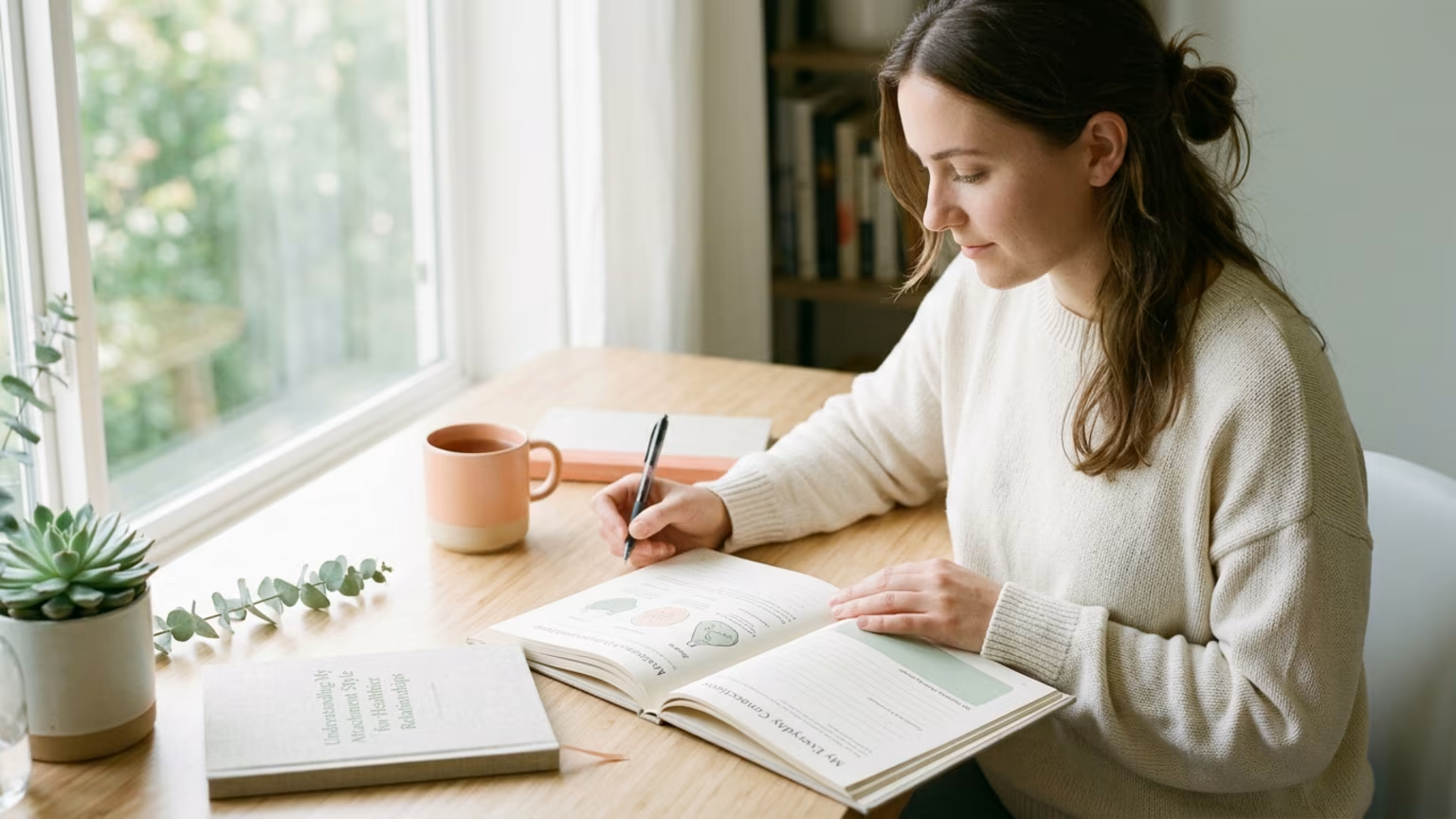
You can keep a simple journal and write down moments when you feel anxious or distant. Ask yourself, "What did I feel in my body? What did I start to believe about myself?" This helps you see patterns, not so you can blame yourself, but so you can care for yourself better.
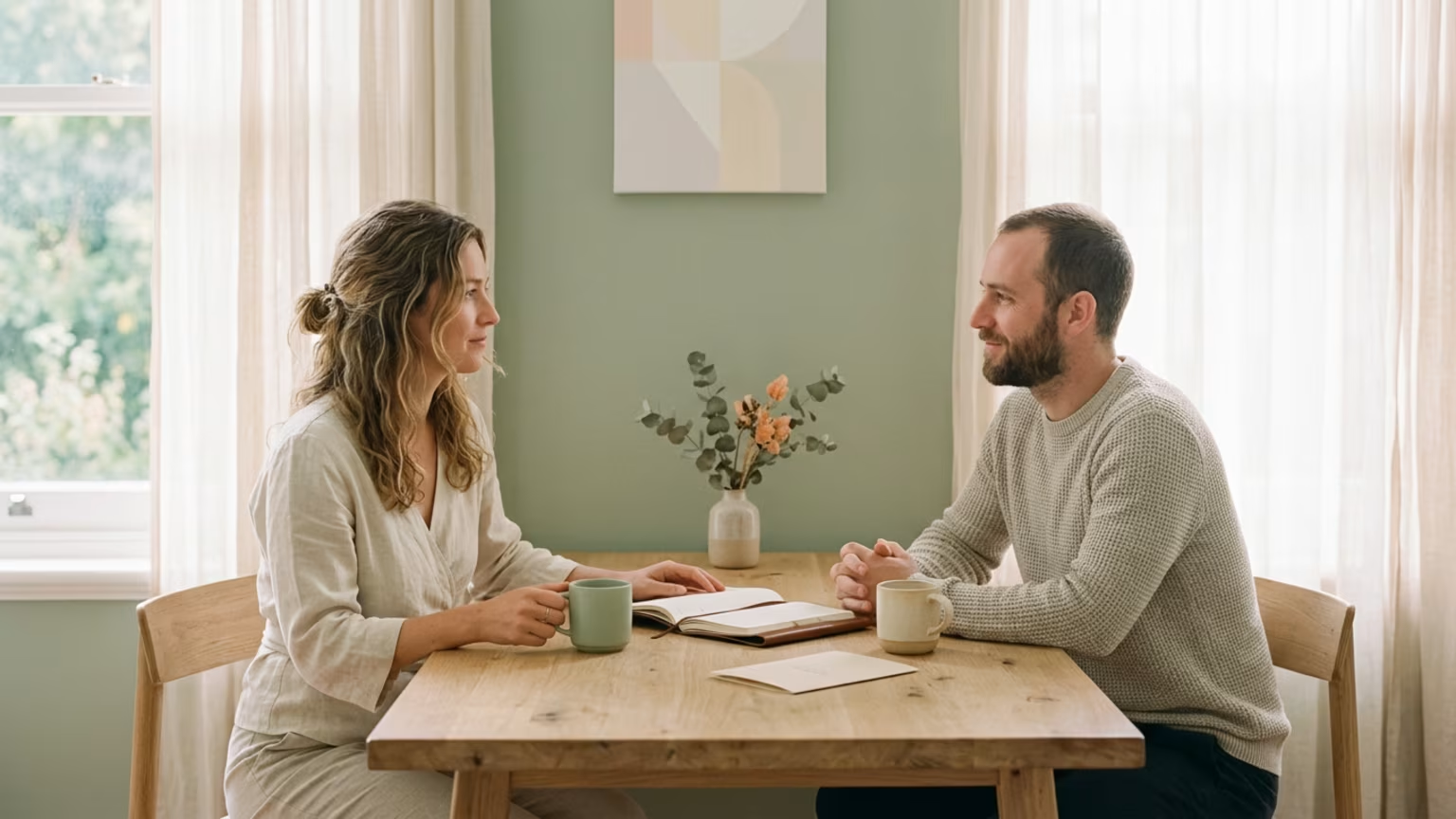
Secure attachment grows when you practice honest, respectful talk, even in small ways. You can start with low-stakes moments.
Each time you speak your needs and the other person responds with care, your nervous system learns, "Maybe it is a little safer to be me." If they do not respond with care, that also gives you information about the relationship, which is painful but also helpful.
It is much easier to feel secure with someone who is mostly steady, kind, and reliable. If you often choose partners who are hot and cold, critical, or unkind, your system will stay on high alert.
Notice how someone treats you over time, not just how intense the chemistry feels. Do they show up when they say they will? Do they speak to you with respect? Can they listen when you share feelings, even if they feel uncomfortable?
You might like the guide What is an anxious attachment style really like if you often feel pulled toward intense but unstable love.
Secure attachment does not mean saying yes to everything. It means you feel allowed to protect your time, body, and energy.
Some simple boundaries might be:
Each time you keep a boundary, you show yourself that you can take care of you. This is a key part of what a secure attachment looks like for you.
You do not have to do this alone. Healing attachment wounds is deep work. It often helps to have safe people nearby.
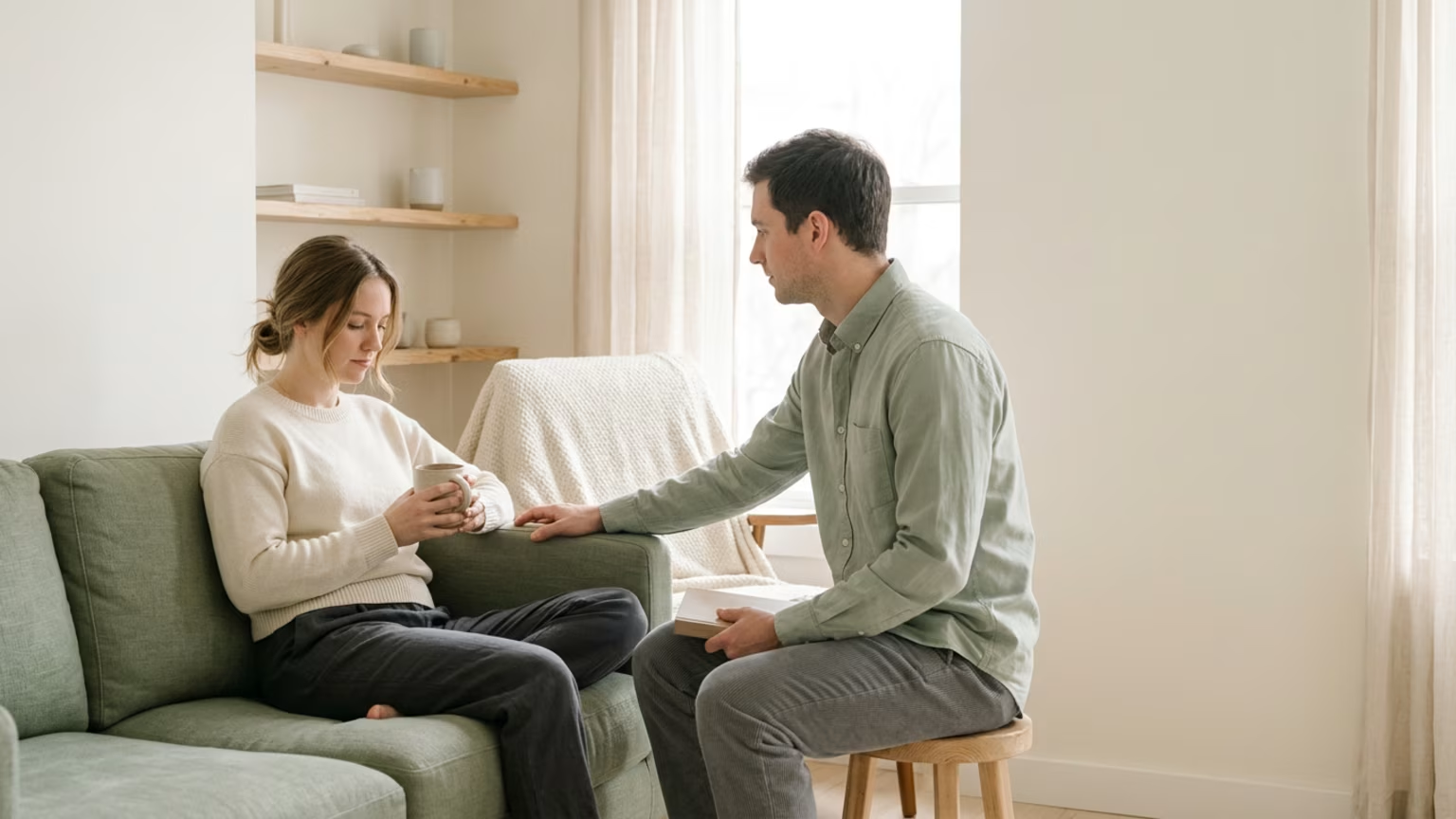
This can be a therapist who understands attachment, a support group, or a close friend who listens without judging you. When you share, you can say, "I am trying to understand what secure attachment looks like for me. Can I talk this through with you?"
Each time someone meets your honesty with kindness, your inner belief of "I am too much" softens a little.
Changing attachment patterns takes time. There will be days you feel very secure and days you feel like you are back at the start. This does not mean you have failed. It means you are human, and your nervous system is still learning.
Try to notice small wins. Maybe you paused before sending a panicked text. Maybe you asked for a hug instead of shutting down. Maybe you chose not to chase someone who was not choosing you back.
These are all signs that a more secure part of you is growing.
As you keep asking, "What does a secure attachment look like for me?" your answer will change. At first, it may look like simply noticing your patterns, or daring to say what you feel once in a while. Later, it may look like choosing partners who treat you with care, and walking away from those who do not.
Over time, you may notice that your sense of worth is less tied to who texts you back or who stays. You still feel hurt when things end, but you do not collapse inside in the same way. You trust that you can grieve and still be whole.
You may feel more open to real intimacy. Not the kind that is only intense or dramatic, but the kind where someone shows up, day after day, in small, caring ways. You can receive that care without always waiting for it to disappear.
Your relationships may also become more honest. You are more willing to say, "This does not feel good to me," and to hear the other person’s truth as well. You do not need to twist yourself into someone else’s shape to be loved.
Most of all, a secure attachment for you might mean that you are on your own side now. You speak to yourself with more kindness. You make choices that protect your peace. You do not leave yourself, even when others do.
There is nothing wrong with you for wondering about attachment. It means you care about how you love and how you are loved. It means you are ready for something a bit healthier, calmer, and kinder.
What a secure attachment looks like for you will not be perfect peace or perfect behavior. It will be a life where you feel safer to be yourself in love. Where you can hold both closeness and independence. Where your worth does not rise and fall with someone else’s attention.
You are not too much. You are not broken. You are a person who learned certain patterns to survive, and now you are learning new ones to feel safe and loved.
For today, you do not need to fix everything. Just take one small step. Maybe you notice one feeling with kindness instead of judgment. Maybe you tell someone, "I am trying to be kinder to myself in relationships." Maybe you rest instead of overthinking.
Each small step is part of what a secure attachment looks like for you. You are allowed to move slowly. You are allowed to learn. You are allowed to be loved while you are still healing.

A collective of writers and researchers specializing in behavioral psychology and relationship recovery.


Uncrumb is a calm space for honest relationship advice. Follow us for new guides, small reminders and gentle support when love feels confusing.
Modern dating feels exhausting. Learn how to navigate dating fatigue and reclaim your peace with gentle boundaries and intentional connection.
Continue reading
Uncrumb is a calm corner of the internet for women who want kinder love choices. Read the guides that fit your story, take what helps and return whenever you need a bit more clarity.