Modern dating
Do I even like dating or do I just fear being alone?
Thursday, March 19, 2026





That tight feeling in your chest can show up right before a date. Your stomach turns as you put on shoes you do not even like. And one thought keeps looping: Do I even like dating or do I just fear being alone?
This question often comes after a small moment. Like when you cancel plans, then feel a rush of panic. Or when you match with someone you do not feel excited about, but you still say yes.
We will work through how to tell the difference between true interest and fear. You will get simple ways to check in with yourself, without judging your needs.
Answer: It depends: if relief beats curiosity, fear is driving it.
Best next step: Write two lists: “pulls me in” and “calms loneliness.”
Why: Fear creates urgency, while real interest creates steady warmth.
A lot of people go through this. Dating can feel like a mix of hope and dread. You may want closeness, but also feel tired of trying.
Sometimes you notice you are not even thinking about the person. You are thinking about what it would mean to be single again. Or what it would mean if everyone else “moves on” and you do not.
In daily life, it can look like this. You swipe when you are bored. You say yes when you feel lonely. Then you feel flat on the date, like you are watching yourself talk.
Or you may enjoy dating at first, then suddenly get anxious. You start checking your phone too much. You replay the conversation. You worry that one slow reply means you will end up alone.
Some women also feel disillusioned. They think, “This never works.” Then they keep dating anyway, because stopping feels like giving up.
And under all of it, there can be a quiet fear. “If I stop dating, will I feel empty?” “If I choose wrong again, is it my fault?”
Humans are built for connection. Wanting a partner is not a weakness. The confusion starts when fear takes the driver seat.
Fear of being alone often feels like time pressure. It can make you feel like you have to keep going, even when you are not enjoying it.
This urgency can show up in your body. You feel tense when someone looks at you. You feel jumpy when your phone lights up. A date stops feeling like two people meeting. It starts feeling like a test.
Many women get messages that being single means something is wrong. Friends may not mean harm, but comments still land. “Any updates?” “Are you seeing anyone?” Even kind questions can feel like a scorecard.
If you already feel tender, that pressure can turn dating into a task. Not a choice.
When you fear being alone, you may stay in things that do not feel good. That can include a relationship that hurts, or a dating pattern that drains you.
Some women notice they start accepting crumbs. Less effort. Less care. Less respect. Not because they do not know better, but because the fear feels louder than their needs.
Loneliness is not just a thought. It is a whole-body feeling. For some women, it comes with heaviness, low mood, and a sense of being left behind.
In that state, any attention can feel like relief. Even attention from someone you do not truly want.
It is also possible you like parts of dating and still fear being alone. Many women have both. The goal is not to remove the fear in one day. The goal is to stop letting fear pick your partners.
This section is the strongest part of the guide. Pick one or two ideas and try them this week. Small moves help more than big promises.
After you talk to someone, pause for 20 seconds. Ask two questions.
Relief is not bad. It is just a clue. If relief is the main feeling every time, fear may be running the show.
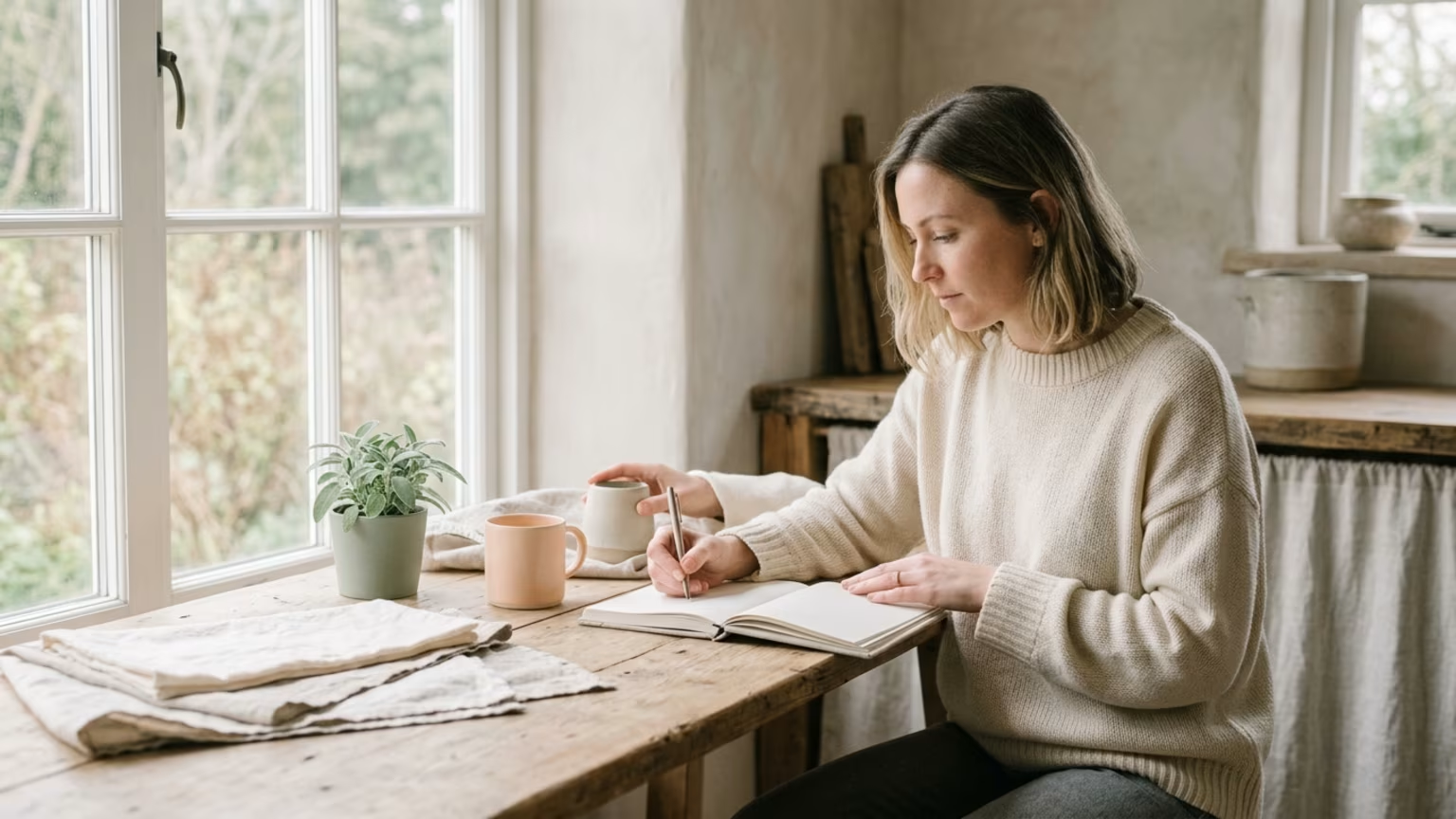
Open a notes app. Make two lists.
You do not need perfect answers. You are looking for patterns.
If most of your reasons live in the second list, take that seriously. It may mean you need care, not another date.
Fear makes standards slippery. So set them while you feel calm.
Pick 3 simple must-haves. Keep them about behavior, not charm.
Then add 3 simple dealbreakers. Again, keep them behavioral.
This helps because fear often says, “Just give him a chance.” Standards say, “Only if it feels safe and respectful.”
If fear is high, speed makes it worse. Slow dating reduces the feeling of being evaluated.
Here is a simple, quotable rule you can keep. If it feels urgent, slow it down.
This is not about giving up on love. It is about stopping the fear of being alone from controlling you.
Write down a short plan for the hours that usually feel hardest. For many women, it is evenings and Sundays.
When you know you can hold yourself through lonely hours, dating becomes more honest.
Fear often wants proof. Proof that you are chosen. Proof that you matter. Proof that this time will work.
Proof-chasing can look like over-texting, over-explaining, or accepting vague plans. It can also look like trying to be “easy” when you are not okay.
Try this instead. When you feel the urge to push for proof, ask for one clear thing.
Then watch what happens. Clear people answer clearly.
Boundaries do not have to be harsh. They can be simple.
If someone reacts badly to a calm boundary, that is useful information. It means your fear does not need to convince you to stay.
When fear is high, you may rate dates by outcome. “Did he like me?” “Will this turn into a relationship?”
Try rating dates by process instead.
This keeps you connected to you. And that is the point.
If you feel burnt out, take a clean break. Not as a punishment. As rest.
Try 7 or 14 days. Tell yourself, “I am not deciding my whole future. I am just resting.”
During the break, notice what comes up. If you feel calmer, that matters. If you feel panicky, that also matters. Both are information.
Sometimes the fear of being alone is tied to older pain. It can come from being left, being cheated on, or growing up without steady care.
Talking to a therapist can help. So can one trusted friend who does not rush you.
You might also like the guide How to stop being scared my partner will leave me. It stays very practical and calm.
Clarity usually does not come as one big moment. It comes as small honest check-ins. One decision at a time.
Over time, dates can start to feel simpler. You may still feel nerves, but not panic. You may still want love, but you do not feel like love is your only air.
You may also notice your choices change. You stop replying to people who are vague. You stop trying to be “cool” when you want reassurance. You wait for steady effort.
If you decide you do not like dating right now, that is okay. If you decide you like dating, but only in smaller doses, that is also okay.
Healing can look like this: you can be open to connection, and still protect your peace. You can want a partner, and still have a full life on a Tuesday night.
If attachment patterns come up for you, there is a gentle guide called Is it possible to change my attachment style. It can help you name what you feel.
Notice what happens when you stop for one week. If you feel intense panic and start chasing attention, fear is likely driving. Make a plan for your evenings, then return to dating slowly. Keep this rule: If it feels urgent, slow it down.
This is common. Anxiety does not always mean “wrong person.” It can mean you need slower pace and clearer plans. Ask for one specific next step, like a day and time, then watch consistency.
Numb often means you are overwhelmed or burnt out. Take a 7 to 14 day break and do more grounding routines. When you return, keep dates short and low pressure. If numbness stays, talk to a therapist about what your body is protecting you from.
Loneliness can make almost anyone bargain with themselves. Write your 3 must-haves and 3 dealbreakers before you talk to anyone new. Then follow your list like it is a safety rail. If you keep breaking it, focus more on building your single life support plan.
Yes. A pause can be a healthy choice, not a defeat. Set a time limit so it feels clear, like two weeks. Use that time to sleep, move your body, see friends, and rebuild trust in your own company.
Open your notes app and write: “Relief or curiosity?” Then answer in one sentence.
We covered how fear can push dating, and how to date from real want. Give yourself space for this. You can go slow and still move forward.

A collective of writers and researchers specializing in behavioral psychology and relationship recovery.


Uncrumb is a calm space for honest relationship advice. Follow us for new guides, small reminders and gentle support when love feels confusing.
Mental-health expert Prakriti Saxena Poddar warns that repeatedly using AI chatbots for relationship reassurance reinforces anxiety and weakens self-trust.
Continue reading
Uncrumb is a calm corner of the internet for women who want kinder love choices. Read the guides that fit your story, take what helps and return whenever you need a bit more clarity.