Modern dating
From Texting Anxiety to Clarity: Building Secure Communication Habits in Modern Dating
Sunday, May 31, 2026





A 2022 Pew Research Center survey found that 53 percent of adults under 30 have used a dating app. This matters a great deal. It means our romantic lives now live on our phones. We are constantly waiting for a notification to tell us we are wanted.
Digital communication removes body language and tone from the conversation. This creates a silent space that our worried minds fill with worst-case scenarios. Learning secure texting habits helps you stop overthinking and start trusting your own peace.
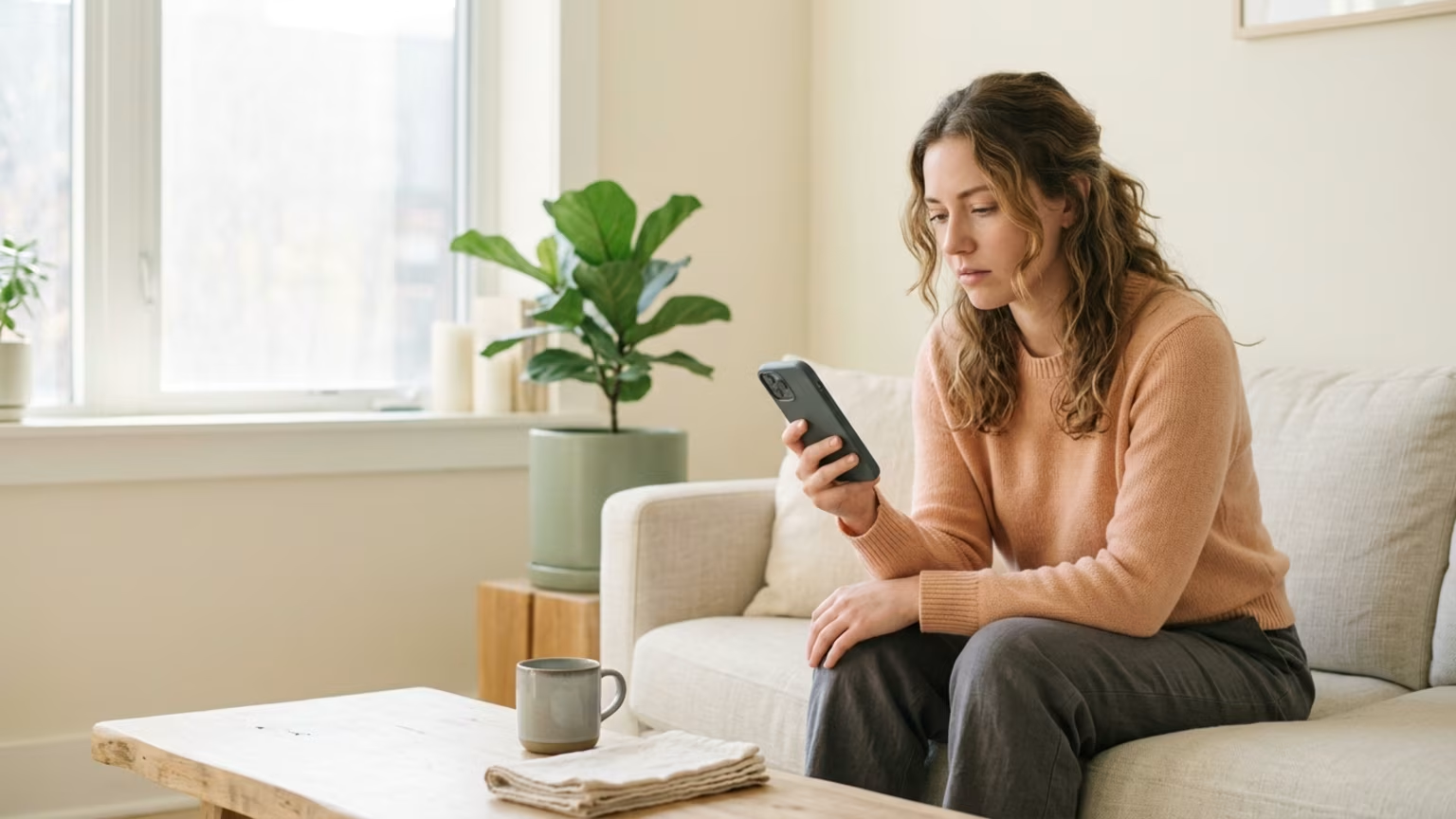
I remember staring at my phone on a Sunday afternoon. I was willing the screen to light up with a message from him. The silence felt so loud in my quiet living room.
I spent hours analyzing every single word I had said the night before. It was not until I finally put the phone in another room and made a cup of tea that a shift happened. I realized my worth was not tied to his response time.
That tiny act of creating physical distance from the device was my first step. It helped me start reclaiming my weekends from the grip of a glowing screen.
It is exhausting to feel like your mood depends on a glowing screen. You are not asking for too much when you hope for a simple reply. You are just a human being looking for connection in a very confusing dating culture. It makes complete sense that inconsistent messages make you feel unsteady.
Our phones demand constant attention and immediate responses. We carry a device in our pockets that acts as a direct line to our self-esteem. It is entirely reasonable to feel overwhelmed by this pressure. You are doing the best you can in a system that was built to distract you.
Texting removes the warm cues we rely on for safety. We cannot hear a gentle tone or see a reassuring smile through a screen. Without these signals, our brains panic and assume we have done something wrong.
People who crave closeness often respond to this fear by checking their phones repeatedly. We might send another text to try and fix the imagined problem. This cycle of waiting and worrying is a heavy emotional burden to carry.
Research on social connection shows that constant screen time can increase stress and make our feelings seem much larger. Digital platforms change how we form romantic bonds. According to a Britannica report on social media, these tools can reshape our basic social interactions and increase our daily anxiety.
Women often carry the weight of emotional labor in early relationships. We tend to send more thoughtful messages and try harder to maintain the connection. When someone pulls away, we often blame ourselves instead of looking at their capacity.
We try to read between the lines of a slow fade or mixed signals. The pain of heartbreak feels sharper when it is drawn out over weeks of silent screens. We lose our footing when we lack a clear story of what went wrong.
When a message does not arrive, our minds write a tragic story. We assume they are losing interest or that we said the wrong thing. We rarely assume they are just busy with a work project.
Learning to write better stories in our minds is a quiet act of self-love. You can gently remind yourself that their silence might have nothing to do with you. This simple shift takes the pressure off your shoulders.
Learning to read actions over words helps us find our footing again. Practicing this shift is a beautiful way to understand your own anxious attachment triggers. We can slowly learn to pause before we send a long message.
We can practice setting kind standards for communication without feeling like we are too much. This gentle work reminds us that we are worthy of clear answers.
Before you reply to a confusing text, pause for just one minute. Take a slow breath and ask yourself if you feel calm or panicked. If your heart is racing, put your phone face down until you feel steady again.
This creates a small gap between their action and your reaction. You can use this gap to protect your peace of mind. Try setting a strict rule for the first hour of your day.
Do not check your romantic messages right after you wake up. Pour your coffee and look out the window first. Giving yourself a peaceful morning builds a quiet confidence that lasts all day.
You can practice batching your screen time. Check your messages at set intervals during the day instead of carrying your phone everywhere. Give yourself two hours of uninterrupted peace in the afternoon.
A life full of hobbies and good friends feels much safer than a life built around a screen. Go for a walk without your device and notice the trees. These tiny acts of rebellion help you remember how big the world really is.
You do not have to match a communication style that hurts you. You can share your needs early on to see if they can meet them. Try saying: "I am not a big fan of talking late at night during the week. I am usually offline by ten, but I love catching up the next day."
If their behavior changes and they disappear for days, you can address it kindly. You might say: "I enjoy talking to you. Sometimes when I do not hear back for a few days, I get a bit in my head. I really appreciate clarity."
This is a calm approach to texting that protects your peace. Sometimes someone will give you breadcrumbs of attention instead of real effort. You can lovingly disengage from this pattern.
Try sending this gentle message: "I am looking for a connection with a bit more consistency. I wish you the best as you figure things out." You always have the right to walk away from confusion.
Sometimes the kindest thing you can do for yourself is to stop trying. It is time to step away if you are the only one initiating conversations. You should gently let go if they disappear when you express a small need.
If a relationship requires you to abandon your own comfort, it is not the right fit for you. Notice if you feel like you are just living in their spare moments. You deserve someone who makes intentional time for your heart.
Pay close attention if they ignore your attempts to connect on a deeper level. A person who values you will want to hear about your day. It is perfectly fine to walk away when the effort is completely one-sided.
Your value does not decrease based on someone's inability to reply. You are allowed to desire consistent connection in a relationship. You will be entirely okay if this specific conversation fades away. Save this gentle reminder for later.
Being left on read triggers our deep fear of rejection. Our brains view silence as a threat to our social safety. This reaction is biological and completely normal for anyone to experience.
Sending a second text is not inherently bad or wrong. It only becomes harmful if you are doing it from a place of panic. Always check in with your body before you press send.
Try to look at their behavior over a span of a few weeks. If they always text short replies but plan lovely dates, they might just hate typing. Focus on their consistent actions rather than isolating one single message.
This behavior allows someone to keep a distant eye on your life without putting in real effort. You do not have to accept this passive attention as genuine connection. You can choose to mute or block them if it brings you peace.
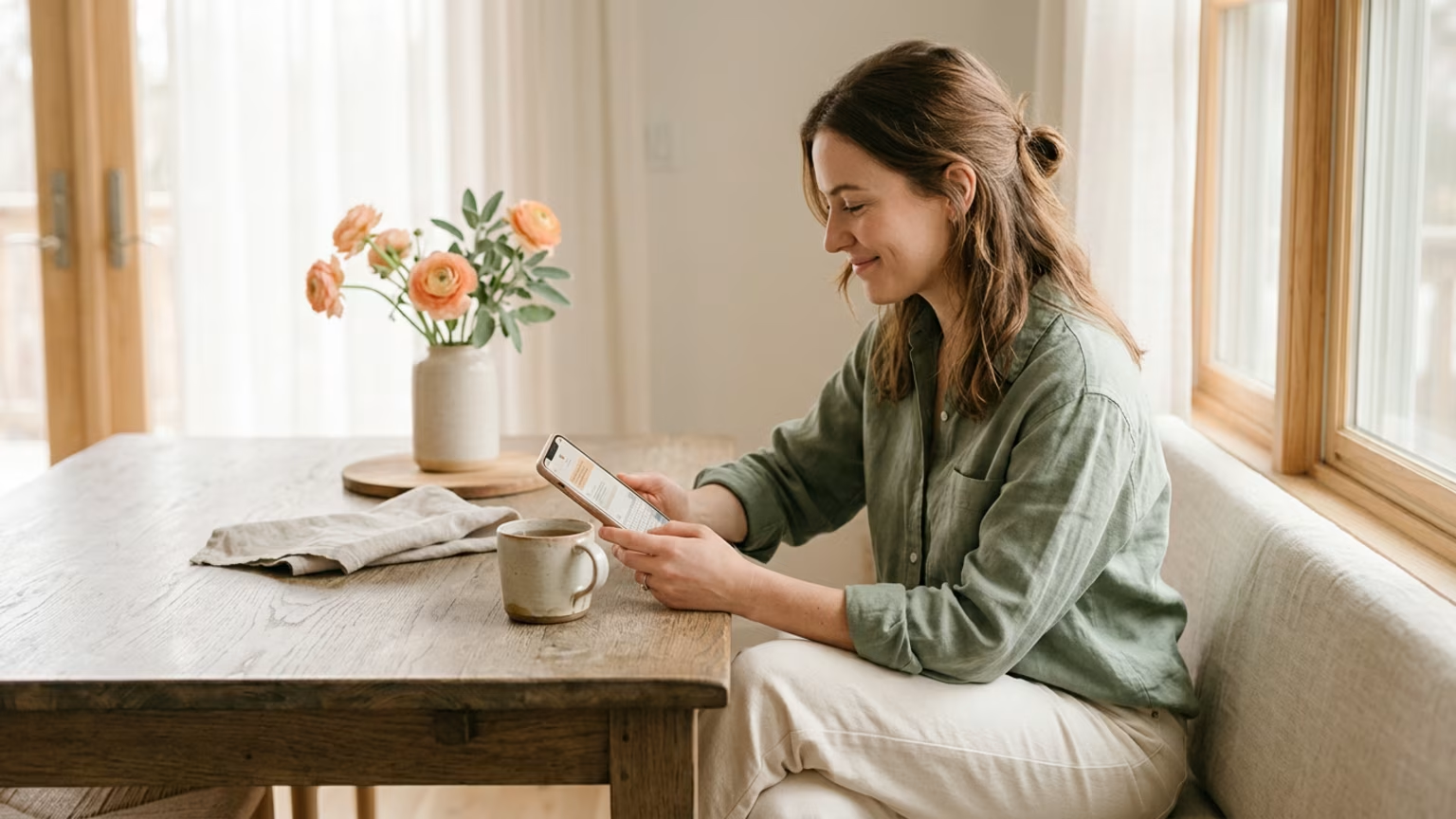
Sunday afternoons do not have to feel like waiting rooms anymore. You can make your tea, leave your phone in another room, and simply enjoy your own company. The silence is no longer a punishment to endure. It becomes a quiet space where you finally get to hear your own voice.
You are allowed to design a life that feels good to your nervous system. You no longer have to wait for someone else to give you permission to rest. You can build a home inside yourself that no delayed message can shake.

A collective of writers and researchers specializing in behavioral psychology and relationship recovery.


Uncrumb is a calm space for honest relationship advice. Follow us for new guides, small reminders and gentle support when love feels confusing.
Mental-health expert Prakriti Saxena Poddar warns that repeatedly using AI chatbots for relationship reassurance reinforces anxiety and weakens self-trust.
Continue reading
Uncrumb is a calm corner of the internet for women who want kinder love choices. Read the guides that fit your story, take what helps and return whenever you need a bit more clarity.