Attachment and psychology
When my partner needs space I instantly feel unwanted and replaceable
Wednesday, February 11, 2026






When your partner says they need space, it can feel like the ground drops under you. The thought that comes up is very clear and painful: "When my partner needs space I instantly feel unwanted and replaceable." This piece covers why this reaction happens, what it might really mean, and how you can feel calmer and safer inside yourself.
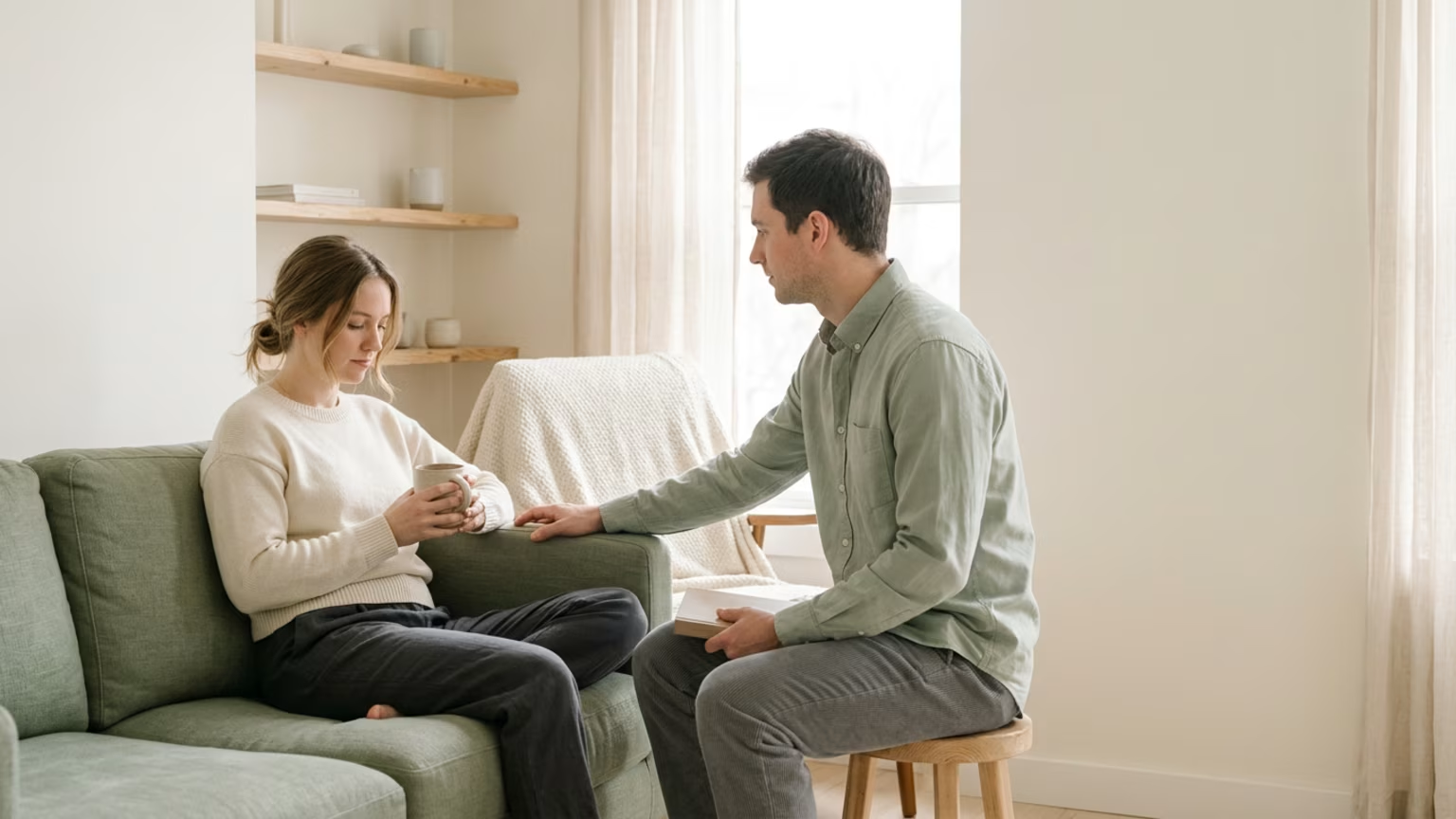
There is often a sharp moment. Maybe your partner says, "I just need some time alone tonight," or "I cannot talk about this right now." Your mind rushes to, "They must be tired of me," or "Someone else could make them happier." It makes sense that you feel afraid and confused, and this guide will help you work with that fear instead of fighting it.
Many women feel this way, especially when they have felt rejected or left behind in the past. When your partner needs space you might think the relationship is ending, or that you did something wrong. Together we will look at what this need for space can mean, how attachment styles play a part, and simple steps you can take so you do not feel so unwanted and replaceable in these moments.
Answer: It depends, but needing space usually means regulation, not that you are unwanted.
Best next step: Agree on a clear time to reconnect before taking space.
Why: Clear time frames calm anxious thoughts and respect both your needs.
When your partner says they need space, it may not sound like a big thing from the outside. Inside, it can feel huge. It can feel like everything you have built with them is suddenly fragile and at risk.
You might notice your body react fast. Your chest might feel tight. Your stomach may drop. Your mind can jump to thoughts like, "I am too much," "They are pulling away," or "I must have done something wrong."
Sometimes the timing makes it feel worse. If your partner wants space right after an argument, or after you shared something personal, it can feel like they are walking away from you and your feelings. The space feels like a punishment, even if they do not mean it that way.
This is why the thought, "When my partner needs space I instantly feel unwanted and replaceable," can come in so strongly. It is not just about this one moment. It can touch old pain and memories where you felt ignored, left out, or chosen last.
Daily life can also make this more intense. Maybe you wait all day to see them after work, and then they say they are too tired to talk. Maybe you planned to share something that has been on your mind, and they say, "Can we do this another time?" The disappointment lands on top of all your other stress, and it feels like proof that you do not matter enough.
When that happens, it is easy to treat their need for space as a final judgment of you. Instead of hearing, "I need time to reset," you hear, "You are not wanted here." No wonder it feels bigger than it should. Your body is trying to protect you from being hurt again.
There are real reasons why space feels like rejection to you. It is not because you are "too sensitive" or "too needy." Often, it is about how your nervous system and your past experiences are wired together.
A common pattern is called anxious attachment and avoidant attachment. You do not need to use the labels, but the pattern matters. Anxious attachment means you often feel safe when you are close and in contact. Avoidant attachment means someone often feels safe when they have enough distance and alone time.
If you tend toward anxious attachment, you may feel calm when you can text, call, or be physically near the person you love. Space can feel like danger. Your body may read distance as, "I am about to be left." So when your partner says, "I need some time alone," your system hears, "I do not want you."
If your partner leans avoidant, they might feel overwhelmed by intense closeness or long, emotional talks. Space helps them breathe and think clearly. To them, space is how they protect the relationship from resentment or shutdown. To you, it can look like they do not care. You are both trying to feel safe, but in opposite ways.
Many women who feel, "When my partner needs space I instantly feel unwanted and replaceable," have old stories that get stirred up. Maybe a parent often pulled away when you had big feelings. Maybe someone you loved stopped talking to you, or left without clear reasons.
When something like that has happened, your mind learns quickly. It learns, "When people take distance, bad things happen." So every new moment of space reminds you of that old hurt. It is not just this partner you are reacting to. It is every time you felt alone and confused before.
This is why your reaction can feel so strong, even if the situation now is not extreme. Your body is not just in the present. It is also in the past, trying to protect you from feeling that same pain again.
Many couples have different needs after a fight. One person wants to talk it through right away to feel close again. The other wants quiet time to cool down and think. Neither is wrong, but the difference can create a painful cycle.
You might reach out after a conflict and say, "Can we please talk about this?" If your partner says, "I cannot right now," it may feel like your feelings are not important. You might push harder, and then they pull back more. Both of you feel misunderstood.
Often, the person who wants space is not trying to punish you. They might be trying to stop the fight from getting worse. But if you connect space with rejection, their attempt to keep things calm feels to you like a cold wall.
What hurts the most is often not the space itself, but the story you tell about it. Many women think, "If they truly loved me, they would want to be with me all the time." So any pullback feels like a sign of fading love.
In reality, healthy love often includes both closeness and distance. People need alone time to think, rest, and do things that are just for them. This does not mean you are unwanted. It means they are a human being with their own needs, just like you.
The key is this gentle shift. Instead of thinking, "They need space, so I am not enough," you can begin to think, "They need space, and I need reassurance." Both needs are true. And both can exist together in a healthy way when you talk about them openly.
There are soft, practical steps you can take so that when your partner needs space, you do not instantly feel unwanted and replaceable. You cannot control their needs, but you can care for your own.
The first step is to notice and name what you tell yourself in that moment. When they say, "I need some time alone," pause and ask, "What story am I telling myself right now?"
Your story might be, "They are tired of me," or "They like someone else more," or "I am a burden." Simply naming it like this can give you a bit of distance from it. You can remind yourself, "This is my fear talking, not a fact."
A small rule that can help is: "If my fear is loud, I check the facts twice." This is short and easy to repeat when your mind starts racing.
Feeling unwanted often gets worse when things are vague. You do not know how long the space will last, or when you will talk again. So your mind fills the gap with the worst story.
When your partner asks for space, you can gently ask for a clear point of contact. For example:
This is not needy. It is a basic need for clarity. A clear time frame can calm your nervous system and help you wait without spiraling.
When you are hurting, it is easy to say, "You always push me away," or "You never care about how I feel." But blame often makes your partner more defensive and more likely to withdraw.
Instead, use "I" statements that share your inner world. For example:
This way, you are not attacking them. You are letting them see your heart. That makes it easier for them to respond with care instead of pulling back.
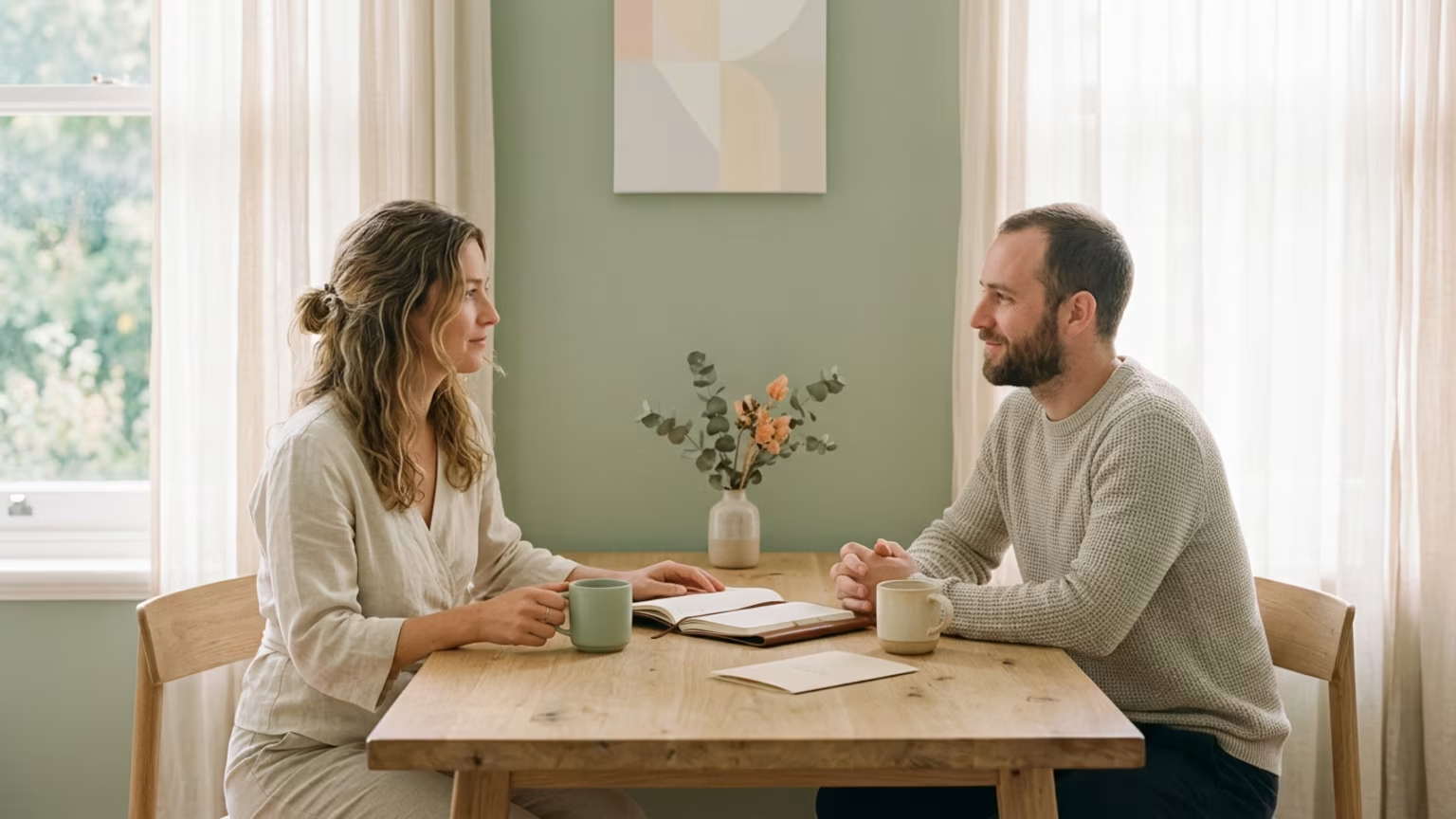
Instead of waiting for the next painful moment, try to talk about space in a calm time. You can both share what you need and agree on some simple guidelines.
Some examples of agreements are:
Agreements like these protect both of you. Your partner gets the space they need. You get some structure and touchpoints so you do not feel dropped or forgotten.
One of the hardest parts is what you do while they are taking space. If you sit and watch your phone, your anxiety will grow. So it is important to plan gentle things for yourself.
During that time, you might:
This is not a way to distract or numb out. It is a way to show yourself, "I matter too. My life is bigger than this one connection."
The thought of being replaceable can be very painful. It often comes from a deep belief that you are not special, or that anyone could take your place and do better.
To soften this, list qualities that are unique about you. Not in a forced, "positive thinking" way, but in a true way. For example, "I listen deeply," "I am thoughtful with small details," "I notice when people feel left out."
Also notice how you show up in relationships. The care you offer, the way you grow, the way you try. These are not replaceable. No other person is you. Space does not erase what you bring.
There is a difference between healthy space and hurtful distance. Healthy space is clear, time-limited, and followed by reconnection. Hurtful distance is vague, cold, and makes you feel small over and over.
Pay attention over time. Do they take space and then return with more calm and care? Do they listen when you share how their distance feels? Or do they disappear often, avoid talking about it, and blame you for reacting?
A simple rule can help here: "If space always feels like punishment, pause and review the relationship." You deserve a partner who cares about how their needs affect you.
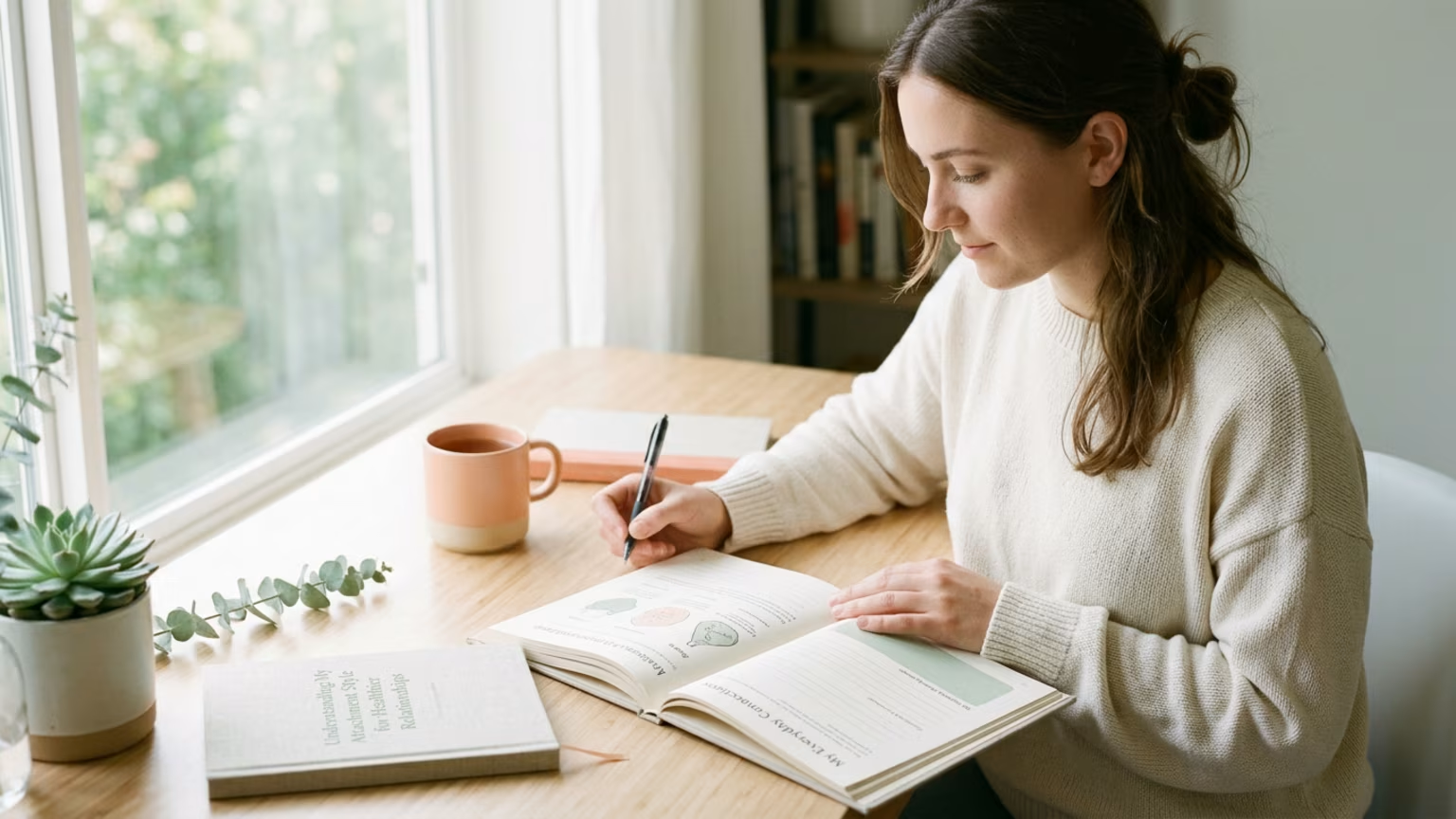
Understanding your attachment style can give you language and tools. If you feel very anxious when a partner pulls away, it can help to learn more about anxious attachment and how to move toward secure attachment.
You might like the guide Is it possible to change my attachment style. It talks more about how attachment can shift over time with awareness and practice.
As you learn what helps you feel safe, you can share that with your partner. For example, you might say, "It helps me so much when you send a quick text even when you need space." Small changes like that can slowly rewire the fear.
When you think, "When my partner needs space I instantly feel unwanted and replaceable," your whole sense of worth can feel tied to how this one person is acting. This is a heavy load for you and for the relationship.
Gently remind yourself of the other parts of your life that matter. Your friendships. Your work or studies. Your small daily joys. Your values and strengths. These do not disappear when your partner steps back for a few hours or a day.
If it helps, you can write a short sentence and keep it somewhere visible, like, "My worth does not change based on someone else's mood." Read it when the fear starts to rise.
Healing this pattern does not happen in one day. But small, steady changes can make a big difference in how you feel when your partner needs space. Over time, you can move from panic to understanding, from feeling replaceable to feeling grounded in your own value.
You may start to notice that space does not always mean something bad. Sometimes, they come back from alone time more relaxed and present. Sometimes, you use that time to tend to yourself, and you feel less empty and more whole.
As you practice naming your feelings, asking for clarity, and setting gentle agreements, the old pattern loosens. The thought might still appear, "They need space, so I am unwanted," but it will not be as loud. You will have more tools, more proof, and more trust in yourself.
If you find that fear of being left shows up in many parts of your love life, there is a gentle guide on this feeling called How to stop being scared my partner will leave me. It can sit next to this piece as you keep learning about yourself.
Most of the time, no. Many people need time alone to calm down, think, or recharge, even when they love their partner deeply. A helpful rule is to watch patterns over time instead of one moment. If they return, care about your feelings, and still invest in the relationship, their love is likely still there.
There is no single "normal," but what matters is clarity and care. A few hours after a tough day or argument, or an evening to themselves, is common for many people. If space stretches into days with no check-in, it is reasonable to ask for more communication and to share how that gap affects you.
Wanting contact and reassurance does not make you too needy. It means you are human and you bond through connection. The key is how you express that need. Using calm "I" statements and asking for clear times to reconnect can honor both your need for closeness and their need for rest.
If your partner always asks for space whenever a serious topic comes up, and never returns to it, that is important information. In that case, the problem is not space itself, but avoidance of emotional responsibility. You might set a simple rule like, "If we pause a talk, we must return to it within 24 hours," and see if they can meet that.
Start with your body. Take slow breaths, move a little, drink water, or step outside. Then do one small thing that reminds you who you are outside the relationship, like reading, drawing, or messaging a kind friend. Write down your thoughts instead of sending them right away, and promise yourself you will revisit them when you feel calmer.
In the next five minutes, write down the story you tell yourself when your partner needs space, then write one gentler story that could also be true. Keep this note somewhere you can reach it the next time the fear rises, so you have your own words to lean on instead of only the panic.
When the question returns as "When my partner needs space I instantly feel unwanted and replaceable," you can remember that this reaction has roots, but it is not the whole truth about you or your relationship. Little by little, you can build new patterns of safety, both with them and inside yourself.

A collective of writers and researchers specializing in behavioral psychology and relationship recovery.


Uncrumb is a calm space for honest relationship advice. Follow us for new guides, small reminders and gentle support when love feels confusing.
Learn how turning inward and reducing rumination after a loss helps you build stronger relationship boundaries, heal your heart, and reclaim your self-worth.
Continue reading
Uncrumb is a calm corner of the internet for women who want kinder love choices. Read the guides that fit your story, take what helps and return whenever you need a bit more clarity.