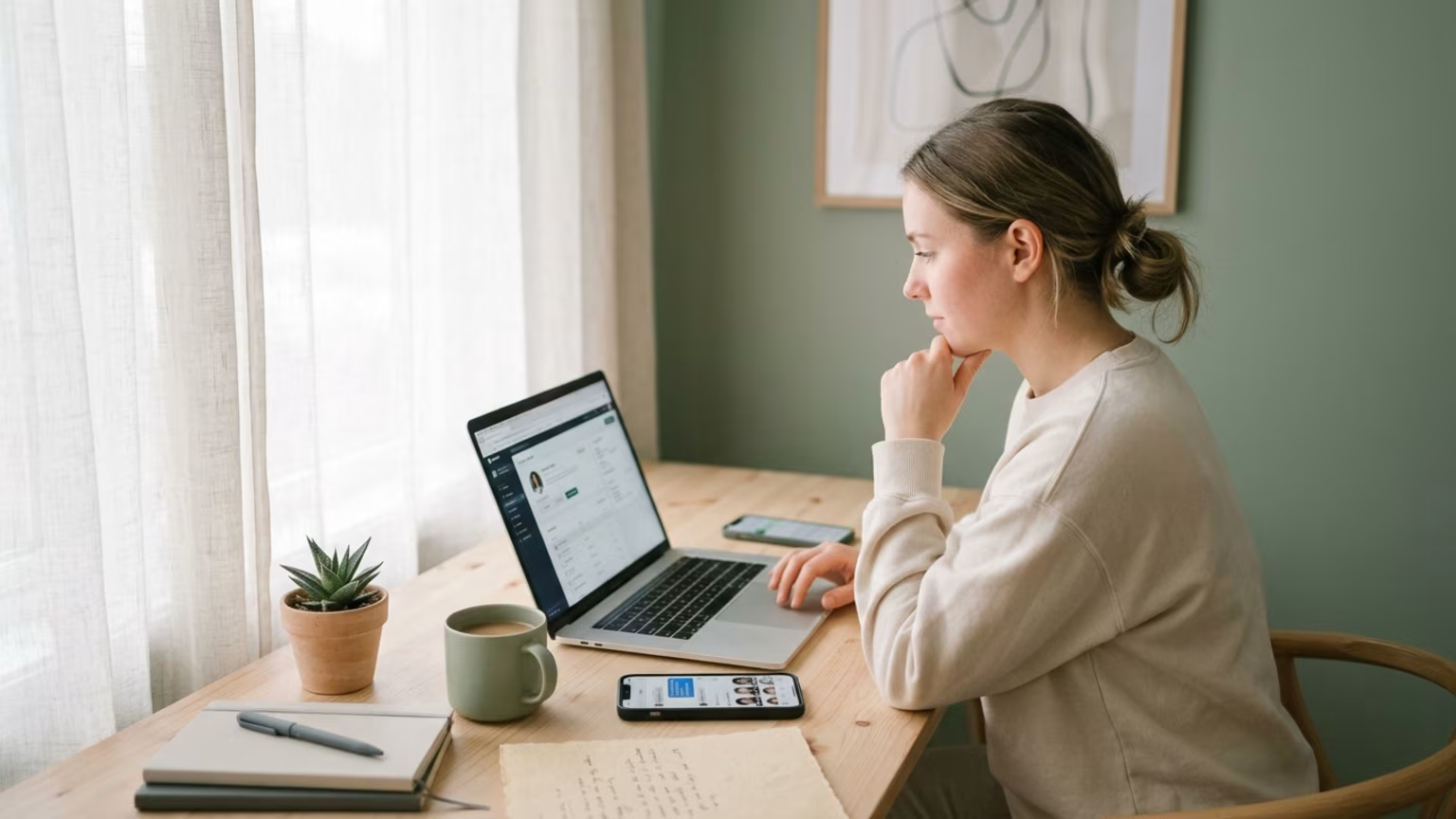
Modern dating






According to recent UTHealth Houston research reported by Texas Public Radio, heavy social media use is strongly associated with anxiety symptoms. The study surveyed 1,066 young people annually from 2018 through 2025. These participants were approximately 12 years old when the research began.
The researchers assessed mental health symptoms using established screening scales. These helpful scales included questions about difficulty sleeping and poor appetite. They checked for nervousness and trouble relaxing.
The findings focused on youth, but the underlying message feels incredibly relevant for adult women. Women in their twenties, thirties, and forties are experiencing profound digital fatigue. We spend hours swiping on dating profiles and waiting for messages to arrive.
This constant screen time can drain our emotional energy and leave us feeling disconnected from ourselves. We often push ourselves to stay visible on dating platforms out of fear of missing a connection. This pressure to remain constantly available can feel incredibly heavy for a tired heart.
Setting the phone down can feel terrifying when you are searching for love. However, protecting your mental space is far more important than answering every message instantly. The research invites us to look closely at how our digital routines truly make us feel.
The collective exhaustion we feel in the dating pool is very real. I remember staring at my phone on a Sunday afternoon. I willed it to light up with a message from him.
The silence was deafening, and I spent hours analyzing every word I had said the night before. It was not until I put the phone in another room and made a cup of tea that I realized my worth was not tied to his response time. That tiny act of creating physical distance from the device was my first step toward reclaiming my weekends.
Today, our team at Uncrumb hears similar stories from women who feel entirely depleted by digital dating. The constant swiping creates a cycle of hope and immediate letdown. We spend hours looking for a spark but often walk away feeling more alone.
Sometimes the hardest part of modern romance is the sheer volume of choices and voices. Every notification feels like a demand for your immediate emotional energy. It is completely understandable if you want to turn off your phone and simply read a book.
Many women force themselves to go on dates when they are already exhausted from swiping. This creates a cycle where every interaction feels strained and overly complicated. Stepping back from the screen helps you return to the dating world with renewed energy.
If you struggle with distinguishing anxiety from intuition when dating, taking a screen break can help. Digital overwhelm can easily turn into deep dating fatigue. It is normal to feel tired when your phone is constantly demanding your attention.
We are not designed to process hundreds of romantic rejections or mixed signals in a single afternoon. Your brain needs quiet time to rest, reset, and heal from small disappointments. Giving yourself permission to log off is one of the kindest things you can do.
Much of our online experience is built around performance rather than real intimacy. Jeff Temple is the lead researcher of the UTHealth Houston study and a psychologist. He suggested that repeated exposure to carefully selected images of other people could encourage unhealthy comparisons.
When we scroll through dating profiles, we are looking at highly curated versions of strangers. It is easy to feel inadequate when everyone else appears to have flawless relationships. This constant comparison steals our peace and deepens our feelings of isolation.
Temple noted that heavy social media use may displace in-person relationships. These offline activities are exactly what can support our emotional wellbeing. Real intimacy requires slowing down, making eye contact, and sharing quiet moments together.
We easily forget that behind every polished profile is a person who is navigating their own insecurities. This realization can help soften the harsh judgments we often direct at ourselves. You do not need a perfect digital presence to be entirely lovable.
Real connection does not require you to present a flawless version of your life. It simply asks you to show up as your honest and vulnerable self. You can only find the courage to be vulnerable when you are feeling grounded and rested.
It takes practice to notice when a digital habit is no longer serving your heart. When you experience swipe fatigue and emotional exhaustion, you are not alone. Stepping away from the screen allows you to reconnect with your own true feelings.
You do not have to perform perfectly to be worthy of deep affection. Real love is found in honest conversations and gentle patience. It is never found by forcing yourself to swipe when you are already feeling depleted.
The UTHealth Houston study provides specific numbers about our digital habits. More than 17% of the participants said they used social media for at least six hours per day. Those who reported at least six hours of daily use were twice as likely to report anxiety symptoms compared to those using it for less than one hour.
The same heavy-use group was three times as likely to report suicidal ideation as the under-one-hour group. The study reported a stronger association between heavy use and anxiety among girls. Girls reported spending more time on social platforms than boys did.
These numbers highlight a clear association rather than proof of direct causation. Temple stressed that young people who are already anxious might simply turn to social media for distraction. A separate 2026 study showed participants spent an average of six hours and 23 minutes on their phones daily.
That total included an average of two hours and 32 minutes on online social interaction apps. The 2026 study found an association between time spent on online social apps and anxiety. However, it did not find a significant association between total smartphone time and anxiety or depression.
This comparison suggests that the type and context of digital activity truly matters. The World Health Organization's Europe office reported that 11% of adolescents showed signs of problematic social media behavior. Texas Public Radio reported that Meta introduced a default daily time limit of two hours for teen accounts.
These statistics offer validation for the digital exhaustion you might be feeling right now. Seeing the data can help you realize that your overwhelm is a very normal human response. You are not failing at dating when you feel tired of the apps.
Temple noted that this research could help identify young people who face greater risks online. The study raises questions about whether improving the quality of our online experiences might protect our mental health. We can apply this same curiosity to our own adult lives and dating routines.
If you or someone you know is experiencing a mental health crisis in the United States, please seek help. The 988 Suicide & Crisis Lifeline provides free and confidential support. You can reach them by call or text at any time, and online chat is available 24 hours a day.
You do not have to participate in every chaotic digital trend to find real love. If online dating repeatedly leaves you feeling worse, you have full permission to reduce your exposure. A screen time reduction experiment can be a wonderful and gentle self-care practice.
A practical experiment could involve tracking when dating apps leave you tense, discouraged, or caught in comparison. This is a gentle self-observation practice rather than a reason for shame. Setting gentle boundaries when you feel dating fatigue is an act of deep self-respect.
Possible boundaries include removing dating apps from the bedroom entirely. You might try pausing notifications during work or avoiding app use during meals. These digital boundary practices were described by Tava Health and offer a great starting point for your peace.
Another simple option is setting a defined window for your dating apps each day. You can mute notifications outside that specific window to protect your quiet moments. This plan should be flexible and comforting rather than strict or punitive.
Protecting your digital peace is a beautiful way to practice self-compassion. If you struggle with setting social media boundaries with a former partner, these same limits can help soften the pain. You are the only person who gets to decide how much access the digital world has to your heart.
Remember that your worth is never determined by an algorithm or a missed text message. You are allowed to take a long break from the dating world without offering anyone an explanation. Your primary responsibility is always to your own emotional wellbeing.
Setting these limits is not about building walls to keep people out. It is about creating a safe emotional container where you can truly thrive. A gentle digital routine helps you save your best energy for the people who truly matter.
If an interaction brings up the familiar sting of a little heartbreak, close the app. Drink a warm cup of tea and remind yourself that you are worthy of a love that feels calm. You are allowed to protect your energy, trust your own timing, and take all the space you need.

A collective of writers and researchers specializing in behavioral psychology and relationship recovery.


Uncrumb is a calm space for honest relationship advice. Follow us for new guides, small reminders and gentle support when love feels confusing.
A new study suggests our brains need a 60-minute window to recover from stress. Learn how to use this gentle pause to heal from modern dating fatigue.
Continue reading
Uncrumb is a calm corner of the internet for women who want kinder love choices. Read the guides that fit your story, take what helps and return whenever you need a bit more clarity.