Attachment and psychology
Why am I scared my partner will see the real me?
Wednesday, January 14, 2026





This moment often shows up in small, quiet ways. It might be when your partner looks at you with real curiosity, and something in you pulls back. It might be when they ask a deeper question, and you change the subject or make a joke.
Many women quietly ask themselves, "Why am I scared my partner will see the real me?" It can feel strange because you may want closeness more than anything, yet feel frozen when it starts to happen. In this guide, we will look at why this fear is so strong and how you can feel a bit safer being yourself.
This fear is not a character problem. It is usually a protection you learned a long time ago. We will explore what makes this so hard, why it happens, and gentle steps that can help you show more of your real self at a pace that feels kind to your body and mind.
Answer: It depends, but this fear usually comes from old hurt, not current truth.
Best next step: Notice one moment today when you hide a real feeling.
Why: Awareness is the first step to change and softens automatic fear.
This fear can touch many parts of your life. It is not only about big talks or deep secrets. It often shows up in daily, simple moments.
Maybe your partner asks, "What do you really think?" and your chest tightens. You say, "It’s fine," even when it is not fine. After, you might think, "Why did I hide again?" and feel confused or frustrated with yourself.
Or your partner does something that hurts you a little. Instead of saying, "That stung," you smile and act okay. Later you replay the scene in your head. You might feel both angry at them and upset with yourself for staying quiet.
Some women feel like they play a role in the relationship. You might be "the cool one," "the easy one," or "the strong one." This role might keep things smooth on the surface. But inside, you can feel lonely, even when you are sitting right next to the person you love.
There can also be a lot of self-talk around this fear. Thoughts like:
This inner voice can be very strict. It can tell you that you must stay small, easy, and always okay. When you live with this voice for a long time, it can feel normal to hide. Hiding can even feel like love, because it seems like the only way to keep the relationship safe.
But over time, something else starts to hurt. You might notice that your partner knows your habits, your stories, and your body, but does not fully know your inner world. That gap can feel like a quiet ache. You may think, "If they really knew me, would they still love me?" and that question can feel both scary and important.
There are many human reasons this fear can show up. It is rarely about you being weak or dramatic. Often it is about what your body and mind learned when you were younger.
If the love you received as a child felt uncertain, your nervous system learned to stay on guard. Maybe a parent was warm one day and cold the next. Maybe love felt tied to good grades, good behavior, or not making trouble.
In that kind of world, being your full self could feel risky. If you were sad, angry, loud, or needy, love might pull away. So you learned to be very careful about what parts of you were "allowed" to be seen.
As an adult, this can show up as anxious attachment. Anxious attachment is when relationships feel shaky inside, even when they look fine from the outside. You might fear being left, think a lot about your partner’s moods, and feel calm only when you feel very close and reassured.
Many women with this fear feel caught between two painful beliefs. One belief is, "I am too much." The other is, "I am not enough." These can show up in thoughts like:
When these beliefs live inside you, it makes sense that being seen feels unsafe. Every time you think about opening up, your mind may jump to the worst case. It might say, "If I show this, they will leave," or "If I show this, they will think less of me."
Underneath the fear, there is often shame. Shame is that heavy feeling of "There is something wrong with me." It is different from guilt. Guilt says, "I did something wrong." Shame says, "I am wrong."
If you carry shame, being seen feels like a risk of being fully exposed. Not just your habits or your mistakes, but the part of you that thinks you are unworthy. Your body may react strongly to this risk with tightness, racing thoughts, or a wish to disappear or change the subject.
This is why a simple question from your partner like, "What do you need right now?" can feel huge. It is not just a question. It can feel like a test of your worth. Your system might rush to protect you by hiding your true answer.
There is also a painful paradox. The things you do to feel safe can slowly make you feel less close. When you hide your needs to avoid conflict, your partner cannot meet those needs. When you act "cool" to avoid looking needy, your partner may think you do not care that much.
Over time, this can create distance. You might feel unseen and under-appreciated. Your partner might feel confused about what you really feel. This distance then seems to "prove" the belief that your real self is not welcome, even though it began with hiding, not with rejection.
Many women also link love with constant validation or sex. You might feel safe only when your partner is very close, very responsive, or very physically affectionate. When that level drops even a little, panic can rise. You might think, "They don’t want me," or "Something is wrong," even when nothing big has changed.
All of this makes the question "Why am I scared my partner will see the real me?" very understandable. Your system is not broken; it is trying to protect you using old rules that once made sense.
This fear does not shift overnight, and it does not need to. You do not have to force yourself to share everything at once. Small, steady steps are often more kind and more effective.
Notice when the fear shows up, without judging yourself. You might say quietly inside, "I am feeling scared of being seen right now." This simple naming can create a little space between you and the fear.
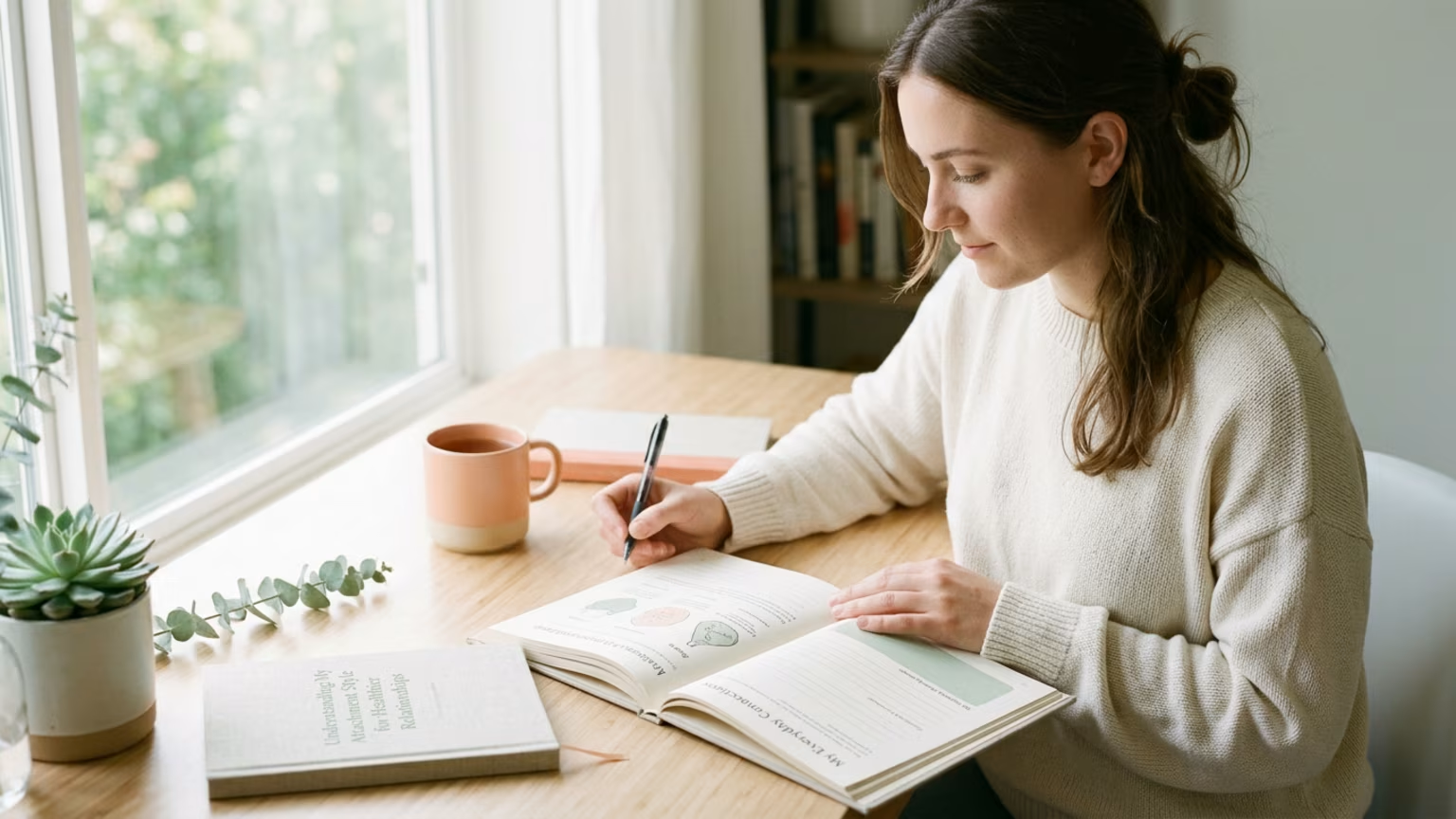
You can keep a small note in your phone or journal with moments when you hid or changed yourself to feel safe. Do this gently, as if you are studying a pattern, not looking for proof that you are broken.
A helpful rule you can remember is, "If it costs your peace, it is too expensive." If hiding yourself is starting to cost you your peace, it is okay to question that pattern.
You do not need a huge confession to start being more real. Begin with very small things that feel just a little bit stretchy but not overwhelming.
After each small act, notice what happens. Most of the time, your partner will stay. They might even respond with care or interest. Let your body register these moments as new evidence that being seen can be safe.
Many women hide their needs because they fear being "too much." But every human has needs in love. Needing closeness, communication, or reassurance does not make you weak; it makes you human.
You can practice simple, clear sentences like:
Try to stick with "I need" rather than "You never" or "You should." This makes it easier for your partner to hear you without becoming defensive.
When you feel scared to be seen, pause and ask, "What story am I telling myself right now?" Maybe the story is, "If I cry, they will think I am unstable," or "If I say I want more, they will leave."
Then gently ask, "Is this a fact, or is this a fear?" You do not need to push the fear away. Just name it as a fear, not a truth. You might also ask, "Has anyone in my life ever stayed when I was real?" and remember those people.
If your partner has actually shown care when you were vulnerable before, let that count more heavily than your fear story, even just by a little bit.
Sometimes the fear of being seen is really a fear of what will happen if you say no. You may worry that setting a boundary will make your partner angry, distant, or done with you.
But healthy boundaries are a sign of self-respect, not rejection. A boundary is simply a line that protects your well-being. It can sound like, "I can’t talk about this right now," or "I want to see you, but I need advance notice."
A simple rule can help here: If someone punishes you for a respectful boundary, that is useful information about them, not proof that your needs are wrong.
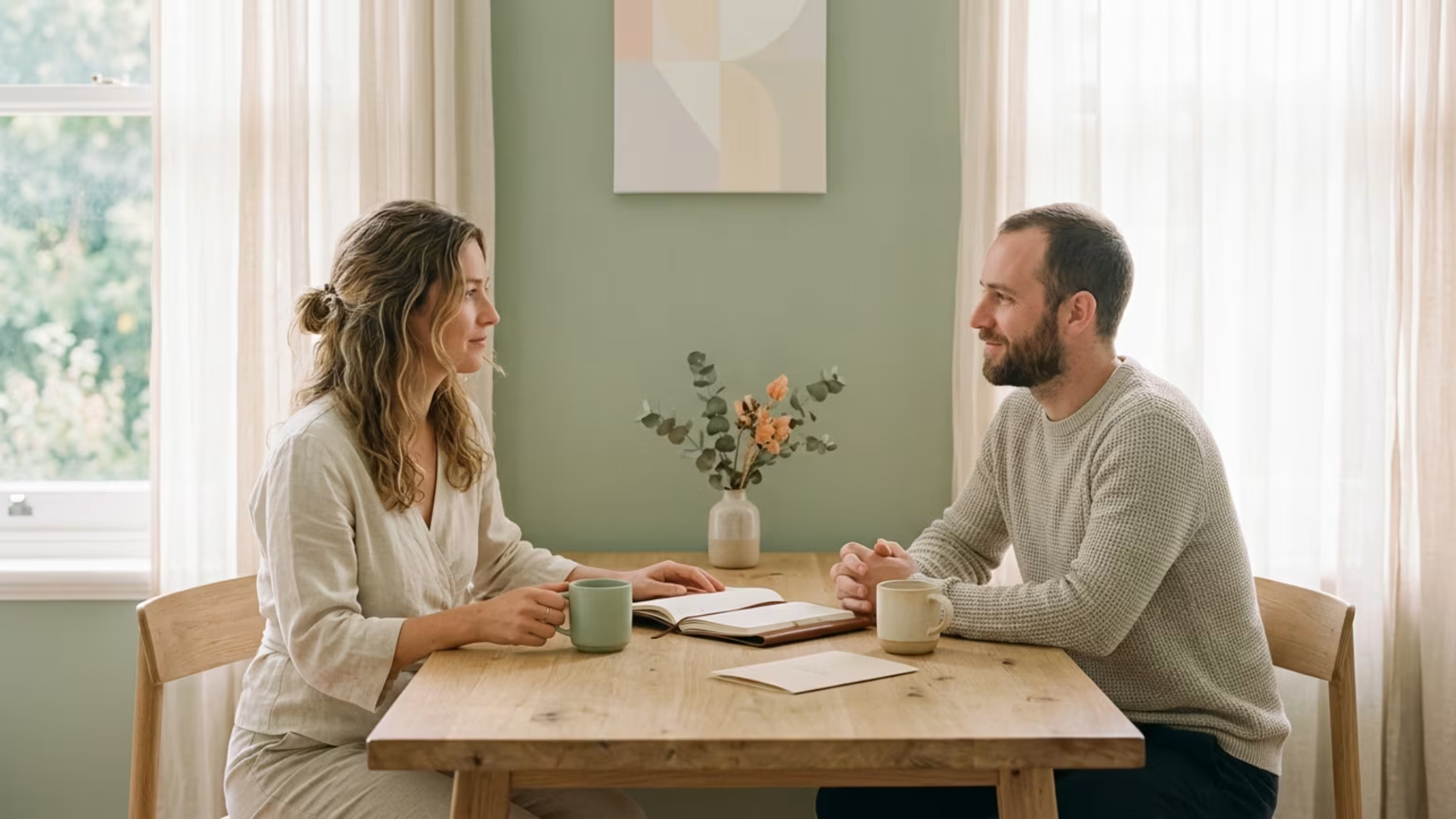
If your partner is generally kind and stable, it can help to name this pattern out loud. You might say:
You are not asking them to fix you. You are inviting them to understand your inner world. Many partners feel relieved when they know what is going on and how they can support you.
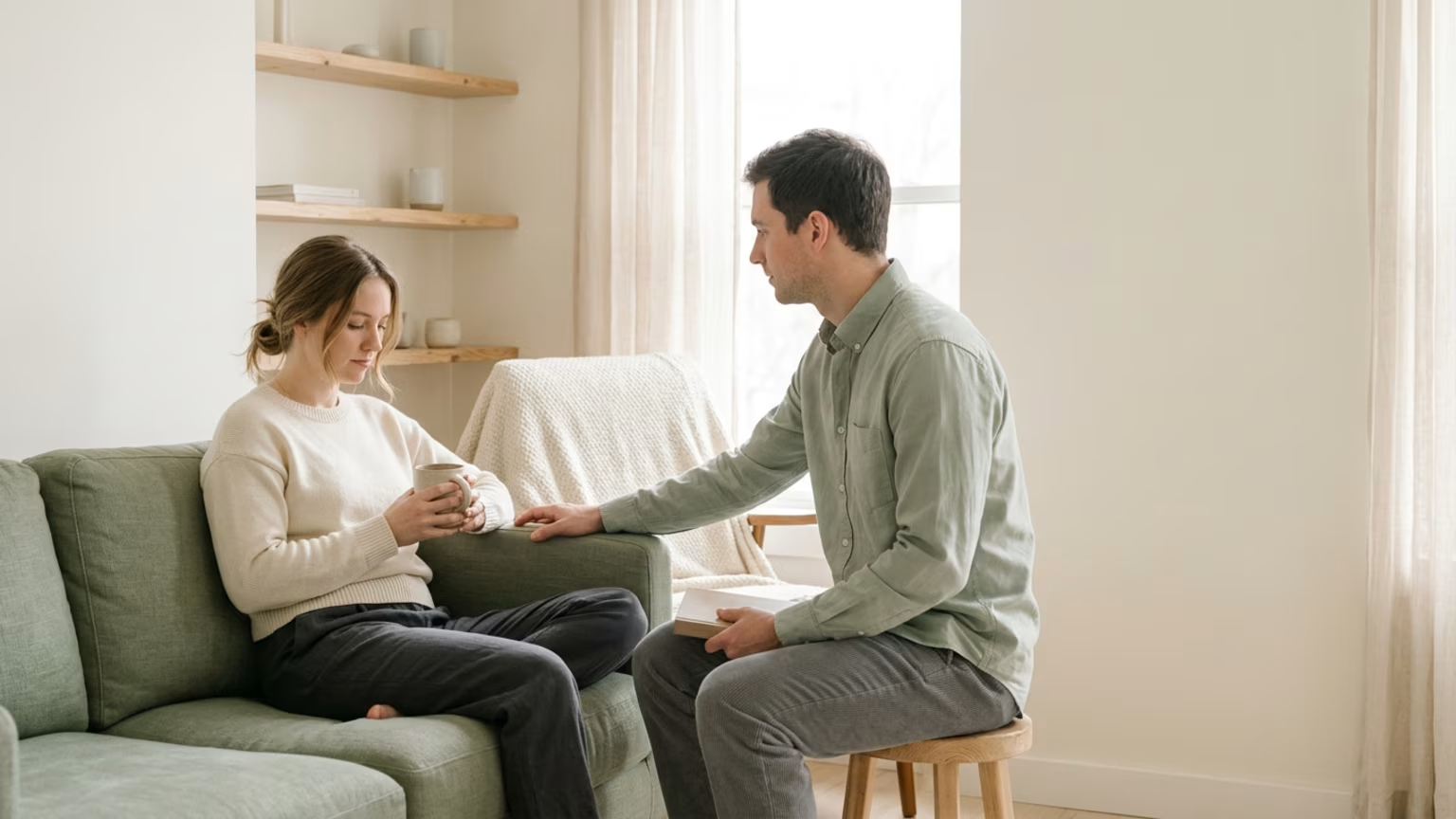
If this fear feels very strong or linked to past trauma, it might be helpful to talk with a therapist. Therapy is simply a safe space to explore how your past and present connect. It is not a sign that you are broken; it is a sign that you are taking yourself seriously.
Some women also find support in writing, workshops, or calm relationship guides. You might like the guide Is it possible to change my attachment style if you want to understand this pattern more deeply.
Healing this fear is not about becoming someone who shares everything all the time. It is about feeling safe enough to be closer to who you really are, at a pace that feels right for you.
Over time, as you try small acts of honesty and see that you are not left or shamed, something inside can soften. Your emotional ups and downs may feel less intense. You might still feel scared sometimes, but the fear no longer decides everything for you.
Many women notice that they start to feel more like the same person in all parts of life. The way you are with friends, at work, and alone begins to match who you are in your relationship. This can feel simple, steady, and surprisingly peaceful.
Real intimacy is not about being perfect or never feeling scared. It is about being seen little by little and learning, through real experience, that your true self is not too much and not too little. Just you.
For many women, the fear does not vanish completely, but it gets much quieter. It stops running the show. The goal is not to never feel scared; the goal is to be able to act with care for yourself even when fear is present.
A simple step is to notice one moment a week when you feel this fear and choose one tiny, safe truth to share anyway. Over time, your body learns that being real does not always lead to loss.
This is a very common question. One way is to look at patterns across your life. If you feel scared to be yourself in most relationships, including with friends and family, the fear is likely more about old wounds and your attachment style.
If you feel mostly safe being yourself with others but tense around this partner, it may be about how they respond. If they often mock, dismiss, or ignore your feelings, that is not your fault. In that case, the healthiest move might be to protect yourself and rethink the relationship.
If your partner seems distant, shuts down during emotional talks, or avoids commitment, they may lean avoidant. Avoidant means they feel safer with space and can feel overwhelmed by closeness. This can make your fear of being seen feel even stronger.
No amount of hiding or over-giving can change another person’s attachment style by itself. If the gap between you feels huge, you may find it helpful to read a gentle guide like How to stop being scared my partner will leave me. Sometimes the kindest choice is to accept that you need a partner who can meet you emotionally.
It can be fair, as long as you are willing to be honest with yourself and grow. Many women need time to unwind old patterns. You do not have to be fully healed to be in a relationship.
What matters is that you are slowly moving toward more truth, not away from it. Even small steps, like naming your fear or sharing one extra feeling a month, count as progress.
Take five minutes and write down one recent moment when you hid a real feeling or opinion from your partner. Then write what you wish you had said instead, in one or two simple sentences.
You do not have to send or say it today. Just letting yourself see your own truth on paper is a powerful first step.
This does not need to be solved today. But every small act of honesty with yourself makes it a little easier to let someone else see the real you, too.

A collective of writers and researchers specializing in behavioral psychology and relationship recovery.


Uncrumb is a calm space for honest relationship advice. Follow us for new guides, small reminders and gentle support when love feels confusing.
Modern dating feels exhausting. Learn how to navigate dating fatigue and reclaim your peace with gentle boundaries and intentional connection.
Continue reading
Uncrumb is a calm corner of the internet for women who want kinder love choices. Read the guides that fit your story, take what helps and return whenever you need a bit more clarity.