Attachment and psychology
Why am I scared of real intimacy but afraid of being alone too?
Thursday, February 5, 2026





There is a very real and painful tension in the question, "Why am I scared of real intimacy but afraid of being alone too?" It can feel like you are pulled in two opposite directions at the same time. This piece covers what this usually means, why it happens, and how you can gently move through it.
Many women feel this strange mix where they want closeness, but when someone gets emotionally near, they feel panic or want to pull away. When they are on their own again, the loneliness hurts and the same question returns, "Why am I scared of real intimacy but afraid of being alone too?" This loop can feel confusing and heavy.
This guide will walk through what is happening inside you, how past experiences and attachment patterns shape this fear, and small, kind steps you can take right now. You do not have to pick between being deeply attached and completely alone. We will explore how you can build connection in a slow and safe way.
Answer: It depends, but this pattern usually comes from old protection, not brokenness.
Best next step: Notice one moment today you pull back from closeness and name the fear.
Why: Seeing the pattern clearly is the first step to soft, real change.
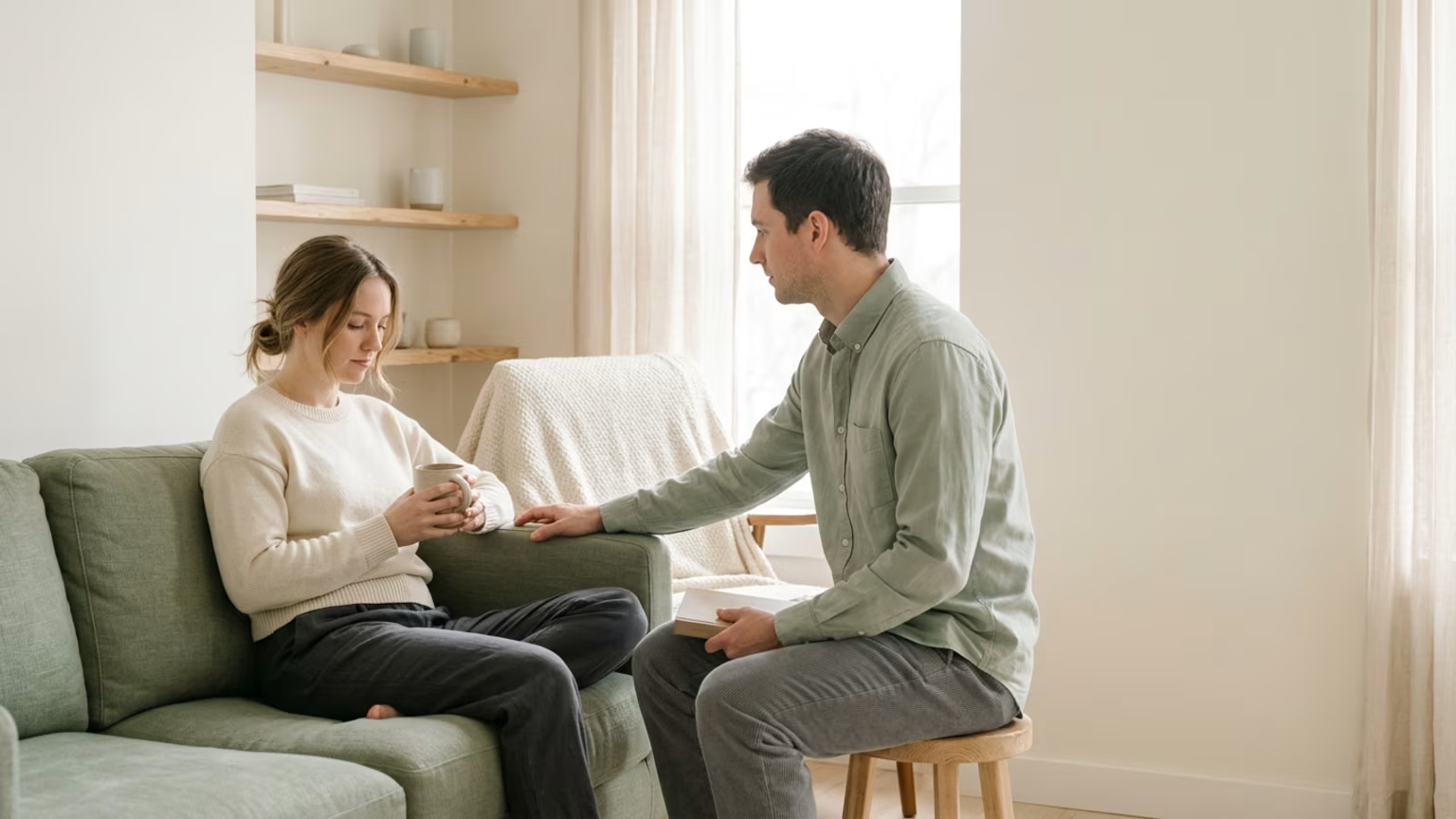
This push and pull can show up in very normal moments. Maybe you are on the couch with someone you like and they look at you with warmth, and a part of you wants to lean in while another part wants to change the topic or check your phone.
Sometimes you crave a message from them, but when they finally text or ask to meet, you feel pressure in your chest. You might think, "This is too much," or "I need space," even though you were sad just minutes ago because they felt far away.
There can also be a quiet voice that says, "Something is wrong with me." You may wonder why other people can let love in while you feel frozen, confused, or restless when things start to get real.
In daily life, this can look like always choosing men who are not fully available, so the intimacy never needs to go too deep. Or you might end things as soon as someone becomes serious, then lie awake at night missing them and doubting your choice.
You might notice yourself saying things like, "I like him, but not that much," or "The timing is just off" when the truth is more mixed. Part of you likes him a lot, and part of you is scared to be fully seen, needed, or disappointed again.
This inner conflict is not you being dramatic or broken. It is usually a sign that different parts of you want different kinds of safety at the same time.
When you ask, "Why am I scared of real intimacy but afraid of being alone too?" you are really asking about safety. One part of you believes that closeness is where love and support are. Another part believes that closeness is where hurt and loss live.
Many women who feel this have been hurt in relationships before. This could be childhood, where love felt unpredictable, critical, or cold. It could be past partners who lied, cheated, pulled away, or made you feel like you were "too much."
When your body and mind go through pain like that, they start to build a quiet rule, something like, "Do not get too close, it is not safe." This rule lives under the surface. You might not think it in words, but your body reacts when someone moves toward real intimacy.
Real intimacy here means being emotionally known and seen, not just sex or time together. It is when someone knows your fears, your hopes, and the parts you are ashamed of. If these parts were once laughed at, ignored, or used against you, your system will try hard to protect them now.
Attachment style is a simple way of talking about how safe or unsafe close relationships feel to you. It grows from your early experiences and continues through later partners. Many women who feel both scared of intimacy and scared of being alone have what is often called a fearful or mixed attachment.
This can look like wanting to be loved deeply, but assuming that anyone who gets close will either leave or control you. Your nervous system sends mixed signals. When someone steps back, you chase. When they step closer, you freeze or push away.
It is like having one foot on the gas and one foot on the brake. You are not being "too much" or "too dramatic." You are trying to move toward connection while also trying to keep yourself safe from old pain repeating.
There are often two main fears working at the same time. One is a fear of rejection or abandonment, the fear that if someone really knows you, they will walk away or stop caring. The other is a fear of engulfment, the fear that if someone is very close, you will lose yourself, your freedom, or your sense of control.
So when you are alone, the fear of rejection is loud. Thoughts like, "No one will ever love me," or "I will always be alone" rise up. You want closeness to prove these thoughts wrong.
But when someone is actually close, the fear of engulfment can wake up. You might think, "If I let him in, I will lose myself," or "If I depend on him, I will be weak." Your body may feel trapped, tense, or irritable, even if the person is kind.
Low self-worth adds another layer to this. If part of you believes, "I am not good enough," or "I am too much," intimacy can feel like a test you are sure you will fail. Letting someone see the real you feels like offering proof that your worst fears about yourself are true.
Shame is the heavy feeling that there is something wrong with who you are, not just what you did. Shame often grows from harsh criticism, emotional neglect, bullying, or partners who blamed you for their own behavior.
When shame sits in the middle of your chest, intimacy becomes risky. You think, "If they see the real me, they will leave," or "If I ask for what I need, they will think I am needy or crazy." So you protect yourself by pulling away or acting like you do not care that much.
When you put all of this together, the pattern makes sense. The fear of being alone pushes you toward people, apps, relationships, and memories. The fear of real intimacy pulls you back the moment things begin to feel serious, vulnerable, or out of your control.
This is not self-sabotage in a cruel sense. It is protection that is now overactive. What once may have kept you safe is now keeping you stuck. The task is not to fight these fears, but to listen to them and gently update them.
You are not stuck this way forever. Attachment patterns and beliefs about love can change over time, especially with awareness, kindness toward yourself, and healthier experiences with safe people. You might like the guide Is it possible to change my attachment style.
Healing fear of intimacy while also soothing fear of being alone takes time, but you can begin with small, steady steps. You do not need to force yourself into a serious relationship to get better at closeness. The goal is to slowly show your body and mind that connection can be safe.
Start by giving simple names to what is happening. When you feel the push and pull, try to notice both fears without judging yourself. For example, "Part of me is scared of getting hurt," and "Part of me is scared of being alone forever."
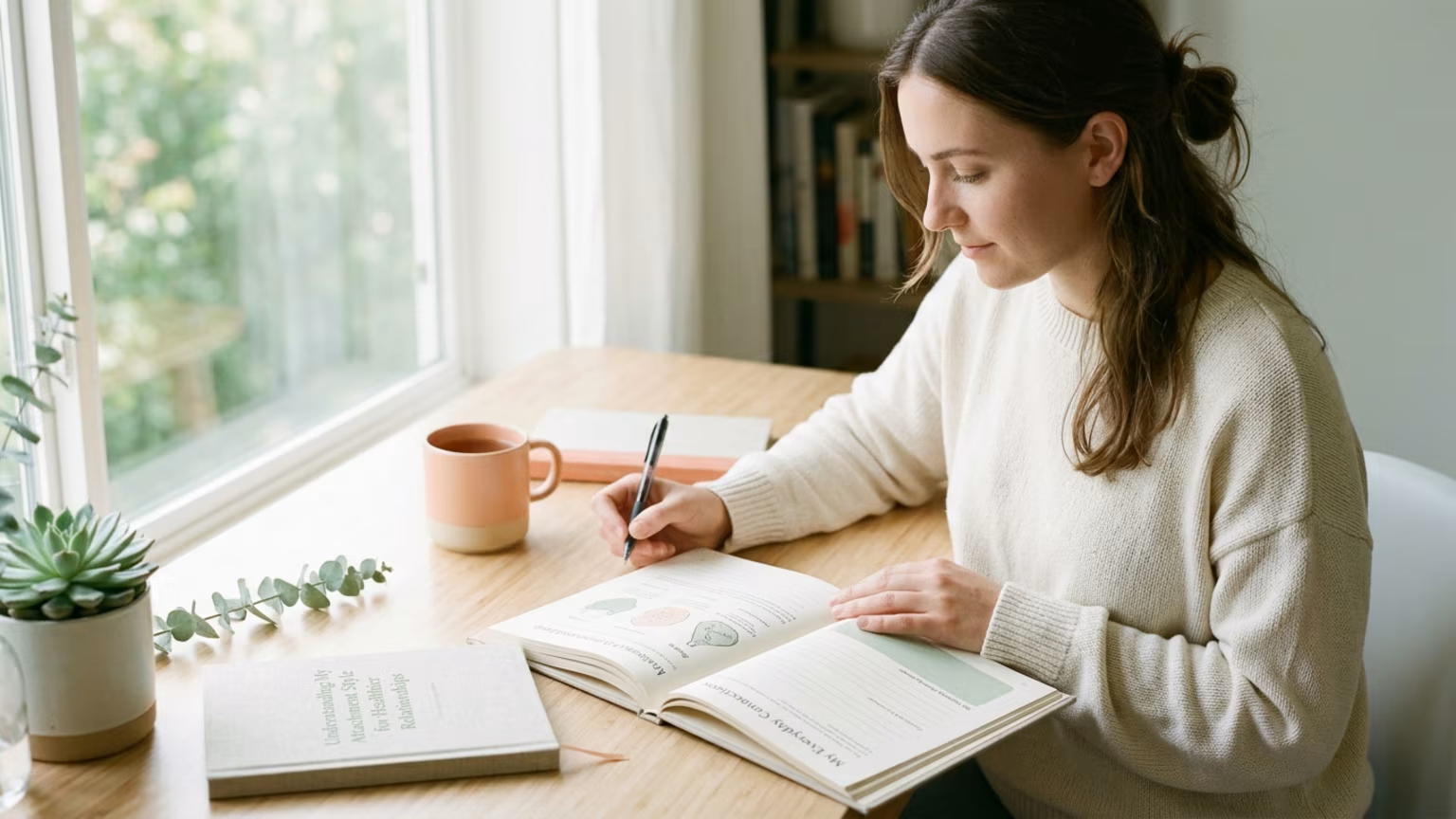
You can write these down in a journal. When you catch yourself pulling away after someone shows care, pause and ask, "What is this part of me trying to protect?" Often, the answer is something like, "It is trying to protect me from being hurt again." This alone can soften the shame.
A helpful rule to remember is, "If it costs your peace, it is too expensive." This applies to pushing yourself too hard, staying in unsafe situations, or ignoring your feelings to please others.
Romantic relationships often feel high stakes. This can make your nervous system react strongly. It can help to practice intimacy and connection in lower pressure spaces, like with friends, family you trust, or even in support groups or therapy.
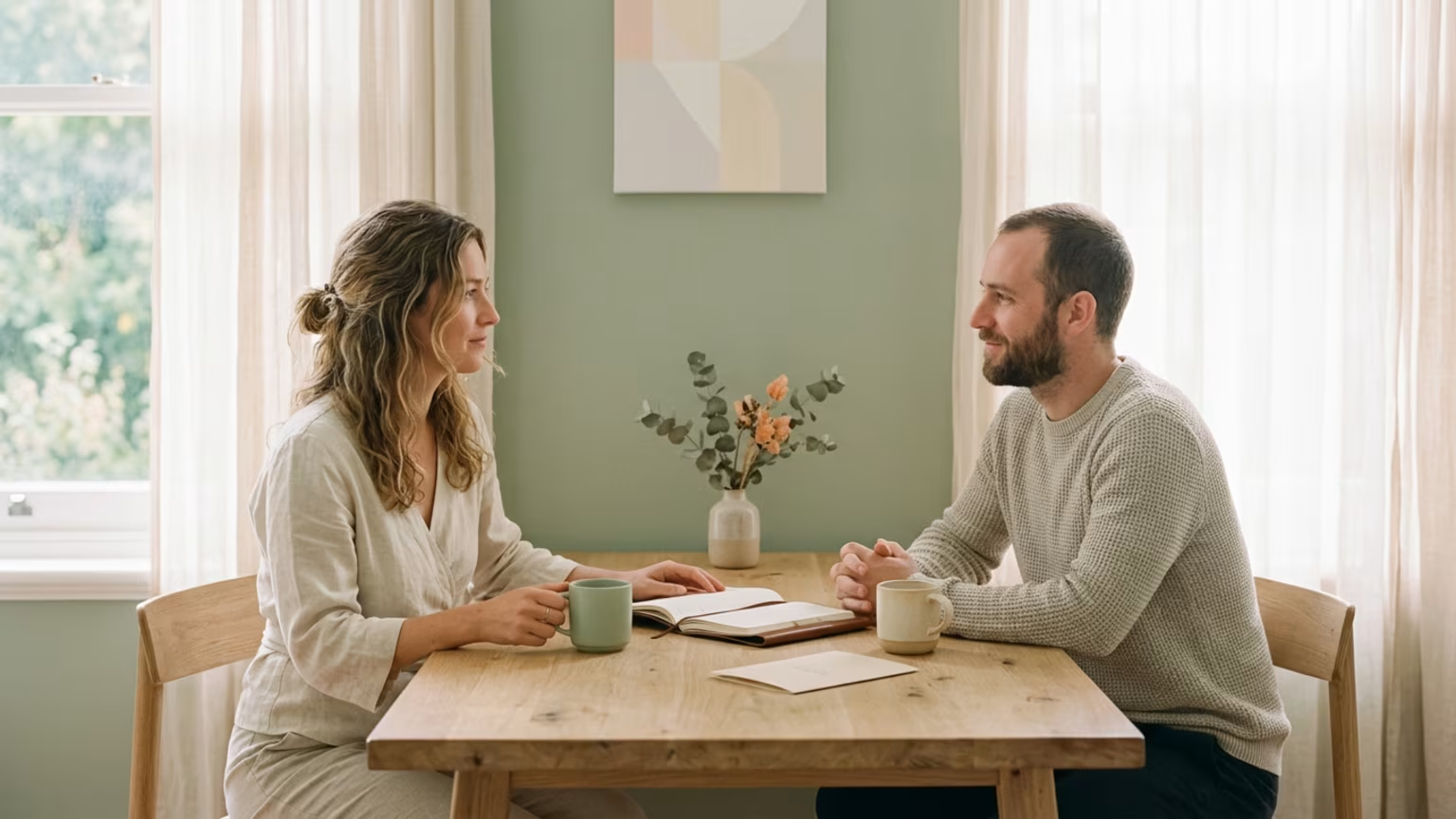
Try choosing one person in your life who feels mostly safe. Share one small, honest thing with them that you usually hide, like "I have been feeling lonely lately" or "I get scared when people get too close to me." Notice how they respond.
These small moments show your system that being seen does not always lead to shame or loss. Over time, this can make it easier to allow emotional intimacy in dating as well.
When you are dating or in a relationship, think in tiny steps, not leaps. You do not need to share your deepest pain on the third date to be "healthy." You also do not need to bolt the first time you feel uneasy.
Each small step is a little experiment. Afterward, check in with yourself. What helped you feel safe? What felt too much? Adjust from there, gently.
Fear of being engulfed often eases when you trust yourself to set and keep boundaries. Boundaries are simple lines about what is okay for you and what is not. They keep you from losing yourself in another person.
Some examples are:
When you know you can protect your own space, letting someone emotionally closer feels less scary. You are not handing them your whole life; you are sharing it.
Fear of intimacy is not just in your head; it is also in your body. Your chest may feel tight, your stomach uneasy, your jaw clenched. When this happens, try a few simple grounding tools.
You can even say quietly to yourself, "This is just a feeling. I am safe right now." Over time, your body learns that closeness does not always mean danger.
It helps to remember that being alone and feeling lonely are not always the same thing. Alone time can be supportive and rich when it is chosen, not forced. Loneliness is the feeling of not being emotionally connected, even if others are around.
To soften loneliness, try building a small web of connection that is not based on one person. This might include:
When your life has more than one source of connection, romantic intimacy feels less like a life-or-death need. There is more space for choice.
The belief "I am unlovable" or "Something is wrong with me" is often at the core of this pattern. This belief is not a fact; it is a story you learned from past pain. It deserves to be gently questioned.
You can try a simple practice. Each evening, write down one small way you showed care or strength that day, even if it seems tiny. For example, "I checked on a friend," or "I listened to my own limits."
Over time, this builds a more balanced view of who you are. You start to see that you are not just someone who gets hurt or pushes people away. You are also someone who cares, tries, and learns.
If this push and pull feels very strong, confusing, or linked to deep trauma, a therapist can be a very helpful ally. Look for someone who feels gentle, clear, and respectful of your pace.
Therapy offers a space where you can practice intimacy in a safe, boundaried way. You share your thoughts and feelings, and your therapist stays kind and steady with you. Over time, this can rewrite some of the old rules in your nervous system about what closeness means.
Approaches like parts work or inner child work can help you meet the younger parts of you that still feel afraid. You can learn to comfort them instead of pushing them away or letting them run the show.
Healing this pattern is not about forcing yourself to be fully open or perfectly independent. It is about building a relationship with yourself where both needs are honored. The need for closeness and the need for space can learn to live side by side.
Over time, you may notice that you can stay present for a real, honest talk without shutting down or picking a fight. You might feel more able to enjoy alone time without falling into despair, and more able to let love in without feeling like you will vanish inside it.
Healthy intimacy is not all-or-nothing. It is a series of small, mutual steps where you feel both connected and respected. There is a gentle guide on feeling scared of loss called How to stop being scared my partner will leave me.
This fear is a signal, not a shameful flaw. It simply means there are old hurts and protections that need care. When dating, be honest with yourself about your pace and limits, and try to choose people who respect your boundaries. A simple rule is, if someone rushes or mocks your pace, they are not for you.
One sign is when you feel the urge to leave or pick fights right after moments of closeness or kindness. Another sign is when your reasons for leaving feel vague, like "I just got bored" or "The spark is gone," but you also feel deep sadness and confusion. Try pausing before big choices and give yourself 24 hours before acting. If the urge to run drops a bit after you calm down, it may be fear, not truth.
Attachment patterns can change with time, awareness, and new kinds of relationships. Every time you have a safer, kinder experience of closeness, your system learns a new possibility. Focus on consistency, small steps, and people who feel emotionally steady. Change is usually slow, but it is very real.
Feeling drawn to people who are distant, taken, or noncommittal is very common in this pattern. Part of you gets the feeling of longing without the risk of real vulnerability, because true intimacy is unlikely to happen. Begin by naming this pull clearly and choosing one small way to step back when it shows up, like limiting contact or not starting new chats late at night.
Sometimes a short, intentional pause can help you reset and focus on your relationship with yourself and your support network. It does not have to be forever, and it does not mean you are failing. You might choose a set time, like three months, to focus on therapy, friendships, and hobbies. If dating feels only painful and confusing right now, a pause can be a kind choice.
Take a piece of paper or open a note, and write two lists with the titles "What scares me about being close" and "What scares me about being alone." Spend five minutes adding honest, simple lines under each. When you are done, place a hand on your heart and thank yourself for telling the truth.
Today you began to listen to the parts of you that want love and the parts that want safety. That alone is a real step toward the kind of intimacy that can hold you, without swallowing you.

A collective of writers and researchers specializing in behavioral psychology and relationship recovery.


Uncrumb is a calm space for honest relationship advice. Follow us for new guides, small reminders and gentle support when love feels confusing.
Learn how turning inward and reducing rumination after a loss helps you build stronger relationship boundaries, heal your heart, and reclaim your self-worth.
Continue reading
Uncrumb is a calm corner of the internet for women who want kinder love choices. Read the guides that fit your story, take what helps and return whenever you need a bit more clarity.