Modern dating
Why does online dating make me feel more insecure not more hopeful?
Tuesday, February 24, 2026





Many women download a dating app feeling open and curious, then feel worse within a week. The swipes start to feel like a test. The silence after a match can feel loud.
That is why the question comes up so often: Why does online dating make me feel more insecure not more hopeful? It can happen after one awkward chat, one ghost, or even just 10 minutes of scrolling.
This guide walks through why apps can pull you into doubt, and what helps you feel steady again.
Answer:Yes, apps often trigger insecurity more than hope.
Best next step:Set a 15 minute daily swipe limit today.
Why:Apps push comparison and fast rejection with little warmth.
Online dating can flip your mood quickly because it hits a few tender spots at once. It is social. It is visual. It is fast.
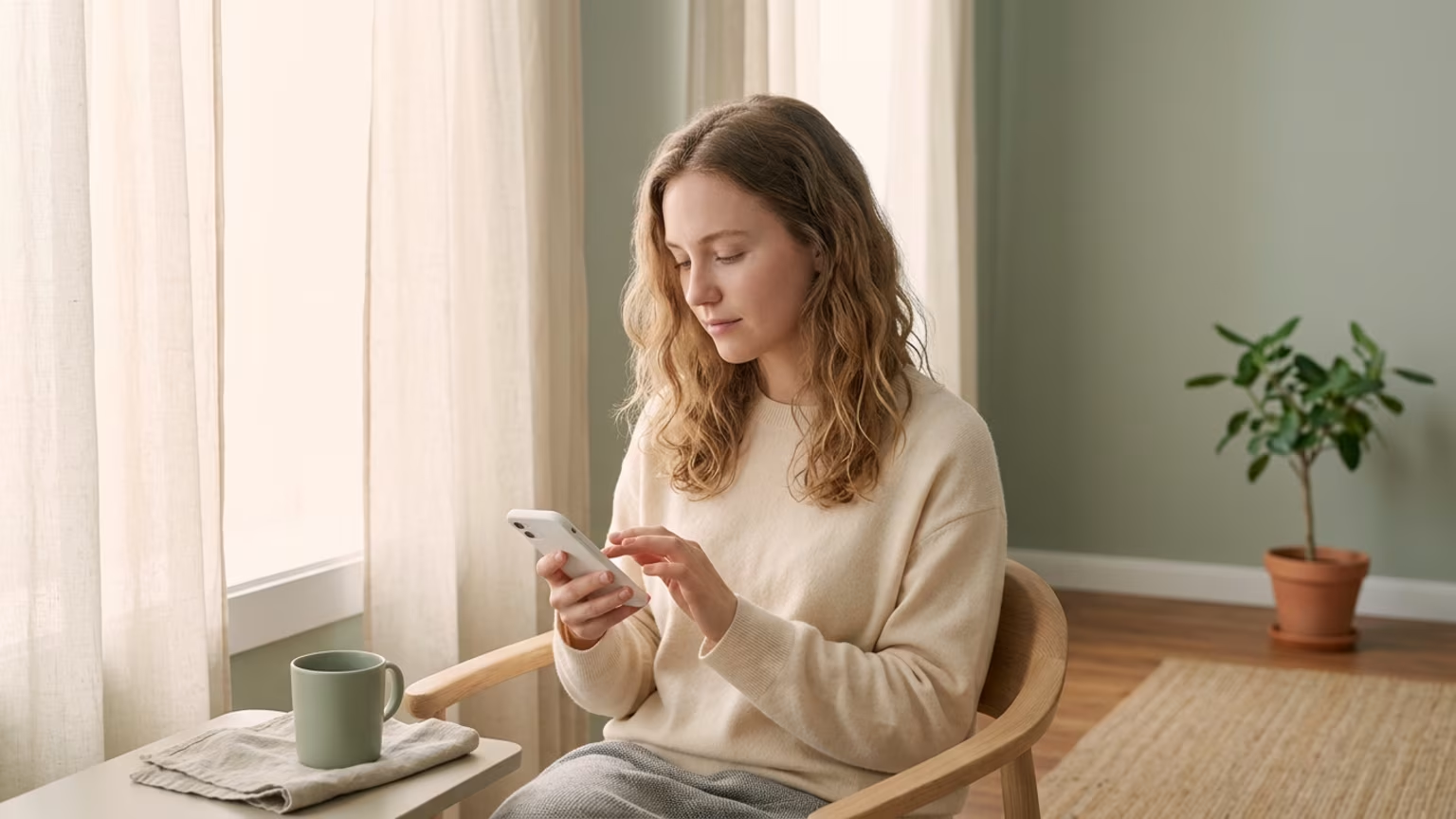
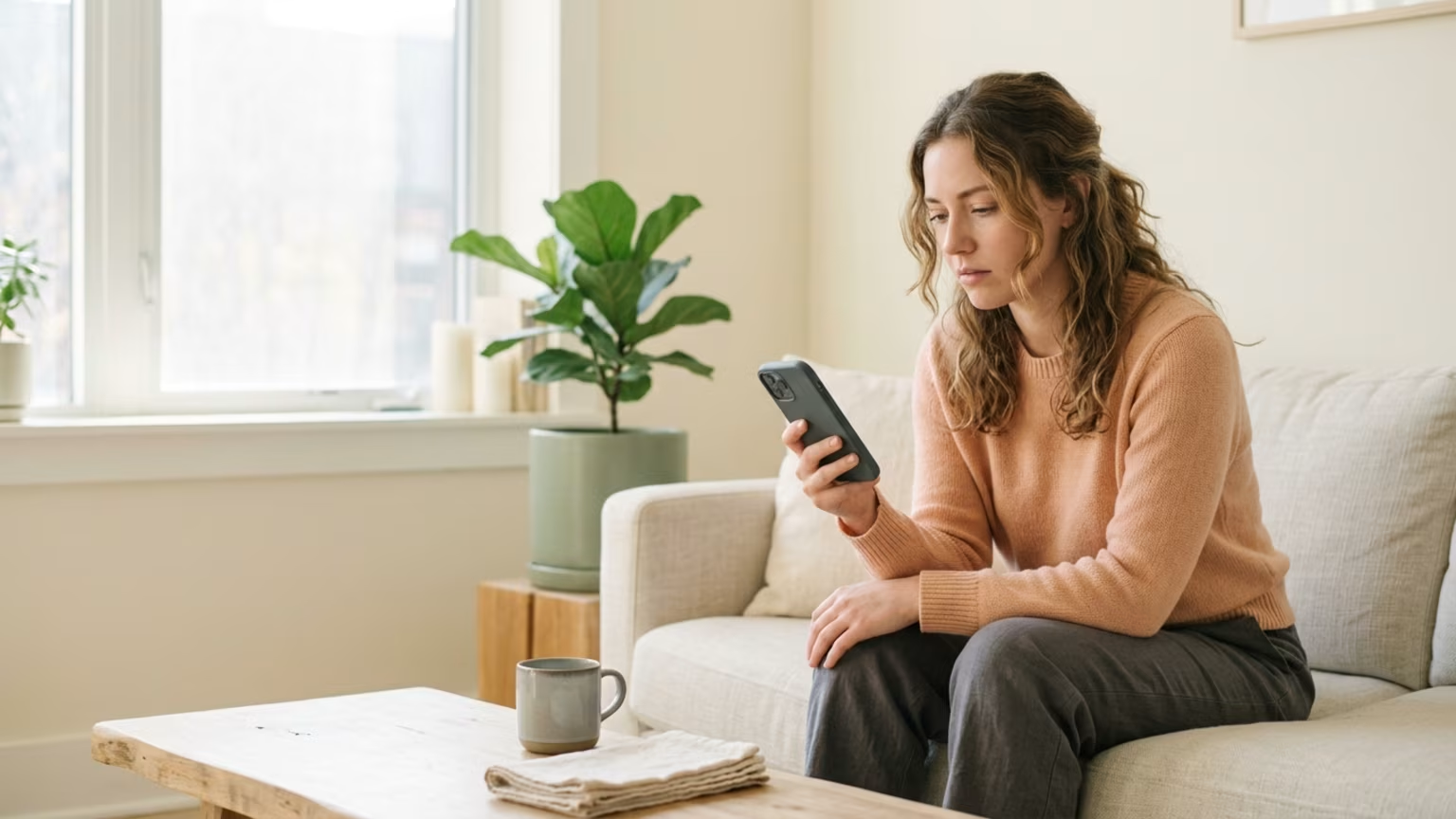
One moment you feel fine. Then you open the app, see someone you like, and notice your stomach drop.
Sometimes it starts with a small moment. You change a photo, then wonder if it is “good enough.” You reread your bio, then feel embarrassed for wanting love at all.
It can also start after a match. The chat is light. Then it slows. Then it stops. Your mind fills in the blank.
Ghosting is when someone stops replying with no explanation. On apps, ghosting is common because it is easy to disappear.
Even when nothing “bad” happens, the app can still drain you. You see so many faces. You feel like you should be excited. But you feel tired instead.
A lot of people go through this. The speed of the app does not match the speed of real trust.
It is not because you are weak. It is often because the app is built around quick impressions and constant choice.
Hope grows from warmth, time, and clear effort. Apps often give the opposite: speed, uncertainty, and comparison.
On apps, your face is often the first “hello.” That can make you look at yourself the way you fear others look at you.
You may start zooming in on small things. Skin. Weight. Smile. Age. It can feel like you are trying to earn basic kindness.
This can happen even if you usually feel okay in your body. The app puts your appearance at the center, again and again.
Profiles are not real life. They are highlights. Best photos. Best angles. Clean jokes. Big trips.
When you scroll, your mind starts ranking. Them. You. Them. You. That can make you feel “less than” without you noticing at first.
Comparison does not need to be true to hurt. It only needs to be repeated.
In person, a slow fade usually has context. You can sense distance. You can read tone.
On apps, rejection is often silent. A match disappears. A date cancels. A message gets left on read.
Your brain hates unclear endings. It tries to solve them. That is when you start thinking, “I must have said something wrong.”
Many women start scanning for danger on apps. They look for “red flags” in every line. This can be smart, because safety matters.
But it can also become exhausting. If every profile feels risky, your body stays tense. Then dating stops feeling hopeful.
Over time, you may start to feel like closeness is not worth the stress.
Endless choice can feel like freedom. But it can also feel like pressure.
When there is always “someone else,” it becomes harder to relax into one connection. You may second guess a good match because you wonder if a better one is one swipe away.
This can lower hope because nothing gets time to grow.
Some apps feel very public. You may worry about someone you know seeing you. Or you may worry about your messages being shared.
That fear can make you hold back. You may avoid talking about health, sex, or anything personal.
Then you feel stuck. You want a real bond, but you cannot be fully real.
Attachment is how you react to closeness and distance in relationships. Some people pull closer when they feel unsure. Some people pull away.
Apps are full of distance. Late replies. Mixed signals. Short chats that go nowhere.
If you already get anxious or guarded in dating, apps can turn the volume up. You may not be “too much.” The environment is just loud.
You might like the guide Is it possible to change my attachment style. It is calm and very practical.
You do not need to “fix yourself” to feel better. You need fewer triggers and more support.
Think of this as creating a calmer container for dating. Less noise. More choice on your side.
Apps are designed to keep you scrolling. That can pull you into comparison and urgency.
Try one limit for one week. Make it small and realistic.
Here is a simple rule you can repeat: If you feel worse after 10 swipes, stop.
Matching can feel like progress, but it is not the same as connection. A match is only a door. It is not a relationship.
Hope grows when there is movement toward real life.
This protects you from weeks of fantasy. It also protects you from over investing in someone who is not showing up.
Your profile should help the right people find you. It should not be a performance.
When your profile feels like an act, you will feel more insecure. Because you will fear being “found out.”
If you catch yourself editing for approval, pause and ask, “Do I like how I sound?”
On apps, rejection is not always about you. Often it is about timing, attention span, or someone chasing a feeling.
This does not make it painless. It just makes it less personal.
A small journal line can help: “Today I showed up with effort. That matters.”
Red flags are signs that something may not be safe or kind. They help you choose well.
But when you are scared, everything can start to look like a red flag. Then nobody feels safe enough to try.
Try a two step check.
Kind, steady people can answer simple questions without punishing you for asking.
If you feel exposed, your nervous system will not settle. You will read danger into everything.
Pick a few simple safety habits.
Safety is not overreacting. It is basic care.
Some dating content keeps you scared on purpose. It can make you feel like one mistake will ruin your future.
That kind of content feeds hyper vigilance.
Your mind becomes what it repeats.
If apps make you feel insecure, it helps to have a second way to meet people. Not as pressure. As balance.
Offline spaces let people see your warmth, not just your photos.
This can bring back hope because you remember how connection feels in real life.
Sometimes the best move is not “try harder.” It is “stop for now.”
A break is not failure. It is you listening.
If ghosting is a big trigger for you, there is a gentle guide on this feeling called I worry about getting ghosted again.
Healing from app insecurity is usually not one big breakthrough. It is many small moments where you choose yourself.
It can look like closing the app earlier. It can look like not over explaining in messages. It can look like taking a break before you crash.
Over time, you may notice a change.
Online dating can still be part of your life. But it stops being the place where your worth gets measured.
Apps can be messy, and you can also be careful. Both can be true. Pick one or two deal breakers, then be flexible on small preferences. If you feel disgust or fear often, take a 48 hour break before deciding.
This often happens when your brain is trying to keep you safe. It is protection that has gone into overdrive. Choose one profile, ask one honest question, and see how they respond.
It can, because it turns people into pictures and rankings. If you notice body checking after you swipe, change the habit first, not your body. Limit swipes to a set time and follow more body kind content.
Long chats can build a fantasy and drain your hope. A common sweet spot is a few days of steady messages, then a short call. If someone avoids meeting for weeks, step back.
Open your phone settings, set a 15 minute daily app timer, and turn it on now.
This guide covered why apps can create insecurity, and how to make dating feel calmer. You want real connection, clear effort, and steady respect, and it is okay to build that slowly. You are allowed to take your time.

A collective of writers and researchers specializing in behavioral psychology and relationship recovery.


Uncrumb is a calm space for honest relationship advice. Follow us for new guides, small reminders and gentle support when love feels confusing.
Mental-health expert Prakriti Saxena Poddar warns that repeatedly using AI chatbots for relationship reassurance reinforces anxiety and weakens self-trust.
Continue reading
Uncrumb is a calm corner of the internet for women who want kinder love choices. Read the guides that fit your story, take what helps and return whenever you need a bit more clarity.