Attachment and psychology
How to deal with someone who is avoidant
Wednesday, December 17, 2025






When you care about someone who is avoidant, it can feel lonely, confusing, and heavy. You may wonder what you did wrong, or why they pull away when you just want to feel close and safe.
How to deal with someone who is avoidant starts with one simple idea. Their distance is not proof that you are not enough. It is often a way they learned to feel safe. Understanding this can calm your mind and help you choose what is right for you.
In this guide, we will talk about what avoidant attachment is, why this person might act this way, and what you can do to protect your heart while staying kind to yourself. You will not fix everything in one day. But you can feel less lost and more steady, even if they do not change.
In daily life, loving someone who is avoidant can feel like trying to hold water in your hands. Each time you think you are closer, something slips away.
You might have moments where they are sweet, talkative, and present. Maybe you spend a weekend together, laugh, and feel close. Then, a few days later, they go quiet. They answer late. They say they are "busy" or "tired". You feel that shift in your body. It can feel like a small drop in your stomach.
When you want to talk about feelings, the future, or what you mean to each other, they might change the subject. They might joke, stay on the surface, or say things like, "Why do we need to label this?" or "I just need space."
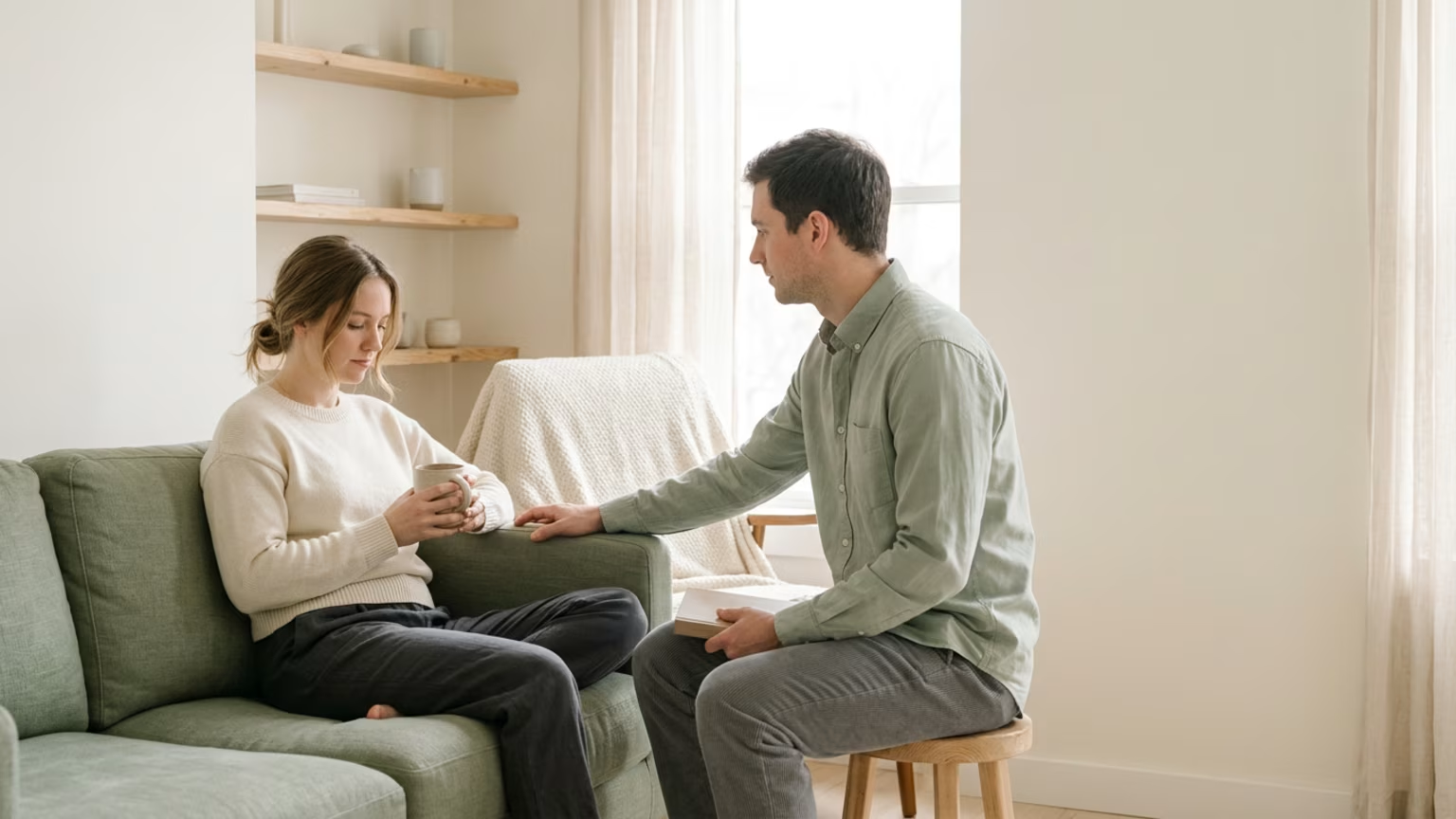
During conflict, instead of leaning in, they may pull back. They may stop replying, or say, "I can't do this right now" and shut down. You may feel desperate to fix it, to explain more, or to say, "Please, just talk to me."
This can lead to a painful cycle. You move closer. They move away. You feel anxious and blame yourself. Then you try even harder. They feel pressured, and they step back more.
Inside, your thoughts might sound like this:
It is very common to feel rejected, confused, and unimportant around someone who is avoidant. None of these feelings mean you are actually unlovable. They are a natural response to emotional distance.
To deal with someone who is avoidant, it helps to know that this pattern often did not start with you. It usually began long before you met them.
Many people with avoidant attachment grew up with caregivers who were not very emotionally present. Maybe their parents were loving in practical ways, like food and shelter, but did not give much comfort, warmth, or open talk about feelings.
Some learned early that showing needs or feelings did not bring closeness. It may have brought silence, criticism, or pressure to "toughen up". So their nervous system adapted. To feel safe, they learned to rely mostly on themselves and to push down emotions.
As adults, avoidant people often feel proud of being independent. They may have a strong "I can handle everything alone" mindset. On the outside, they might seem confident and in control.
On the inside, though, emotional closeness can feel risky. If getting close once meant pain or letdown, their mind may now link intimacy with danger. So when a relationship starts to feel serious, their old defenses wake up.
They might tell themselves things like, "I can't need anyone" or "People always disappoint me". Their brain tries to protect them by creating distance. This is often automatic, not something they are fully aware of.
People with avoidant attachment often have a more positive view of themselves and a more negative view of others. In simple words, they may think, "I can trust myself. I am capable. But other people are unpredictable or demanding."
Because of this, deep closeness can feel unsafe. They may fear losing their freedom, being controlled, or being swallowed by someone else’s needs. So they keep guard.
When things get emotional, they may shut down. They may seem calm or cold, but often they are just overwhelmed. Pulling away, going quiet, or staying at the surface of conversations are all ways their system tries to stay safe.
It is important to remember this. Their distance is usually about their own fear and history, not about your worth. This does not make their behavior okay or easy. But it can help you see that you did not cause their attachment style, and you cannot single-handedly fix it.
Being close to someone who is avoidant can shape how you feel about yourself, your mood, and your choices in love.
When your partner pulls away, it is easy to turn inward and blame yourself. You might think, "If I were more chill, he would stay," or "If I were prettier, funnier, or less emotional, he would want me more."
Over time, this can wear down how you see yourself. You may start to doubt that your needs for closeness are valid. You might ask yourself if you are "too much" simply because you want steady care and respect.
One of the hardest parts of loving someone who is avoidant is feeling lonely while technically not single. You might have a partner, but feel like you do not really have a teammate.
You may go through hard days without telling them, because you expect a flat or distant response. You may stop sharing your inner world because it feels like talking to a wall. This can bring a quiet kind of sadness.
If you have a more anxious or sensitive attachment style, your need for closeness may increase when they pull away. You might send extra messages, try to explain again and again, or scroll their social media to see what they are doing.
This can create a pattern. The more you reach out, the more they feel pressured and back away. The more they back away, the more desperate you feel. It can be very hard to step out of this cycle once it starts.
This is not because you are clingy or they are heartless. It is because your nervous systems are reacting in opposite ways to the same fear of loss.
When you are caught in this dynamic, it is not just the relationship that hurts. It can touch your whole day.
It can also impact your future choices. You might stay in a painful bond because you fear being alone. Or you might start to believe that this is just how love feels. If this speaks to you, you might like the guide When I am afraid of being alone.
There is no quick fix for avoidant attachment. But there are kind, practical steps you can take to care for yourself and to create more clarity in the relationship.
The first step in how to deal with someone who is avoidant is simply to name it. When you see their pattern as avoidant attachment, you can separate their behavior from your value.
Instead of thinking, "He does not open up because I am not interesting," you can think, "He finds emotional closeness scary, and this is how he copes." This small shift can soften some of the self-blame.
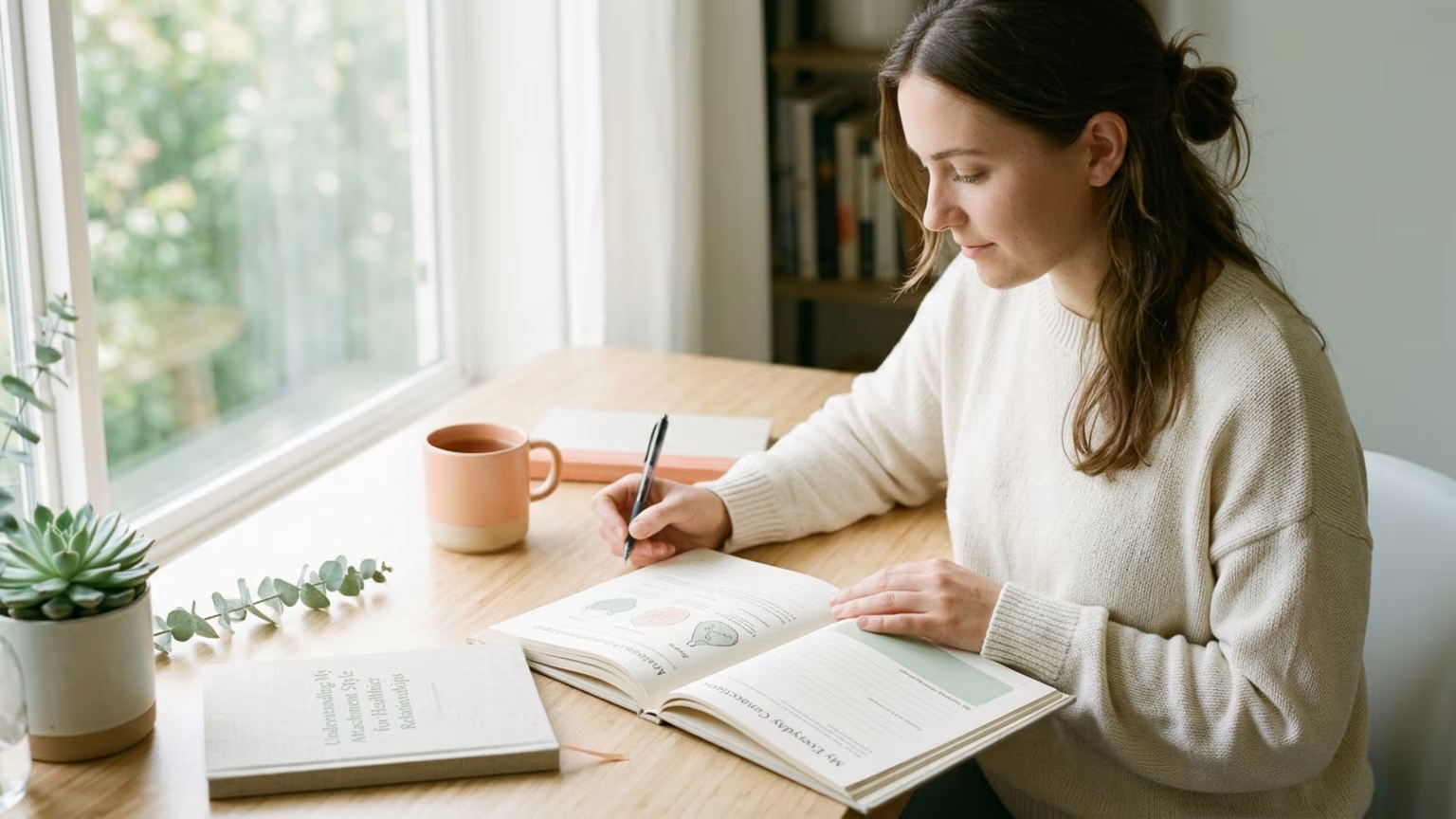
You might also want to learn more about your own attachment style. If you tend to feel very anxious or jealous, that matters too. You may find the guide I get so jealous easily and I hate it helpful.
Someone who is avoidant will likely need more space than you do. They may need time alone to reset after emotional talks or after spending a lot of time together.
Giving them some space can help them feel safer. But this does not mean ignoring your own needs. There is a difference between healthy space and silent treatment that hurts you.
You can say things like:
This way, you honor their need for distance while also honoring your own need for stability and clarity.
When emotions are high, long speeches and blame often push avoidant partners farther away. They may feel cornered or judged, even if that is not your intent.
Short, clear "I" statements can work better. For example:
Notice that these focus on your feelings and needs, not their flaws. You are not saying, "You never text" or "You are so cold". You are sharing your inner world and what helps you feel safe.
To deal with someone who is avoidant in a healthy way, you need boundaries. Boundaries are not threats. They are clear lines that protect your well-being.
A boundary might sound like:
Boundaries do not guarantee that the other person will change. But they help you stay in touch with what you need to feel okay. They also help you see more clearly if this relationship can meet those needs or not.
It is very tender to see the pain under someone’s avoidant behavior. You might know about their childhood, their past breakups, or the ways they have been hurt. You may want to be the one who finally makes them feel safe.
But it is not your job to be their therapist, healer, or savior. You can offer warmth, honesty, and steadiness. You cannot do the inner work for them.
If they are not willing to look at their own patterns, go to therapy, or talk about what is going on inside them, your love alone will not be enough to change this dynamic. That is not a failure on your part. It is a limit of what one person can do.
While you may want to pour all your energy into making the relationship work, it matters that you invest in yourself too. Your mental and emotional health are not less important than theirs.
Some steps that can help are:
When your life has more support and meaning outside of this person, their distance will still hurt, but it will not feel like your whole world is falling apart.
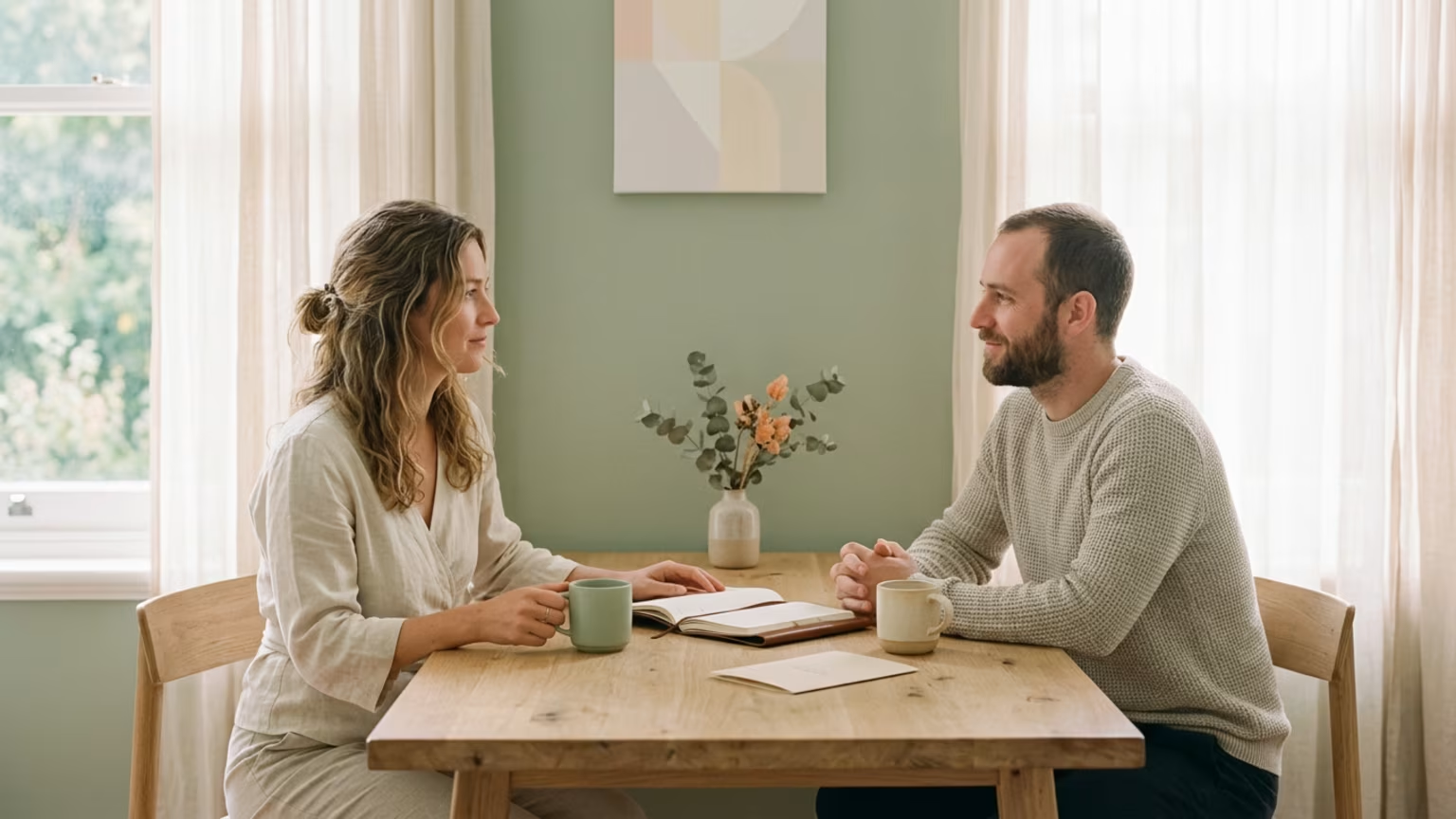
If your partner is open to it, couples therapy can be a safe place to explore these patterns. A good therapist understands avoidant attachment and can help you both find new ways to connect.
Even if they will not go, you can still seek individual therapy. Learning about attachment, communication, and boundaries can change the way you show up in all your relationships, not just this one.
As you learn how to deal with someone who is avoidant, you may notice shifts in yourself first. You might blame yourself a little less and see the bigger picture more.
You may start to pause before chasing when they pull away. You might ask, "What do I need right now?" instead of only thinking, "What do they need from me?"
Over time, you will get clearer answers to some hard questions. For example:
If the answer to these is often "no", it does not mean you failed. It might mean this is simply not a good fit for the kind of connection you want.
Healing with an avoidant partner is possible when both people are open to learning and changing. It usually takes time, patience, and often outside support. But you do not have to wait forever in a situation that keeps wounding you.
Many women learn to think, "If I stay, if I prove my love, if I am patient enough, he will finally open up." While patience and care matter, they should not mean ignoring your own hurt again and again.
Real care includes you too. Your feelings count. Your nervous system deserves safety. Your needs for connection, steady contact, and respect are not unreasonable or "needy". They are human.
Sometimes, moving forward slowly means stepping back from the relationship, or ending it, so you can heal. Sometimes it means staying, but with clearer boundaries and more support. Either way, your well-being matters.
If you are reading this because you feel confused, rejected, or lonely around someone who is avoidant, please know this. You are not broken for wanting closeness. You are not too much for needing care.
The way they pull away is about their own history and fears. It touches you deeply because you care. That does not mean you must carry the whole weight of the relationship on your shoulders.
You are allowed to ask for what you need. You are allowed to step back if those needs are not met. You are allowed to take up space in love, just as much as anyone else.
For today, you do not have to make a big decision. You can start with one small step. Maybe that is writing down your needs, reaching out to a trusted friend, or simply reminding yourself, "My feelings make sense."
You are not alone in this. Many women struggle with how to deal with someone who is avoidant. Over time, with gentle honesty and care for yourself, you can move toward relationships that feel more steady, mutual, and kind. And you deserve nothing less.

A collective of writers and researchers specializing in behavioral psychology and relationship recovery.


Uncrumb is a calm space for honest relationship advice. Follow us for new guides, small reminders and gentle support when love feels confusing.
Learn how turning inward and reducing rumination after a loss helps you build stronger relationship boundaries, heal your heart, and reclaim your self-worth.
Continue reading
Uncrumb is a calm corner of the internet for women who want kinder love choices. Read the guides that fit your story, take what helps and return whenever you need a bit more clarity.