Breakups and healing
How to get through the first weekend alone after a breakup
Monday, April 27, 2026





This weekend can feel endless. The first quiet morning. The empty side of the bed. The moment you reach for your phone and remember there is no “good morning” coming.
This guide walks through how to get through the first weekend alone after a breakup in a calm, practical way. It is not about being strong. It is about getting through the next two days with care, and with less panic.
You might feel okay for ten minutes, then fall apart again. That swing is common. A lot of people go through this, especially on the first weekend when there is less structure.
Answer: Yes, you can get through it by planning the hours.
Best next step: Write a simple weekend plan with three anchor moments.
Why: Empty time hurts more, and your body needs safety cues.
The first weekend alone can hit harder than the weekday. During the week, work, errands, and messages fill some of the space. On the weekend, the space is loud.
Many women notice the pain spikes at very specific times. Friday evening. Saturday morning. Sunday night. These were often “couple hours,” even if you did not think of them that way.
It can also feel like your body is confused. You might wake up tired, even if you slept. You might feel hungry and not want food at the same time.
Small moments can set it off.
If your mind says, “I must have done something wrong,” that is also common. Your brain is searching for a reason so it can feel in control again.
Breakups do not only change your feelings. They change your daily safety signals. Even if the relationship was not perfect, your system got used to the routine.
When you have been close to someone, your mind expects the usual check ins. No message can feel like danger, even when you know you are safe.
This is why the silence can feel so sharp. It is not proof you are unlovable. It is your system adjusting.
Structure is calming. It tells your mind, “There is a plan.” When the plan is gone, your thoughts can run in circles.
That is why planning tiny things helps so much. Not big “self improvement.” Just simple anchors.
If the relationship was a big part of your life, being alone can feel like losing a part of yourself. You might think, “Who am I without this?”
That feeling is painful, but it is also temporary. Identity returns through small choices, not one big moment.
Sometimes the feeling is not only sadness. It is fear. A deep feeling like, “I have been left.”
If this is you, it can help to treat it like a safety need. Your body is asking for steadiness, not answers.
The goal for this weekend is not to “be over it.” The goal is to lower the pain level by a few points and help you feel a little safer in your own company.
When your time is wide open, the mind fills it with rumination. Rumination means replaying the relationship over and over, trying to solve it. It rarely brings peace.
Instead, plan three anchor moments each day. Keep them realistic.
Put them in your notes app. Set reminders. Let the plan carry you when you feel shaky.
This is the weekend when many people text their ex, then feel worse. Not because texting is “bad,” but because it often comes from panic.
Here is a simple rule you can repeat: If you are tempted at night, wait until noon.
Night feelings are louder. Noon gives you a clearer mind. If you still want to send something at noon, you can decide then.
Some triggers are unavoidable. But you can reduce the biggest ones for two days. Think of it as emotional first aid.
Changing one thing, like fresh sheets or a different candle, can signal “new chapter” without forcing anything.
When the pain rises fast, your body needs a cue that you are safe. Grounding is not about pretending you are fine. It is about coming back into the room.
Try this for 60 seconds.
Then do one simple action. Drink water. Step outside. Wash your face. The action helps your body complete the reset.
Breakup weekends can make meals feel pointless. Or food can feel like the only comfort. Both are understandable.
Pick “good enough” food. Simple and steady.
Also drink water. Dehydration can make anxiety feel worse.
You do not need a hard workout. You need movement that tells your body, “I am here. I can carry myself.”
Rhythm helps. A steady walk, a simple beat, even folding laundry can calm the inner alarm.
Being alone and being lonely are not the same. But this weekend can be deeply lonely. Connection helps your nervous system settle.
Make one plan that includes another person. Keep it easy.
If you do not want to talk about the breakup, you can say that. Try, “I just need company today.”
Many women feel shame about how big the feelings are. Shame adds a second layer of pain.
Try one small sentence that reduces shame. For example: “This hurts because it mattered.” Or, “This is a normal reaction.”
You can also journal for ten minutes. Do not write a perfect story. Write the truth of the moment.
Evenings are often the hardest. The light changes. The day slows down. The mind looks for comfort.
Build an “evening buffer.” This is a short routine that keeps you from spiraling.
If you cry, let it happen. Crying is a release. It does not mean you are going backward.
Checking their social media can feel like relief for five seconds. Then it usually brings a new wound.
When the urge hits, do a swap.
Small rule: Do not search for pain on purpose. This weekend is tender.
Abandonment fear can make you feel like you are a child again. Like you cannot cope. This is not a character flaw.
Put a hand on your chest and say, slowly:
Then do one physical thing that signals care. Make the bed. Wash a cup. Step into fresh air.
If this fear is a long pattern for you, you might like the guide How to stop being scared my partner will leave me.
Breakups can make you feel helpless. One small completed task can bring back a little dignity and steadiness.
Pick one five minute task.
Then stop. You are not trying to rebuild your whole life in one weekend.
This weekend is not a test of your worth. It is just the first time your body is meeting the empty space.
Over time, the same weekend hours start to feel different. The silence becomes less sharp. The routines become yours again.
A common pattern is that healing is not straight. One weekend might feel better, and the next one might feel hard again. That does not mean you are failing. It means your mind is learning in layers.
As you practice small plans and small comfort, you build trust with yourself. You prove, in real time, “I can be with me.”
If you want a wider reset after the first shock, you might like the guide How to rebuild my life after a breakup.
Yes. Weekends have more empty time and more memory triggers. Plan three anchors each day and keep them small. If you feel overwhelmed, focus on the next hour only.
Only text if it is practical and needed. If it is emotional, wait until noon and re read what you wrote. A helpful step is to write the message in notes first, not in chat.
Crying is common in early grief. Drink water, eat something small, and take a shower if you can. If you are still crying nonstop for hours, call a friend or a support line for real time help.
That thought often shows up after rejection or loss. Do not debate it with big speeches. Do one caring action that proves the opposite, like feeding yourself and reaching out to a safe person.
Open your notes app and plan three anchors for tomorrow, with times.
This guide covered how to get through the first weekend alone after a breakup by using small plans, grounding, and gentle connection.
What you want long term is calm, self trust, and love that feels safe. Take one small step that protects your peace today, then rest. You are allowed to take your time.

A collective of writers and researchers specializing in behavioral psychology and relationship recovery.


Uncrumb is a calm space for honest relationship advice. Follow us for new guides, small reminders and gentle support when love feels confusing.
A gentle breakdown of the new PNAS study on nasal breathing and anxiety. Learn why you do not have to perfectly regulate your nervous system to find true love.
Continue reading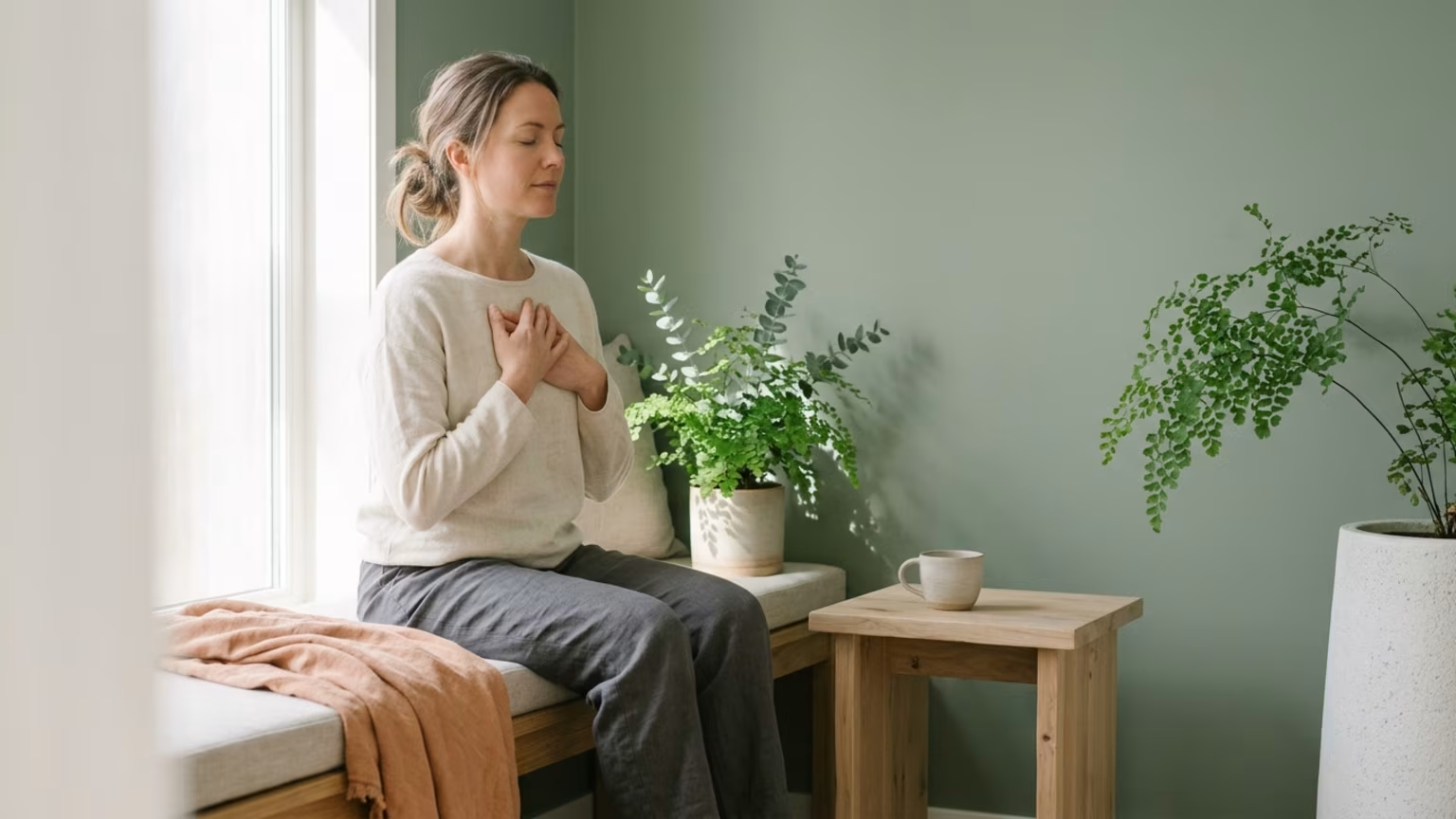
Uncrumb is a calm corner of the internet for women who want kinder love choices. Read the guides that fit your story, take what helps and return whenever you need a bit more clarity.