Dating red flags
How to Trust Your First Uneasy Feeling on a New Date
Monday, July 13, 2026






Being fair to a stranger on a first date is a terrible idea. We are taught to give everyone the benefit of the doubt. We are told to ignore our own discomfort for the sake of politeness.
You do not need hard proof to trust an uneasy feeling on a new date. That quiet clenching in your stomach is enough of a reason to take a step back. Your intuition is built on years of subconscious data gathering, and it exists to keep you safe.
You might be sitting across from someone right now. They look fine on paper, and they check the obvious boxes. But your chest feels tight, and you are silently wondering if you are just being overly critical.
It is exhausting to constantly negotiate between what your head says makes sense and what your body is loudly resisting. We talk ourselves out of our feelings all the time. After a heartbreak, we desperately want to get it right.
We try so hard to be open-minded that we start betraying our own boundaries. When you feel a sudden drop in your stomach, your brain is recognizing a familiar pattern of unsafety. It remembers past hurt, and it is sending a physical alarm signal.
Ignoring that alarm causes a deep ache. You are effectively telling your body that its warnings do not matter. This creates a painful disconnect between your mind and your physical self.
Over time, that disconnect chips away at your ability to trust your own judgment. Sometimes you need immediate physical space to figure out what you are feeling. Go to the restroom, and splash cold water on your wrists.
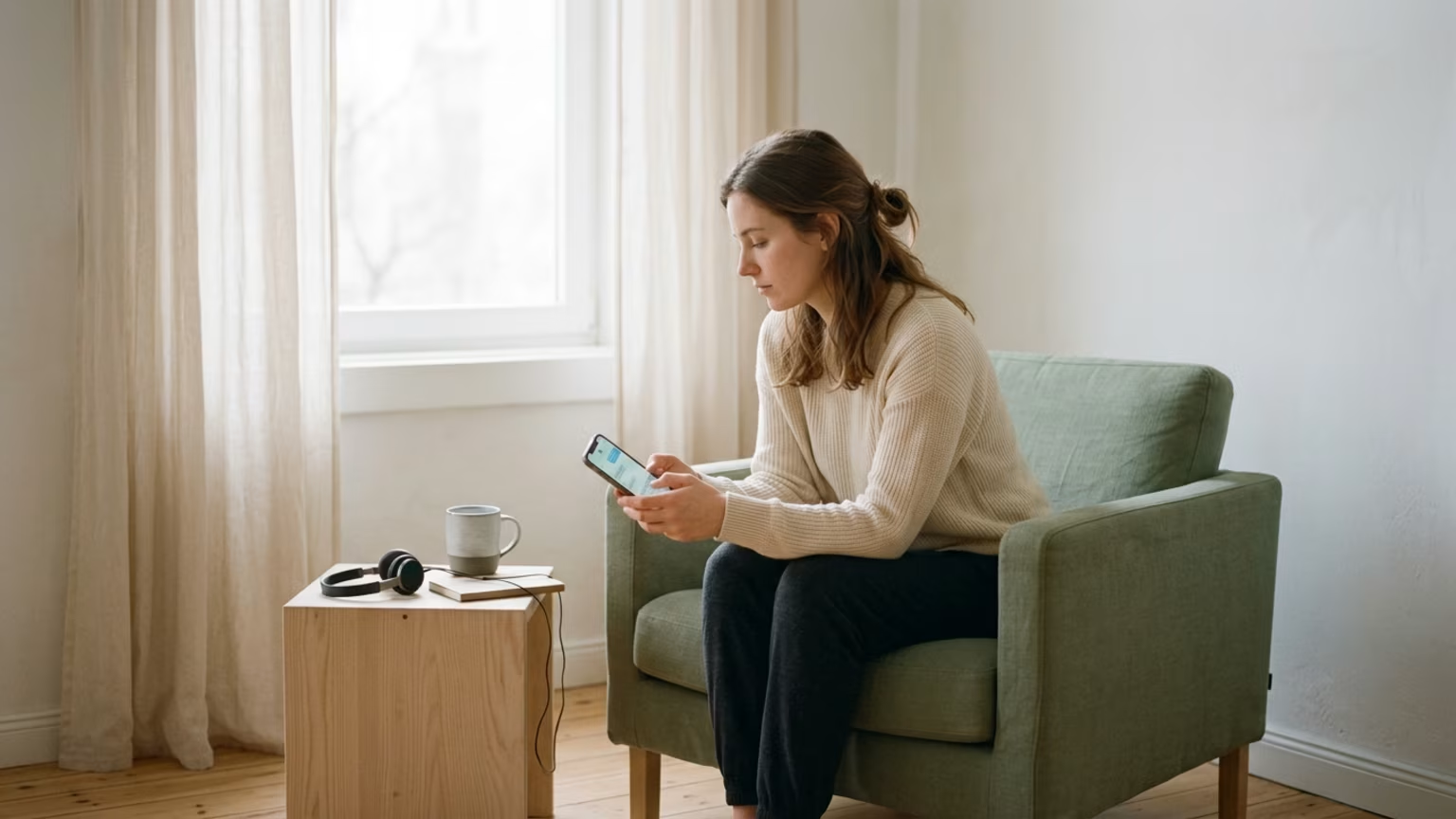
Let your nervous system settle for just one minute. I remember staring at my phone on a Sunday afternoon, willing it to light up with a message from him. The silence was deafening, and I spent hours analyzing every word I had said the night before.
It was not until I finally put the phone in another room and made a cup of tea that I realized my worth was not tied to his response time. That tiny act of creating physical distance from the device was my first step toward reclaiming my weekends. You can create that same physical distance on a date by simply excusing yourself for a moment.
Society tells us that a good partner is hard to find. We are constantly reminded that dating is a numbers game. This creates a quiet panic that we might accidentally reject someone wonderful.
When a date acts slightly inappropriate, friends might urge you to overlook it. They say things about how hard it is to meet people nowadays. This outside noise makes your own internal voice much harder to hear.
But you are the only one who has to live inside your body. Your friends will not be the ones dealing with the consequences of ignoring your intuition. You have the absolute right to set standards that make you feel secure.
Women are often socialized from a young age to keep the peace. We learn to smile politely even when we feel profoundly uncomfortable. This programming runs very deep in our adult dating lives.
On a first date, this polite instinct can feel like a trap. You might find yourself laughing at jokes that feel deeply unkind. You nod along to stories that make your stomach churn.
Breaking this habit requires immense self-compassion. It is entirely okay to stop smiling when you do not find something funny. You do not owe a stranger absolute warmth if they are making you feel uneasy.
A recent heartbreak leaves behind a very sensitive alarm system. Your nervous system is working overtime to prevent another painful experience. This can make dating feel like walking through a minefield.
You might wonder if your current uneasiness is just past trauma speaking. It is very common to question whether you are projecting old fears onto a new person. But your body does not know the difference between past and present threats.
Treat your body like a frightened friend who just needs some reassurance. Do not scold yourself for feeling scared on a date. Instead, softly acknowledge the fear, and give yourself permission to step back.
We are often conditioned to be the accommodating ones. We smile through uncomfortable jokes, and we brush off comments that sting. We carry this need to be agreeable into every new interaction.
When an early match makes you feel slightly off, you might try to rationalize it. You tell yourself they are just nervous, or they had a long day. You become their defense attorney.
You argue their case against your own inner witness. This dynamic is incredibly draining. It forces you to spend your precious energy managing their image instead of assessing your own comfort.
You deserve to set healthy personal standards without feeling like you are demanding too much. You might realize mid-date that the uneasy feeling is not fading. You do not have to endure the next two hours in silent panic.
You have full permission to cut the evening short. You do not need a grand excuse, and you do not need to fake an emergency. You can simply say something kind but firm.
Try saying, "I have really appreciated our conversation tonight, but I am going to head home now." If they press for a reason, you do not owe them a debate. You can softly add, "I am just feeling quite tired, and I need an early night."
It is not a lie when your heart feels exhausted from ignoring its own instincts. Sometimes the discomfort does not come from a blatant insult. There are no obvious warning signs you can point to.
The person is polite, but you still feel an unshakable urge to leave. This is often the hardest type of intuition to trust. We want a neat, logical explanation for why we feel unsafe.
Without a clear reason, we start to doubt ourselves. But your subconscious mind processes thousands of tiny details every second. It notices a specific micro-expression, a slight shift in tone, or a tense posture.
Your logical brain is just lagging behind what your body already knows. This is why many women find themselves feeling highly anxious after dates that seemed perfectly fine on the surface. A healthy connection will not make you feel frantic or confused.
True safety in dating feels incredibly boring at first. There are no massive highs, and there are no terrifying lows. When you are used to the chaos of past relationships, calm can feel very unsettling.
You might mistake peace for a lack of chemistry. It takes time to recalibrate your nervous system. You can start by looking for steady, predictable behavior.
Someone who texts back reliably is far better than someone who sends poetry at midnight and then disappears. A gentle, consistent presence is the true foundation of trust. If you are struggling with this, adjusting your dating perspective can help you prioritize safety over sparks.
There are moments when an uneasy feeling is a loud command to leave. You must learn to spot these signals without second-guessing them. Your physical safety and emotional well-being must always come first.
If a date repeatedly talks over you or mocks your opinions, it is time to go. If they make disparaging comments about waitstaff, that is a clear reflection of their character. If they pressure you for physical intimacy after you say no, walk away immediately.
You do not have to explain your departure. You can just pay your half of the bill, stand up, and leave the venue. Protect your own heart, and let them deal with their own behavior.
We often intellectualize our feelings instead of feeling them. We sit across the table and analyze our date's career prospects. We ignore the cold sweat forming on our palms.
Your body has its own intelligence system that works independently of your logic. It communicates through a sudden lack of appetite or a racing heartbeat. These physical sensations are not random occurrences to be suppressed.
Pay close attention to how your muscles feel during the conversation. If your shoulders are drawn up to your ears, you are bracing for impact. True comfort allows your body to sink fully into the chair.
Walking away from a bad date can trigger an unexpected wave of sadness. You might feel disappointed that another evening ended in frustration. This emotional letdown is completely normal.
You might be tempted to text them and apologize for leaving early. Please resist the urge to smooth things over at your own expense. Let the silence sit, and allow the connection to naturally fade away.
Use the next few hours to actively comfort yourself. Put on your softest pajamas, and make a warm cup of herbal tea. You did something incredibly brave by honoring your own limits.
Trusting yourself is not about being right one hundred percent of the time. It is about committing to have your own back in every scenario. It is a promise that you will not abandon yourself for politeness.
Every single time you listen to your body, you reinforce that promise. You teach your nervous system that you are a safe person to rely on. Over time, that quiet uneasiness will stop feeling like a nuisance.
It will become a trusted friend who whispers important warnings in your ear. You will begin to value your own comfort over the approval of strangers. This is the very core of healing.
Dating requires a deep reserve of self-compassion. You will get it wrong sometimes, and that is perfectly okay. You are learning a new language of self-trust.
When the panic rises, press your hand to your chest. Take a slow breath, and repeat this quiet truth to yourself. "My feelings are valid, and I am allowed to leave any situation that does not feel safe."
Save this gentle reminder for later.
Nausea before a date is incredibly common. Your nervous system is anticipating a potential threat. Try to drink some water, and remind your body that you can leave at any time.
Anxiety usually feels loud, frantic, and filled with "what if" questions. Intuition is often a quiet, heavy feeling of knowing. Intuition does not panic, it simply states a fact.
Yes, dating requires a massive amount of emotional energy. You are processing a new personality, maintaining conversation, and assessing your own safety. It is very natural to need a quiet day of rest afterward.
Regret is just a temporary feeling of missing an imagined future. You ended the date early because your body felt unsafe in the present moment. Trust the past version of yourself who made that brave decision.
Guilt means you are a deeply empathetic person who cares about others. But you cannot build a romantic connection on pity or obligation. It is actually kinder to let them go early on.
Learning to hear your own voice takes time. It is a slow, quiet practice of returning to yourself. Every time you honor a small uneasy feeling, you build a stronger home within your own chest.

A collective of writers and researchers specializing in behavioral psychology and relationship recovery.


Uncrumb is a calm space for honest relationship advice. Follow us for new guides, small reminders and gentle support when love feels confusing.
Mental-health expert Prakriti Saxena Poddar warns that repeatedly using AI chatbots for relationship reassurance reinforces anxiety and weakens self-trust.
Continue reading
Uncrumb is a calm corner of the internet for women who want kinder love choices. Read the guides that fit your story, take what helps and return whenever you need a bit more clarity.