Modern dating
Why Preserving Personal Peace Leads Many Singles to Step Away From the Exhaustion of Romance
Sunday, September 6, 2026
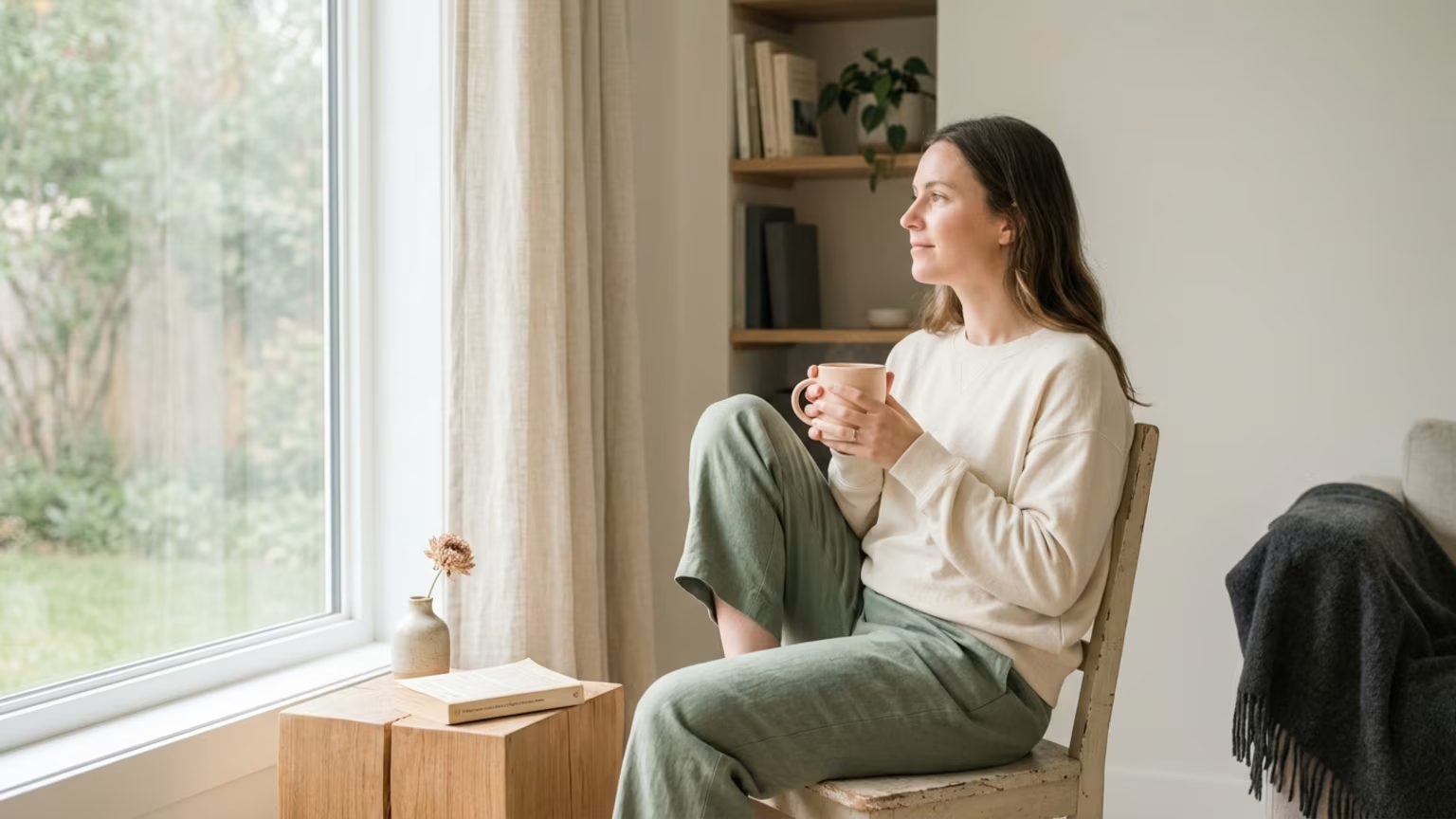





In September 2024, Nicolle Monico wrote a column for San Diego Magazine about modern romance. Her piece asked if having a happier or more stable life alone was reason enough to remain single. She wondered if preserving our peace was better than chasing forced connections.
Monico illustrated this tension through two friends who used pseudonyms. Trent is a 37-year-old man who said he is happy alone. He noted he would rather be single if a relationship became unhappy or too difficult.
Another friend named Sarah shared a similar sentiment about her own independence. She wanted companionship only if it allowed her to preserve her freedom and existing routines. These stories captured a feeling that many of us know all too well.
The core question is not simply about being single versus being partnered. It asks whether the work of intimacy is necessarily evidence that a connection is wrong. Relationships require compromise and deep self-examination.
A person who genuinely wants love might use any difficulty as proof that they should withdraw. They might tell themselves that the effort is just not worth the disruption to their calm life. This mindset makes every interaction feel incredibly heavy.
This evaluative mindset shifts our focus away from true connection. We start viewing potential partners as threats to our carefully constructed peace. The fear of losing our independence overrides the natural desire for shared moments.
We often sit on our couches and wonder if the effort is truly worth the fatigue. Modern romance asks us to constantly evaluate our worth against the silence of strangers. That cycle can make even the most hopeful heart feel tired and defeated.
Choosing singlehood can feel like a heavy decision when you actually want a loving partnership. We fear that choosing our own peace means we are simply giving up. It is easy to confuse healthy self-protection with a fear of true intimacy.
Women face a unique exhaustion when navigating these digital platforms. We desire connection but we deeply need to protect our emotional energy and physical safety. This creates a painful tension between hoping for love and guarding our well-being.
Many women fear that stating basic expectations will make them seem demanding. "I used to feel the exact same way. I would twist myself into knots trying to be the cool, low-maintenance girl."
"The truth is, asking for basic communication is never too much for the right person. The day I started stating my needs plainly was the day the wrong people naturally filtered themselves out of my life." A calm single life is not automatically evidence of emotional unavailability.
We do not have to accept exhaustion as the price of admission for romance. A quieter life is sometimes exactly what we need to hear our own intuition again. Trusting that quiet voice is a beautiful act of self-care.
You might feel anxious when you step away from the dating pool. The world tells us that we must keep trying if we want to find our person. Rest is actually a vital part of preparing your heart for real love.
That pressure to constantly put yourself out there can feel incredibly isolating. We scroll through endless faces and wonder why nothing feels quite right. Giving yourself permission to pause is a powerful way to reclaim your energy.
Monico argued that relationships can expose communication problems and trauma-related habits. Intimacy naturally brings our personal blind spots right to the surface. However, that work should not feel like an endless audition for lasting love.
The column discussed secure and avoidant attachment styles alongside anxious and disorganized patterns. These terms offer a helpful framework for recognizing how people respond to closeness and conflict. They are meant to be reflection tools rather than rigid labels for every bad date.
Reflecting on these patterns helps us stop blaming ourselves for every failed connection. Observing our attachment styles in modern romance offers gentle clarity when things feel confusing. You do not need to constantly evaluate your every move.
A healthier approach replaces constant judgment with gentle curiosity. We can stop asking if someone is impressive enough to justify disrupting our routines. Instead, we can simply ask how we feel in their presence.
Intimacy does require adjustment and learning. The primary article points out that we can learn to pause during conflict rather than shutting down completely. That single shift can positively impact our friendships and our daily lives.
We often bring an evaluative mindset into our search for a partner. We treat every conversation as strict evidence for or against a person. This makes dating feel less open and much more transactional.
Recognizing subtle signs of emotional distance can help you protect your peace. You can establish your limits without building a massive wall around your heart. Softening your approach allows you to connect without losing yourself.
Growth does not only happen inside of a romantic relationship. You can mature and heal and learn incredible things about yourself entirely on your own. A romantic partner is not required for your personal development.
Learning about yourself is a gentle process that never truly ends. You can read books and take quiet walks and journal your deepest thoughts. That internal work is just as valuable as any relationship lesson.
The sheer fatigue many women feel is deeply real and measurable. A recent report summarized research by Liesel Sharabi, Paige Von Feldt, and Thao Ha. They described dating-app burnout as involving emotional exhaustion and a deep detachment from other users.
A reported longitudinal study began with 493 active single dating-app users. The study retained 190 participants through its final wave over 12 weeks. According to that report, emotional exhaustion and perceived inefficacy increased over time.
The evidence suggests that our motivations heavily shape our digital experiences. The research summarized by ScienceBlog notes that using apps to seek social approval predicted greater loneliness one month later. Using them to pursue a relationship did not show the same reported connection with later loneliness.
This distinction is incredibly important for anyone feeling drained by their phone. The same technology feels vastly different depending on your personal motivation. Using an app for genuine companionship might not carry the exact same emotional weight.
Online platforms can introduce genuine safety concerns that drain our energy. A report summarizing Pew Research Center data says 48% of online-dating users experienced at least one of four measured unwanted behaviors. Women under 50 reported these forms of harassment at higher rates than men.
Another summary of Pew’s findings shares an even more specific reality. It reports that 56% of women under 50 who had used dating platforms received unsolicited sexually explicit messages or images. Taking a break from these platforms is a completely valid form of self-care.
These numbers validate the desire to simply walk away for a little while. Experiencing unwanted attention is a very reasonable cause for taking a long pause. A break from dating is not a failure of resilience.
Knowing when to rest is a core part of protecting your emotional well-being. Finding a sense of peace in modern dating requires setting firm digital boundaries. You can always delete an application when it stops serving your highest good.
The statistics remind us that our frustration is not a personal failing. We are navigating digital spaces that were simply not built for our emotional comfort. Acknowledging this reality helps us let go of unnecessary guilt.
An easier single life is a completely valid choice. It is not automatically proof that partnership is wrong for you. Difficulty alone does not tell you whether a relationship is actually healthy.
You are allowed to want love without surrendering your core identity. Your routines and your quiet mornings are precious parts of who you are. A good partner will want to complement that life rather than consume it.
We often tolerate unnecessary heartbreak under the assumption that love requires total sacrifice. The ordinary vulnerability of learning intimacy is very different from feeling chronically depleted. You can maintain your non-negotiable standards and loosen your demand for instant certainty.
A healthy connection will not ask you to erase your existing friendships. It will not demand that you abandon your values or your financial independence. The changes that come with intimacy should be negotiated rather than strictly demanded.
Uncrumb believes that your self-trust is your most valuable compass. You can gently step back from the dating pool whenever the water feels too rough. There is profound strength in honoring your own emotional capacity.
You do not have to participate in every chaotic digital trend to find real love. If your current path feels heavy, you are allowed to simply rest. The quiet spaces in our lives often hold the most beautiful answers.
Your peace is a beautiful sanctuary that deserves fierce protection. You never have to apologize for keeping your standards incredibly high. The right person will respect the walls you have built and wait for the door to open.

A collective of writers and researchers specializing in behavioral psychology and relationship recovery.


Uncrumb is a calm space for honest relationship advice. Follow us for new guides, small reminders and gentle support when love feels confusing.
Some strengths may reflect unreliable early support. A gentle look at childhood affection, dating pressure and making room for your own needs.
Continue reading
Uncrumb is a calm corner of the internet for women who want kinder love choices. Read the guides that fit your story, take what helps and return whenever you need a bit more clarity.